

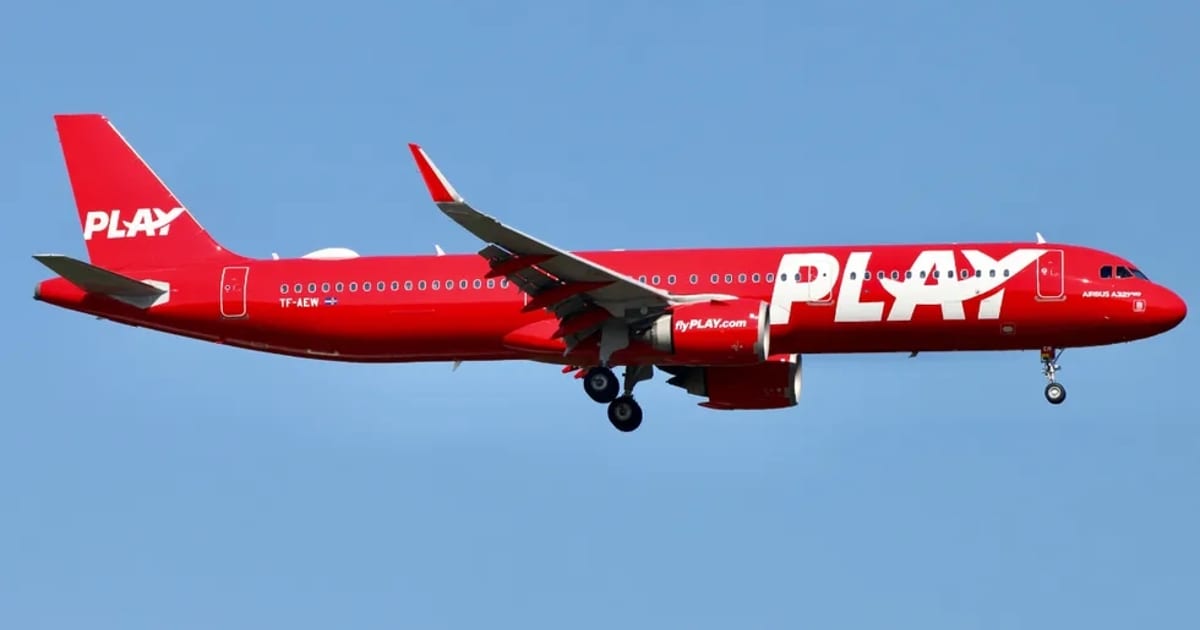

Play, a low-cost airline based in Iceland, has suddenly shut down, canceling all flights and leaving hundreds of passengers in the lurch.
In a statement released today, the company announced that its board has “decided to cease operations”—effective now—and all flights on the airline’s schedule have been called off.
Travelers with Play tickets are on their own when it comes to making alternate arrangements, the statement (unhelpfully) adds.
As the New York Times reports, Play operated flights between Reykjavik and destinations in Europe, Canada, and the United States. A spokesperson for Iceland’s Keflavik Airport told the Times that an estimated 1,750 passengers were affected by Play’s sudden shutdown today, including those on scheduled departures to Baltimore, Barcelona, Lisbon, Paris, London, and Copenhagen.
None of those flights are happening now, and stranded travelers will need to make other, likely more expensive, plans.
Icelandair has already said it will not be offering reduced fares for Play passengers, according to the Points Guy, though Icelandair will increase available seats in Play’s markets in order to help out stranded customers.
Affected passengers are advised to check travel insurance policies and credit card terms to see if they’re eligible for any compensation, especially for costly last-minute rebookings.
Why did Play go kaput? And are other low-cost carriers doomed?
Play launched in 2021, adopting the low-base-fare, multitude-of-extra-fees model followed by many other no-frills carriers. The airline was an unofficial reboot of Wow Air, another Icelandic budget carrier with a similar business model and many of the same executives, that shuttered in 2019.
In the statement announcing its demise, Play noted that the “company’s performance has long been weaker than expected,” characterized by poor ticket sales, shifting market demands, and various operational challenges.
Low-cost carriers like Play have struggled financially in recent years due to factors such as increased costs and larger competitors that have introduced their own no-frills tickets, squeezing out the upstarts.
These conditions have contributed to the money woes of Spirit Airlines and even prompted United Airlines CEO Scott Kirby to declare earlier this month that the deep-discount model in commercial aviation is dead—or, at any rate, will be soon.
