

Opinions expressed by Entrepreneur contributors are their own.
Key Takeaways
- The rapid growth of AI is dramatically increasing global electricity demand. Data centers powering AI tools consume energy comparable to small cities, with demand projected to surge in the coming years.
- This shift is reshaping the electricity market, turning power from a simple utility expense into a strategic business asset.
- For entrepreneurs, energy costs, infrastructure availability and power resilience are becoming critical factors in business strategy, innovation and long-term competitiveness in the AI economy.
The AI boom has its dirty little secret: It runs on enormous amounts of electricity. Behind each chatbot, generated image and AI recommendation sits a data center that consumes more power than the grid was intended to support. And, most alarming, the demand is growing faster than the infrastructure can keep up.
There’s a growing rise in the cost of electricity due to AI power centers, making energy, not algorithms, the defining bottleneck of the AI era. Entrepreneurs ignoring this fact are doing so at their own peril.
The scale of AI energy demand
The numbers are staggering, and they are only heading in one direction. Here’s what’s driving the surge.
Training vs. inference power needs
Large GPU clusters are needed to train a frontier AI model. But once deployed, inference (generating responses for millions of users) scales exponentially. As AI use goes mainstream, inference workloads are now overtaking training as the dominant electricity draw.
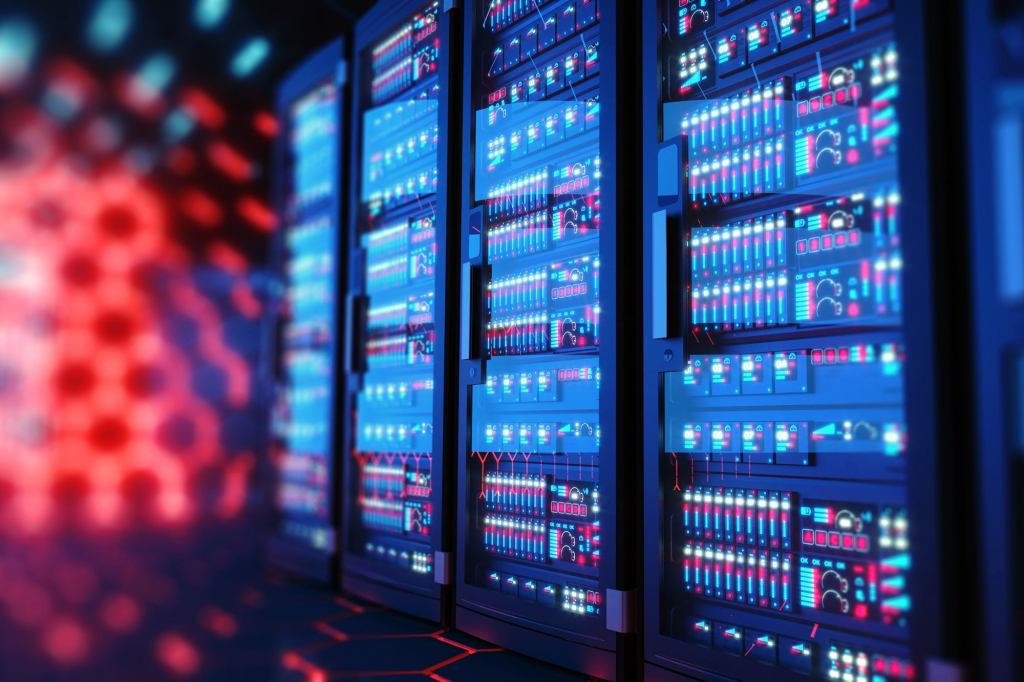
Data centers as mega power consumers
Modern hyperscale AI data centers use power equivalent to that of small cities. Microsoft, Google and Amazon are constructing power-hungry facilities that consume hundreds of megawatts. According to Goldman Sachs, AI-driven data centers may see a 160% increase in power demands by 2030, a figure that should concern every entrepreneur.
Why this demand is different
Unlike traditional computing, AI workloads run 24/7 at extremely high density. The launch of a viral AI tool, for instance, can create sudden grid strain almost instantly. It’s a relentless, always-on-demand pattern operators have never managed at this scale.
How AI is rewriting the electricity market
The energy market is not merely responding to AI; it is being restructured by AI.
Power is now a strategic asset
The leading tech giants aren’t waiting for the grid to catch up. Microsoft, Google and Meta (Facebook) have all signed long-term Power Purchase Agreements (PPAs) spanning multiple decades. Some are directly building their own energy sources. Power has shifted from being a utility expense to a strategic priority for the company.
Grid stress and infrastructure bottlenecks
Transmission limitations are creating serious delays in connecting new data centers to grids. Aging substations were never designed for high-density AI loads. Utilities are accelerating upgrades to transmission towers and high-voltage infrastructure to keep pace.
These projects require skilled work at elevation. For instance, power infrastructure increasingly depends on aerial maintenance services for power infrastructure to safely service transmission systems and substations at scale. Behind the digital AI boom lies very real, ground-level grid work.
Rising energy prices in key regions
Data center clustering is driving up electricity costs in Northern Virginia, Dublin and Singapore. As AI infrastructure concentrates in these regions, competition for power pushes prices higher, squeezing smaller businesses nearby.
The renewable energy acceleration
AI’s power hunger is, paradoxically, becoming one of the strongest catalysts for the clean energy transition.
AI as a catalyst for clean energy
Solar, wind and battery storage projects are being funded at record pace, not by governments, but by tech companies securing clean electricity. AI is inadvertently becoming one of the most powerful engines of the energy transition.
The return of nuclear conversations
Small Modular Reactors (SMRs) are now seriously discussed in Silicon Valley boardrooms. Nuclear offers 24/7 carbon-free baseload power that renewables can’t guarantee, and a new generation of nuclear startups is being built specifically to meet AI’s power demands.
Sustainability pressure
ESG expectations are pushing AI companies to prove clean operations. “Green AI” (verifiably powered by renewables) is fast becoming a competitive differentiator, not just a PR talking point.
What this means for entrepreneurs
If you are building in the AI era, the power equation affects you directly. Here’s what to act on:
Energy costs are a strategic line item
SaaS founders and AI startups must factor power economics into their models. Data centers are fast becoming the defining infrastructure of the AI economy, and the costs that come with them are routinely underestimated.
Location strategy is shifting
Proximity to cheap, stable electricity now rivals tax incentives. Power-rich regions are pulling data centers and the businesses that depend on them.
New markets are opening
Energy optimization software, cooling tech, workload efficiency tools and grid management platforms are all high-growth sectors. The race to power AI with nuclear energy alone is spawning an entirely new investment category.
Risk management is non-negotiable
Power outages and capacity limits can halt operations. Diversify cloud regions and build contingency plans for grid disruptions.
The investment ripple effect
Utilities and power infrastructure firms are among Wall Street’s hottest investments. Industrial real estate near substations is being rapidly acquired, and venture capital is flowing into the energy-tech convergence.
As the IEA’s World Energy Outlook makes clear, digital infrastructure and global energy markets are now inseparable.
The bigger shift: Electricity as the new oil
Every major industrial revolution was unlocked by an energy breakthrough. Steam power transformed manufacturing. Oil built the modern economy. AI may be triggering an equally profound energy shift, one where electricity access determines who leads and who follows.
Entrepreneurs who grasp the power layer gain a vantage point that most of their peers are still missing.
The AI revolution is, at its core, an energy story. Every model trained, every query answered, every product powered by machine learning depends on a functioning, well-maintained electrical grid. Businesses that treat power as a background concern do so at their peril.
The next competitive edge may not come from smarter AI; it may come from a smarter energy strategy. Entrepreneurs who understand where electricity flows, where it’s constrained and where it’s being unlocked will be the ones who shape what the AI economy looks like a decade from now.
Key Takeaways
- The rapid growth of AI is dramatically increasing global electricity demand. Data centers powering AI tools consume energy comparable to small cities, with demand projected to surge in the coming years.
- This shift is reshaping the electricity market, turning power from a simple utility expense into a strategic business asset.
- For entrepreneurs, energy costs, infrastructure availability and power resilience are becoming critical factors in business strategy, innovation and long-term competitiveness in the AI economy.
The AI boom has its dirty little secret: It runs on enormous amounts of electricity. Behind each chatbot, generated image and AI recommendation sits a data center that consumes more power than the grid was intended to support. And, most alarming, the demand is growing faster than the infrastructure can keep up.
There’s a growing rise in the cost of electricity due to AI power centers, making energy, not algorithms, the defining bottleneck of the AI era. Entrepreneurs ignoring this fact are doing so at their own peril.
The scale of AI energy demand
The numbers are staggering, and they are only heading in one direction. Here’s what’s driving the surge.
