
Close Menu
    What's Hot

    The Trump Administration Is at War With Itself Over AI Regulation

    Party Like a Swede! A Guide to Celebrating Midsummer.

    Trump-backed Iowa Senate candidate says Iran war could become ‘political liability’

    Facebook X (Twitter) Instagram
    Trending
    • The Trump Administration Is at War With Itself Over AI Regulation
    • Party Like a Swede! A Guide to Celebrating Midsummer.
    • Trump-backed Iowa Senate candidate says Iran war could become ‘political liability’
    • What to Watch in Tuesday’s Primary Elections in Iowa, Montana and Beyond
    • U.S. Was Asked to Blacklist Colombian Cartel Gold. It Was Also Buying It.
    • Opinion | Ian Bremmer on the Risks America Poses to the World
    • The World Has Only Four Great Powers—and They Might Not Be Who You Think
    • What Ireland and Germany Can Teach Us About Birthright Citizenship
    interluknewsinterluknews
    • Home
    • Business
      • Corporate News
      • Industry Insights
      • Startups & Entrepreneurship
      • Technology & Innovation
    • Economy
      • Economic Policy
      • Financial Analysis
      • Inflation & Interest Rates
      • Trade & Markets
    • Global
      • Conflicts & Security
      • Diplomacy
      • Global Trends
      • International Affairs
    • Lifestyle
      • Fashion
      • Food & Dining
      • Personal Development
      • Travel
    • Opinion
      • Columns
      • Editorials
      • Expert Opinions
      • Reader Voices
    • More
      • Politics
        • Elections
        • Government & Policy
        • International Relations
        • Political Analysis
      • Sports
        • Cricket
        • Football / Soccer
        • International Sports
        • Local Sports
      • Technology
        • Artificial Intelligence
        • Cybersecurity
        • Gadgets & Reviews
        • Tech News
      • South Africa News
    Facebook X (Twitter) Instagram
    interluknewsinterluknews
    Expert Opinions

    Europe Is Losing the Energy-Security Battle to China by Emmanuel Guerin

    adminBy adminMay 8, 2026No Comments5 Mins Read
    Share Facebook Twitter Pinterest Copy Link Telegram LinkedIn Tumblr Email
    Europe Is Losing the Energy-Security Battle to China by Emmanuel Guerin
    Share
    Facebook Twitter LinkedIn Pinterest Email

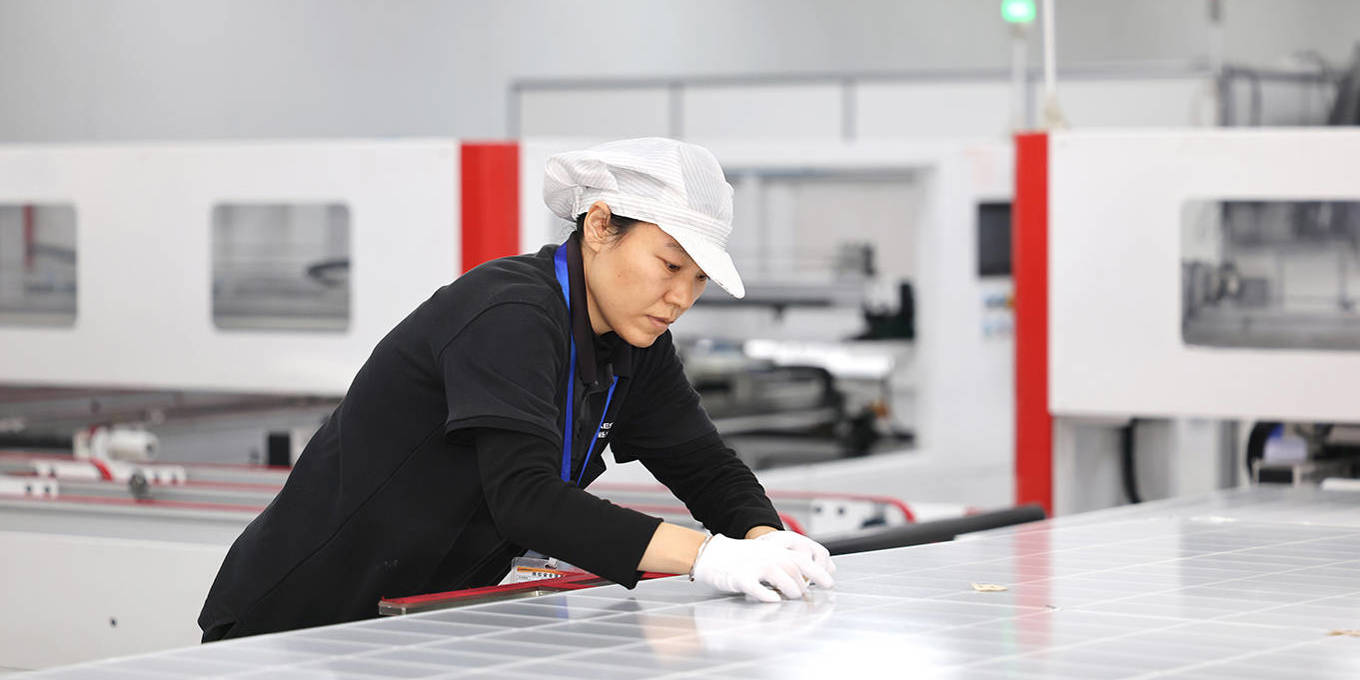
    While tensions around the Strait of Hormuz are rattling global oil markets, energy security is no longer defined solely by access to fossil fuels. What China has understood, and Europe has not, is that security now depends on electricity systems that can deliver low-cost power at scale and support heavy industry.

    PARIS—The war in Iran has triggered a dramatic redistribution of global wealth. US oil and gas companies stand to pocket at least $60 billion in windfall profits this year, while Russia could gain up to $100 billion in additional fiscal revenues. But nearly every economy, including energy exporters, is grappling with slower growth, rising inflation, and the prospect of persistently high interest rates.

    1. US President Donald Trump gesturing while speaking about the conflict in Iran during a press briefing in the James S. Brady Press Briefing Room at the White House in Washington, DC, on April 6, 2026.

      Kent Nishimura/AFP via Getty Images

      Trump’s Tragedy of Errors

      Joseph E. Stiglitz
      weighs the economic implications of America’s reckless war of choice against Iran.

    2. Missile strike in Iran city.

      Atta Kenare/AFP via Getty Images

      The Age of Global Un-Order

      Mark Leonard
      foresees a geopolitical landscape shaped not by stable alliances but by shifting interests.

    3. Illustration of a giant eye watching a man on a computer.

      Moor Studio/Getty Images

      Living Without an AI Kill Switch

      Ngaire Woods
      identifies the steps that can be taken now to prepare for attacks enabled by frontier models like Mythos.

    The clearest fault line runs through the Strait of Hormuz, as its closure has exposed Asia’s heavy dependence on Gulf energy. Europe, too, is paying a steep price: since the Iran war began, the European Union has spent an additional €24 billion ($28 billion) on fossil-fuel imports.

    At the same time, the current crisis is redefining energy security. In the 20th century, it meant reliable access to oil and gas. Today, energy security increasingly rests on the ability to electrify rapidly, produce clean power domestically, and control the technologies and supply chains on which the electricity systems of the future will depend.

    By those measures, China holds a clear competitive advantage. Electricity already accounts for roughly 30% of its total energy consumption, compared with about 20% in the United States and Europe. The EU, for all its climate ambition and electrification targets, remains dependent on imported fossil fuels and foreign clean technologies.

    The divide within Europe is just as striking. Spain, for example, has built a partial buffer against fossil-fuel volatility: renewables now set wholesale electricity prices roughly 80% of the time, averaging €60 per megawatt-hour. Italy, by contrast, remains heavily exposed to natural-gas markets, with electricity prices hovering near €130 per megawatt-hour.

    The European Commission’s AccelerateEU initiative reflects the urgency of electrification. This package of measures seeks to curb rising energy costs and reduce the bloc’s dependence on imported fossil fuels by scaling up electric vehicles (EVs) and heat pumps, expanding renewables, strengthening power grids, and building storage capacity. But it lacks the financing needed to achieve its stated objectives. Without a credible investment strategy, it risks remaining a tissue of ambition rather than a coherent plan.

    China, by contrast, has spent decades building an integrated electrification system, securing access to critical minerals, expanding its dominance in refining, scaling up renewables, batteries, and EVs, and electrifying its industrial base. As a result, it now controls strategic chokepoints across the clean-energy value chain.

    Given that industrial electricity prices in Europe were roughly twice as high as in China even before the current energy shock, the transition from a world dominated by petrostates to one shaped by electrostates is likely to accelerate. Access to low-cost electricity will translate directly into strategic autonomy and geopolitical leverage. While the US and Russia may benefit most from the fossil-fuel shock in the short term, the balance is set to shift toward China over time.

    Europe could still benefit from the energy transition, but that will require more than new targets and regulations. Success depends on large-scale investment and a well-designed industrial policy. Otherwise, Europe risks trading dependence on Gulf oil and gas for dependence on Chinese clean technologies.

    Encouragingly, the EU has begun to put in place the regulatory framework needed to support this shift. Most notably, the Net-Zero Industry Act, the Critical Raw Materials Act, the European Chips Act, and the Industrial Accelerator Act are aimed at securing control over key parts of the electrified economy by strengthening Europe’s industrial base, ensuring access to vital inputs, and bolstering technological capabilities.

    These initiatives also signal a more assertive approach to industrial policy. Public procurement, state aid, and other tools are increasingly geared toward supporting low-carbon products made in Europe or within trusted supply chains. In this sense, Europe is beginning—albeit cautiously—to play the same strategic game as China.

    The main constraint, however, is financing. As the 2024 Draghi report on EU competitiveness made clear, the investment required for the clean-energy transition far exceeds the bloc’s current resources. This underscores the urgent need for common financing instruments, including Eurobonds, to support the necessary spending.

    Europe still has time to catch up. But unless it matches its regulatory ambition with sustained investment, it will remain strong on rules and weak on delivery. In a world defined by industrial policy and geopolitical competition, there is little room for half measures.

    battle China Emmanuel EnergySecurity Europe Guerin losing
    Follow on Google News Follow on Flipboard
    Share. Facebook Twitter Pinterest LinkedIn Tumblr Email Copy Link
    Previous ArticleOpinion | What to Do for the Elderly? Stop Badgering Them!
    Next Article What Is Body Dysmorphic Disorder?
    admin
    • Website

    Related Posts

    Emmanuel Macron’s Versailles glitz masks a fading economic legacy

    June 2, 2026

    A Trump Deal With Iran Could Spell Trouble for Israel’s Netanyahu

    June 1, 2026

    Opinion | Wise and Not So Wise Tips for Being Old

    June 1, 2026
    Leave A Reply Cancel Reply

    Demo
    Latest Posts

    The Trump Administration Is at War With Itself Over AI Regulation

    Party Like a Swede! A Guide to Celebrating Midsummer.

    Trump-backed Iowa Senate candidate says Iran war could become ‘political liability’

    What to Watch in Tuesday’s Primary Elections in Iowa, Montana and Beyond

    Latest Posts

    Subscribe to News

    Get the latest sports news from NewsSite about world, sports and politics.

    Advertisement
    Demo

    We are a digital news platform delivering timely, accurate, and insightful coverage of politics, global affairs, business, economy, sports, and more. Our mission is to keep readers informed with reliable news, clear analysis, and stories that truly matter.
    We're social. Connect with us:

    Facebook X (Twitter) Instagram Pinterest YouTube

    Subscribe to Updates

    Get the latest creative news from FooBar about art, design and business.

    Type above and press Enter to search. Press Esc to cancel.

    Powered by
    ...
    ►
    Necessary cookies enable essential site features like secure log-ins and consent preference adjustments. They do not store personal data.
    None
    ►
    Functional cookies support features like content sharing on social media, collecting feedback, and enabling third-party tools.
    None
    ►
    Analytical cookies track visitor interactions, providing insights on metrics like visitor count, bounce rate, and traffic sources.
    None
    ►
    Advertisement cookies deliver personalized ads based on your previous visits and analyze the effectiveness of ad campaigns.
    None
    ►
    Unclassified cookies are cookies that we are in the process of classifying, together with the providers of individual cookies.
    None
    Powered by