

The rest of the world continues to shunt Africa to the periphery, regarding it mainly as a source of raw materials. But as more advanced economies face structural problems, the continent’s unmatched demographic momentum and enormous industrialization potential imply that it will play a central role in global economic expansion.
WASHINGTON, DC—More than 50 years after decolonization, the West still regards Africa as a supporting player in the global economy: a source of raw materials and little else. This outdated view has hampered Africa’s development of high-value manufacturing industries and integrated supply chains, impeding economic growth. As a result, disparities in per capita income between Africa and other regions have increased, and the continent’s share of global trade has fallen below 3%, even though Africa accounts for almost one-fifth of the world’s population.
But as more countries cross the “super-aged” threshold, with more than 20% of the population aged 65 and older, the international community should be increasingly motivated to stop placing Africa in a peripheral role. The world economy needs new drivers of demand, and Africa is uniquely suited to fulfill that need. In fact, Africa’s demographic dynamism, together with its enormous infrastructure investment needs, mean that it should play an increasingly central role in global trade and investment in the coming years.
Africa’s demographic momentum is unmatched. Its population is expected to approach 2.5 billion by 2050. At that point, Nigeria is projected to be the world’s third-most-populous country, surpassing the United States and ranking below only India and China. By the end of the century, nearly 40% of the world’s population is set to be African.
More importantly, Africa will account for most of the net growth in the global working-age population, as countries in most other regions confront shrinking labor forces and rising dependency ratios. Recent data show that economies with population growth above the global average of 1% have experienced an average real GDP growth rate of 3.1%, while those with negative population growth have achieved only 1.4%. African GDP is already growing above the world’s average, and most long-term forecasts indicate that the continent’s strong demographic tailwind will help power the global economy.
While economic growth requires an optimal mix of capital, labor, and technology, the mutually reinforcing interaction between job creation and rising consumer spending is often at its core. Historically, demographic strength has supported human-capital development, sustaining the expansion of domestic demand, which accounts for more than two-thirds of US GDP and over half of Canadian GDP.
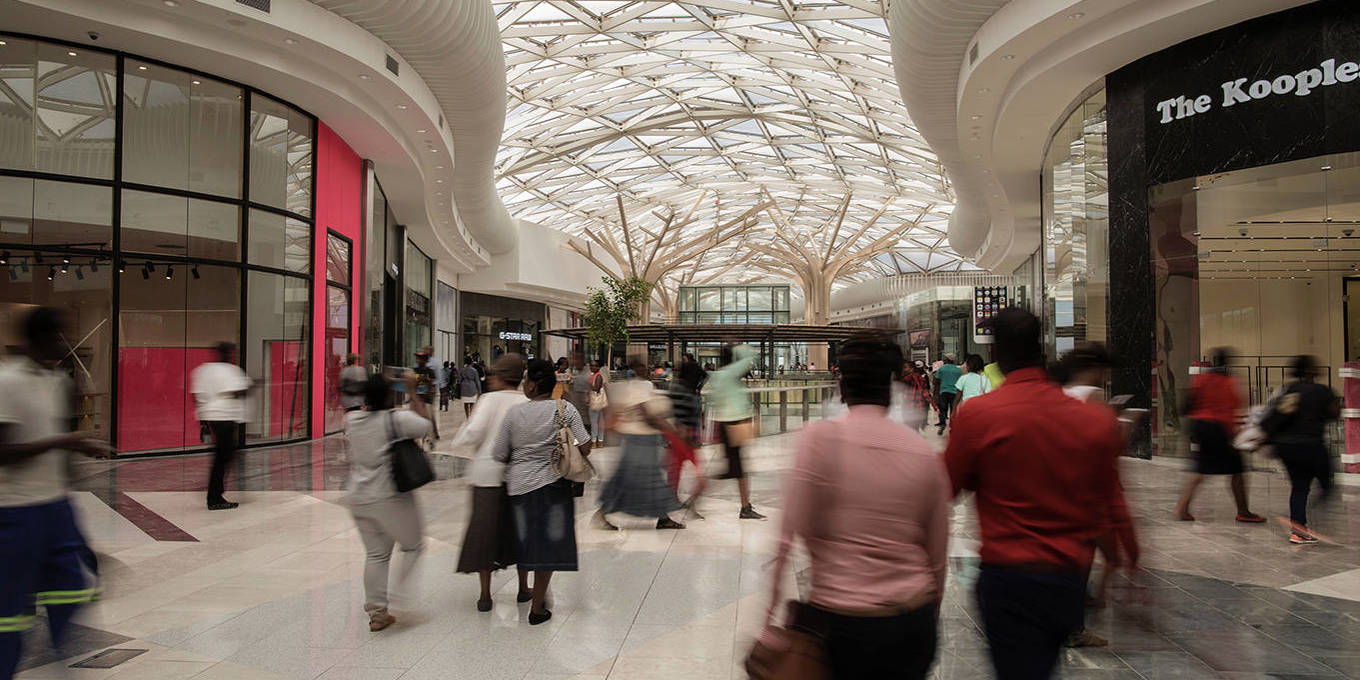
In this context, Africa’s youth bulge is a major asset in terms of both labor supply and new demand. Whereas consumption growth has slowed in the advanced economies, owing to demographic stagnation, it is expanding in Africa, as rapid urbanization creates new consumer markets and incomes gradually rise. By 2050, hundreds of millions of Africans are expected to join the middle class, and consumer and business spending on the continent is projected to reach $16.1 trillion, creating significant demand for goods and services.
Africa also has enormous potential for structural change. As the world’s least-industrialized continent, contributing less than 2% of global manufacturing, Africa offers the greatest opportunities for productivity gains and per capita income growth. Bauxite is a case in point: what is worth $874 billion at the mine gate becomes $5.2 trillion when refined into alumina, and up to $15.4 trillion when smelted into aluminum. Processing raw commodities on the continent, rather than exporting them, offers a vast economic opportunity.
Seizing this opportunity will require efforts to address Africa’s infrastructure deficit. Increased spending on infrastructure, particularly in the construction, mining, manufacturing, and services sectors, would set the stage for long-term productivity gains. The scale of the gap implies that sustained investment could drive growth momentum for decades, with huge positive spillover effects for the global economy.
With sufficient financing for infrastructure, human-capital development, and policy reforms, Africa can achieve large-scale industrialization, transform its population growth into sustained economic dynamism, and generate a powerful demographic dividend for the global economy. The implementation of the African Continental Free Trade Area is a key step toward catalyzing this structural transformation, because a more integrated market bolsters cost advantages and spurs industrial growth. Manufactured goods would first scale through AfCFTA-enabled regional demand and then expand into global markets as Africa becomes more competitive.
With its rapidly growing population, large and untapped consumer markets, industrialization potential, immense resource wealth, and pursuit of regional economic integration at scale, Africa holds the future of global growth in its hands. As more advanced economies face structural problems, Africa is the largest remaining reservoir of transformative growth potential.
But if African countries are to form a pillar of 21st-century global economic expansion, they need the support of effective policies. The stakes are high: if the continent’s potential is not realized, the aging world will struggle to sustain prosperity. Africa’s success is thus no longer a regional issue, but rather a global imperative.
