

The International Football Association Board (IFAB) has made some big changes to soccer ahead of the World Cup in the United States, Mexico and Canada. But you’ll also see them in leagues around the world next season too.
Here’s what is changing this summer.
 Andy Davies (@andydaviesref) is a former Select Group referee, with more than 12 seasons on the elite list, working across the Premier League and Championship. With extensive experience at the elite level, he has operated within the VAR space in the Premier League and offers a unique insight into the processes, rationale and protocols that are delivered on a Premier League matchday.
A host of VAR changes
The Video Assistant Referee (VAR) will now be allowed to review a number of new things, including:
– An incorrectly awarded corner kick, but only as long as it doesn’t delay the restart.
– Any attacking fouls that happen before play is started. Previously, no foul would be allowed until the ball is live, but now VAR can step in to suggest disciplinary action when a restart has resulted in a goal, penalty, corner or free kick.
– A red card which is issued from a second yellow card which is clearly incorrect.
– A case of mistaken identity when a player is punished with a yellow or red card for a foul committed by another player.
Verdict: These are sensible additions to the VAR review protocol. They are all situations where, currently, it doesn’t make sense that they can’t be checked. — Davies
Players can’t cover their mouths
Any player who disguises their mouth with a hand, arm or shirt during a confrontation with an opponent will be punished with a red card.
The rule has been brought in to stop potential racist comments being hidden from view, after the recent incident involving Benfica winger Gianluca Prestianni and Real Madrid’s Vinicius Junior in the UEFA Champions League. A key point is that if the conversation is friendly, players can do it. But as soon as there is any hint of confrontation, it could be a red card.
Verdict: This is an important addition to protect players in confrontational situations. It sends a clear message that this type of action will not be tolerated or accepted. — Davies
10-second substitutions
Subbed players have 10 seconds to leave the field at the nearest point of exit. If they don’t, then the player due to come on must wait at least one minute until the next stoppage in play and are waved on by the referee. And that means their team must play with 10 men until they arrive.
Verdict: A positive rule and another clear message from FIFA designed to speed up play and punish teams whose players try to deliberately delay the game. — Davies
5-second restart
If the referee feels a player is deliberately taking too long on a throw-in or goal kick they will instigate a five-second countdown, at the end of which the team will be penalized.
The ref will raise their hand to begin the countdown. If the ball isn’t in play by the time that is over, then possession will be reversed. If it’s a throw-in then another throw-in will be awarded to the opponents; if it’s a goal kick then a corner will be awarded to the opponents.
Verdict: This is an excellent addition and will have a positive effect on speeding up the game. I do not expect to see many, if any, goalkeepers take the risk of conceding a corner by being too slow from a goal-kick. — Davies
Injured players leaving the pitch
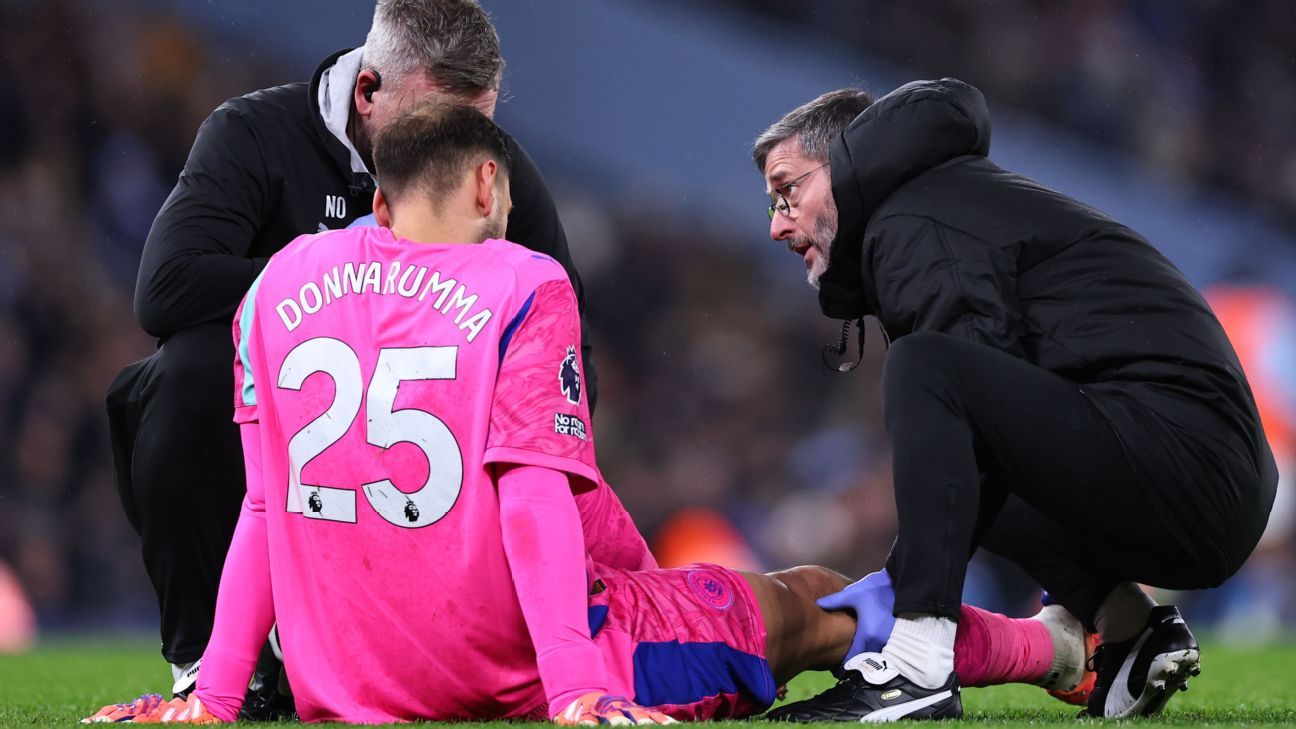
An outfield player who is treated by medical staff must leave the pitch for one minute. There could be exceptions with goalkeeper injuries, severe injuries, or collisions.
Verdict: I don’t like this new law: one minute is too long for a player to wait to come back on to the pitch with their team down to 10 players, and it unfairly disadvantages them. The Premier League has used a 30-second rule, which worked well with over 70% fewer players treated on the pitch. I don’t think fans will like this change and it feels unnecessary — Davies.
No more tactical timeouts for goalkeeper injuries
Players won’t be able to go to the technical area to get advice from their coaches when a goalkeeper goes down injured. They will be told to stay put.
However, there won’t be any disciplinary action for those who break the rule.
Verdict: Something needed to be done in these situations, and this is a positive first step to combatting the problem. However, this is not a law and there is no punishment for players who still wonder across to the touchline … yet. It will be down to the match officials to manage.
Plus, there will be a three-minute hydration break in the middle of both halves, where instructions can be given by the managers to their teams anyway!
Players leaving the pitch
Any player who leaves the pitch in protest over a decision will be shown a red card. The same applies for team staff who tell players to leave the pitch. And if a team causes a match to be abandoned then they will forfeit the match (for example, Senegal vs. Morocco in the AFCON final).
Verdict: Good. The game has to be protected from the ridiculous situation we watched in the AFCON final, which damaged its image.
Hydration breaks each half
There will be three minutes allowed in each half (around the 22nd minute) for a hydration break due to the extreme temperatures in the host countries.
Verdict: A sensible introduction for this World Cup, with the safety of the players and officials paramount.
A longer halftime break for the World Cup final?
FIFA has announced that, for the first time, the final at MetLife Stadium in New Jersey on July 19 will include a Super Bowl-style concert. This has led to concerns that the game’s halftime break would be around double the normal length (15 minutes), due to the show.
But Hugh Evans, CEO of the nonprofit Global Citizen, which has partnered with FIFA on the show told The Associated Press in an interview that everyone involved were huge soccer fans who wanted to ensure the performances would be “significantly shorter than the 15-minute mark.”
“Soccer fans around the world can be rest assured knowing that we’re very respectful of the game,” he added.
