

The historic racetracks that host the Triple Crown of Thoroughbred Racing are each in the midst of an evolution, with major upgrades, renovations, and in one case, a complete rebuild—and they’re all happening at once. It’s part of an industry-level reckoning with the changing demands of horseracing spectators, and the changing fortunes of horseracing itself.
The three racetracks—Churchill Downs in Louisville, Pimlico Race Course in Baltimore, and Belmont Park in Elmont, New York—are all in various stages of renovation, each with a design led by the sports-centric architecture firm Populous. They’re getting new grandstand configurations and infield access improvements, fancier suites, a broader range of luxury experiences, and, importantly for growing the sport, a closer connection between spectators and horses.
The overarching theme of this work is hospitality, and it’s reconfiguring these historic racetracks at a time when horseracing is facing deep consolidation and persistent concerns about the humane treatment of the horses themselves.
Some of this work is a response to the changing nature of horseracing, which was transformed in the 1990s by the widespread adoption of racetrack simulcast betting, turning the experience of going to the racetrack into one in which a spectator may be watching horseraces on a screen rather than outside on the track. “What happened starting about 30 years ago, the operators became very focused on the wagering side of the business and, in a way, forgot that they were providing hospitality,” says Todd Gralla, senior principal and director of equestrian services at Populous.
For the historic racetracks of the Triple Crown, arguably the three most popular and important races in the sport, the redesigns and renovations underway now are an effort to reorient the industry. Within a few years, these three racetracks will complete projects that could set a new standard for how horseracing can continue on as a sport and an experience.
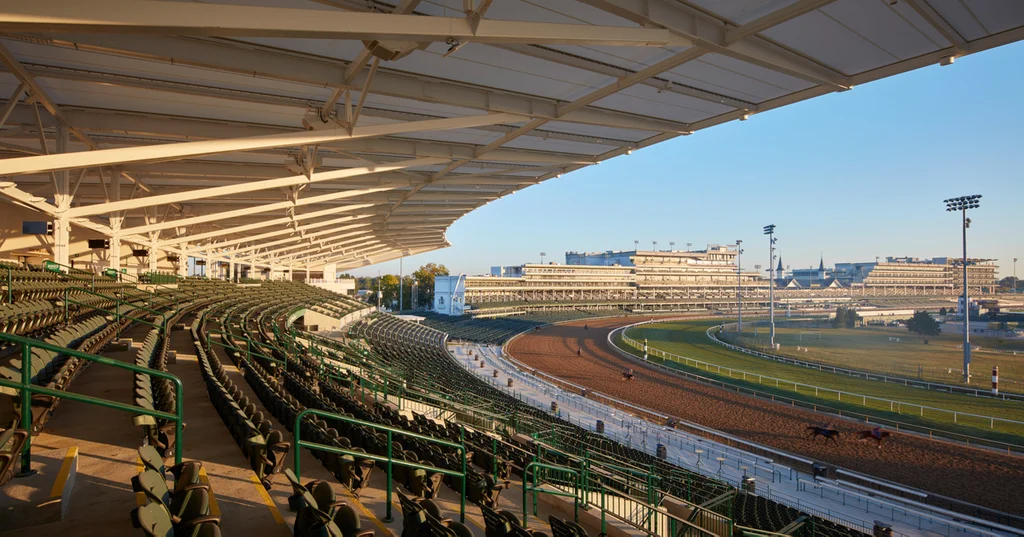
Churchill Downs, home of the Kentucky Derby
The highest profile horserace is undoubtedly the Kentucky Derby, which recently had its 152nd running. Famous for its pomp, fashion, and mint juleps, the Derby is now part of a two-day mega event in Louisville, where tickets can run upwards of $20,000 per person. Rich in tradition, the Derby’s racetrack, Churchill Downs, has spent the past decade working with Populous to upgrade its facilities and its spectator experience to make it worth that high price.
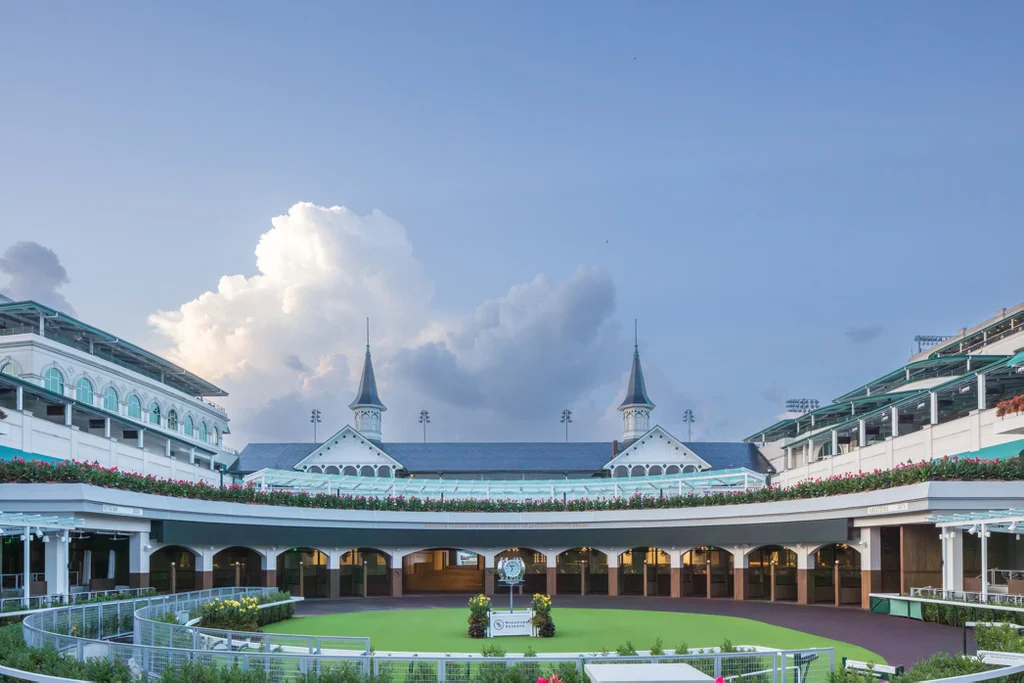
The biggest project has been a complete reworking of the paddock, the pre-race area where horses and jockeys prepare and spectators on the edges can get relatively close views of the horses. The $200 million project expanded the area from 5,000 square feet to 12,000 square feet, and added more room for people to watch as the horses get their final inspections before heading onto the track.
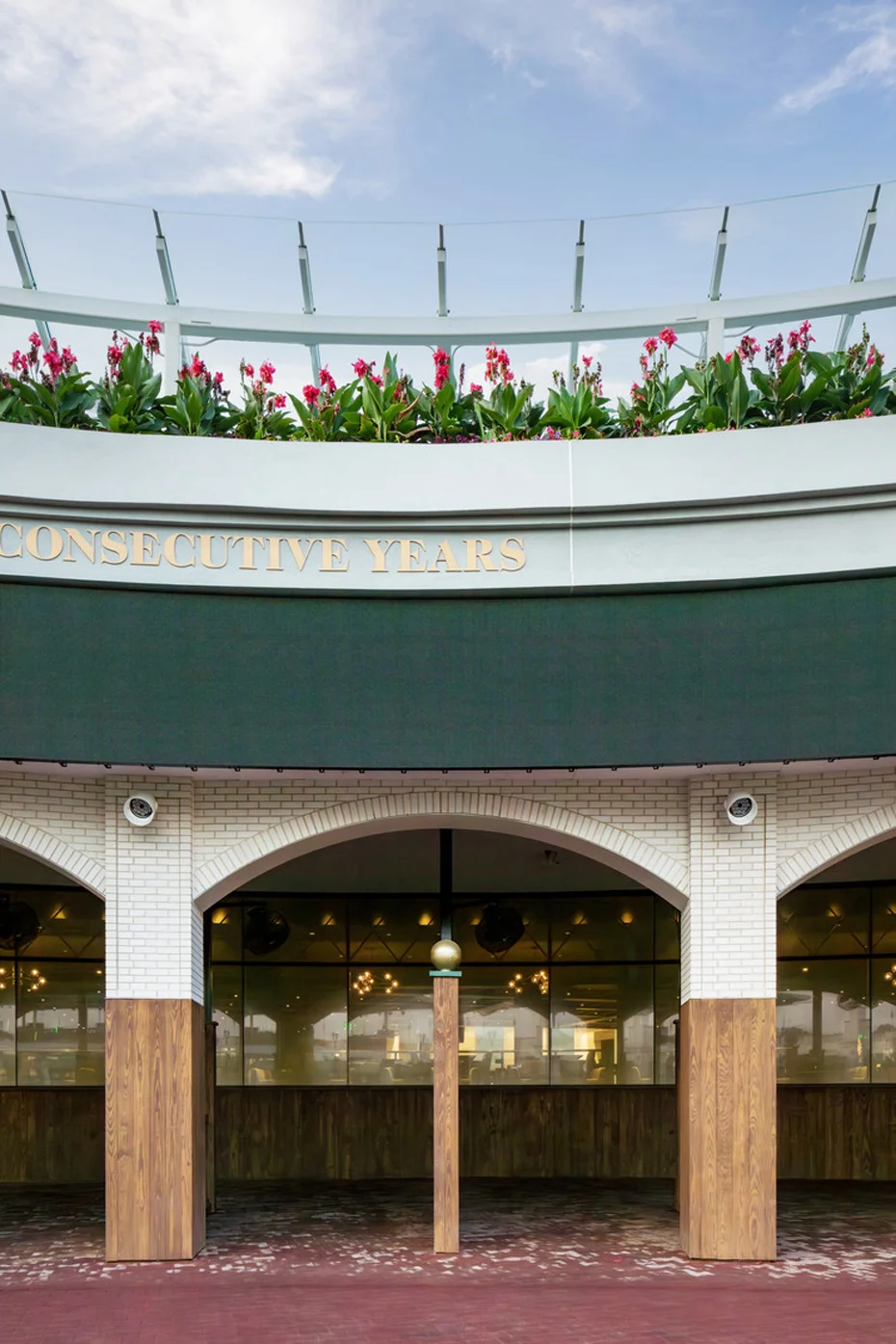
“We do surgery, so to speak, on all the parts of the facility. But when you equate it to the human body the paddock is really like the heart,” says Sarah Contardo, senior vice president of sales and strategy at Churchill Downs. “So it was really important that we got that particular project correct.”
The new paddock includes standing room only spaces right on the fence, allowing any visitor to Churchill Downs, no matter the ticket level, the ability to get up close to the horses. The renovation project, which completed in 2024, also created the opportunity to rethink the spaces along the paddock. Contardo says that led to the creation of bespoke club spaces that look out directly onto the paddock or into the stalls of the horses preparing to walk out onto the paddock.
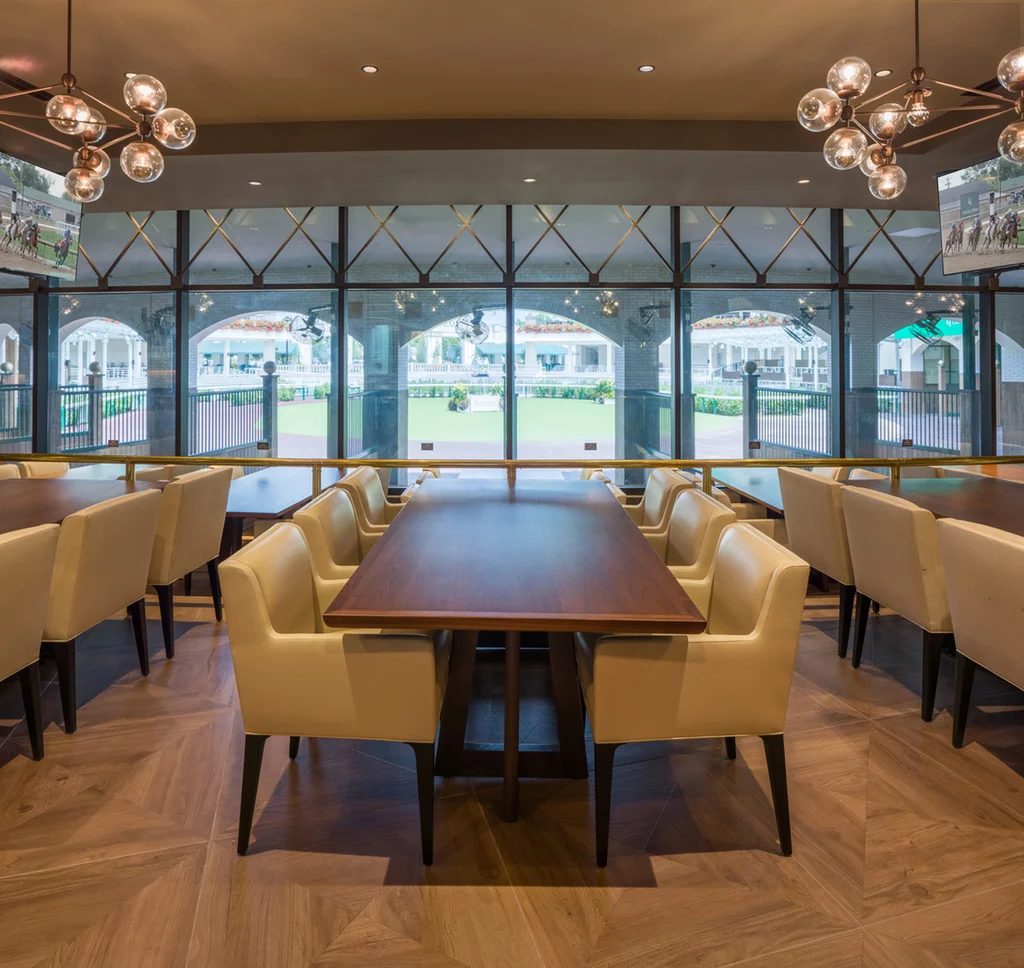
Luxury experiences are an increasingly important part of the plan at Churchill Downs. A more recently completed project is the renovation of the finish line suites, the high-end private boxes that look out directly onto the track’s finish line. Mason Paoli, a senior principal and interior design director at Populous who led the project, says every suite had an established customer, so the redesign was all about giving longtime Derby fans a new, upgraded experience without taking away the things they liked.
“We had to reimagine them to bring them up to date, but we had to take a little bit more of a traditional lens, without being tired,” she says. The design leans into the race’s history, but also added a few new features, including an ice cream and coffee bar. “That has been a huge hit,” says Contardo.
Deciding where to inject something new is a challenge, though. “Our entire job is that dance between holding onto history but renovating,” Contardo says. “People want modern amenities. We need specific things in rooms today that they didn’t need 150 years ago.”
Belmont Park, home of the Belmont Stakes
The modernization underway at Belmont Park in New York is much more of an architectural revision. The former grandstand structure is being replaced with a soaring and swooping new seating facility, with a compact section of outdoor stadium seating backed by a five-story building block of suites and amenity spaces, all covered by a white roof canopy that looks like a hotrod’s rear spoiler. It’s expected to fully open in the spring of 2027.
The size of the building is big, but it’s actually a downsizing for Belmont Park, which averages around 7,500 spectators on a typical race day. “Belmont had more than a million square feet of physical plant. We’ve reduced that by two-thirds in the new facilities,” says Meg McWilliam, a principal and senior architect at Populous.
But the project is also an expansion, in a way. That typical raceday crowd of 7,500 balloons to 50,000 on the day of the Belmont Stakes, and the new design has opened up more space for special event facilities, extra seating, and more overflow areas, particularly in the track’s infield. Previously, you couldn’t get to that donut hole in the middle of the tracks at Belmont, and now you can. Part of the work at Belmont Park has unlocked the infield and increased the total green space by almost five-and-a-half times.
McWilliam says that opens up more opportunities to flex for different crowds, and to offer different experiences for the variety of races and other events the site can host. And when it comes time for the Belmont Stakes, the facility can accommodate the very unique nature of the race and its crowd.
“People interact with racing facilities for a much longer period of time than other sports facilities. You’re not showing up for two hours or three hours. You might be showing up when the gates open at 8 a.m. and leaving after the last race and the post-race concert at 8 p.m.,” she says. “There are so many more touch points that we have to consider as a result. And that’s where these kinds of differentiated experiences and differentiated price points really start to come into play.”
Pimlico Race Course, home of the Preakness Stakes
Baltimore’s Pimlico Race Course, opened in 1870, is getting the most extensive revision of the Triple Crown venues. The entire facility, save the historic oval race course itself, has been demolished. Populous is now working with the project’s lead architect, Ayers Saint Gross, to make Pimlico’s clubhouse more experiential.
The look of the project is still taking shape and won’t open until 2028, but Gralla says it is being inspired by the original clubhouse that burned down in 1966, a multi-terraced and highly ornate building designed in the steamboat gothic style. The original 1870 grandstand survived that fire, though, and the wood structure was preserved during the recent demolition, making it possible for that wood—itself over century old at the time of original construction—to be repurposed. “We are literally reusing timber that’s 240 to 250 years old in our new facility,” Gralla says.
Like Belmont, Pimlico is a smaller scale racetrack that happens to host a few high-profile and high-attendance events. So even though Pimlico’s Triple Crown race, the Preakness Stakes, draws international attention and large crowds, most of the other events it hosts do not. “It is not practical for us to go into Belmont and Pimlico and build a 60,000-seat brand new venue, financially speaking, when the average daily attendance is between 5,000 and 10,000 people,” Gralla says.
As an alternative, Populous focused on rethinking Pimlico’s infield—the hole of the racetrack donut—to make more room for spectators and hospitality services. “When we have the Preakness roll around or the Maryland Million at Pimlico, we’re able to scale from that less than 10,000 seat permanent venue up to 30,000 or 40,000 people,” Gralla says.
Outside lessons
The renovations and changes coming to the Triple Crown racetracks are intended to support the American horseracing business, but they take their lessons from beyond the sport, and beyond the U.S.
Contardo at Churchill Downs says her company closely monitors other horse racing tracks around the world, as well as the venues for other major sports and team, like Wimbledon, Formula One racing, and the New York Yankees. They even reference the guest experience at Disney parks.
The most direct lesson Churchill Downs has applied from outside horseracing comes from the NBA. “Every NBA team at this point has a tunnel where the players walk through the club in order to get out to the court. And that is essentially what we did with our Paddock Club,” Contardo says. For fans inside, there is an up-close view of the athletes they came to see perform. “You have a behind the scenes view into the horse stall, just like you might have in one of these other three letter league clubs.”
Gralla of Populous says there are even lessons to learn from within horseracing. Long a global sport, horseracing remains popular in Saudi Arabia, Egypt, and the United Arab Emirates, and none of those places allows the kind of wagering that so deeply changed American horseracing. Populous has experience with equestrian projects in these places. How they keep bringing in spectators can be informative for the future of the sport in the U.S., says Gralla.
“At those tracks, it’s all about hospitality and the fun. A day at the horse races,” he says. “We have that experience of what does it take to attract people to horse racing when there’s no betting, and we offer that experience back to reinvigorate the hospitality experience here in the Americas.”
