

In February, Alamo Drafthouse—the theater chain known for its food and drink service, retro branding, and diverse film programming—started rolling out a major operational change. The brand phased out its on-paper food and drink ordering system for a QR code system that requires viewers to order from their phones. The move was designed to solve a host of operational problems for the brand’s employees and guests.
Then, the uproar began.
“This hurt more than, like, most of the breakups I’ve had,” Andy Young, a film and TV editor in Los Angeles, told The New York Times. The actor Elijah Wood tweeted that the new experience was “truly awful.” The Alamo Drafthouse subreddit exploded with backlash. Employees at one location in Denver held a strike to protest disruptions to their work. A Change.org petition, which now has over 10,000 signatures, emerged to call for a reversal of the new policy.
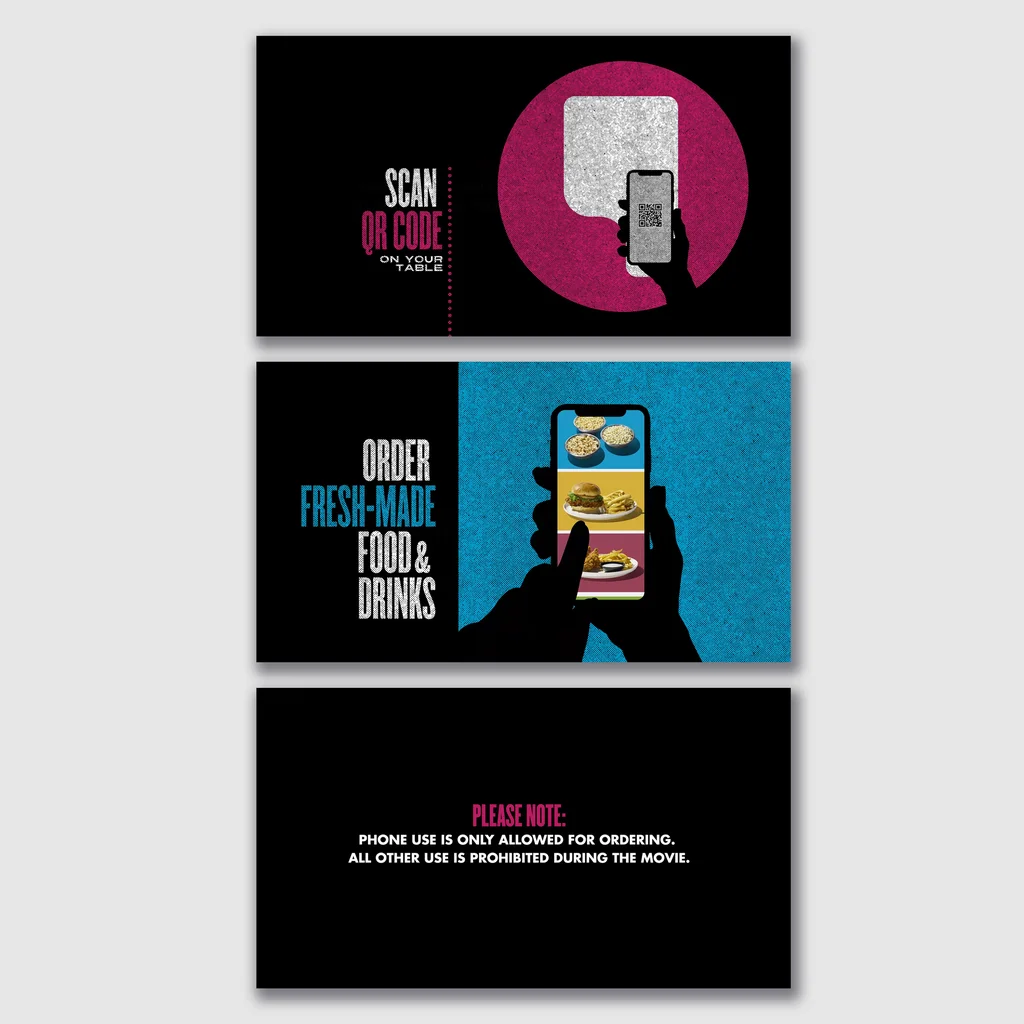
The vocal response was almost entirely negative—and it largely stems from the fact that the Alamo has long established itself as a distraction-free movie viewing space with its “Don’t Talk” marketing campaign. To many loyal fans, the Alamo was one of the last bastions of the phoneless world, and this new mobile ordering system represented the downfall of that ethos for a corporate check.
Alamo Drafthouse’s executive leadership sees things differently. Multiple sources told Fast Company that, in many ways, Alamo’s previous operational design was broken—causing more interruptions for guests and more work for employees behind the scenes. The results of the new mobile ordering system, they say, simply don’t match up with the backlash: Alamo is having its best year for box office revenue since 2019, employees are netting higher take-home pay on average, and guests are placing more in-theater orders than ever before.
“Alamo Drafthouse has always been focused on delivering the best moviegoing experience possible,” CEO Michael Kustermann says. “Technology has evolved, and we want to embrace the ability to evolve with it if it improves the cinematic experience. We believe it does.”
What’s happened
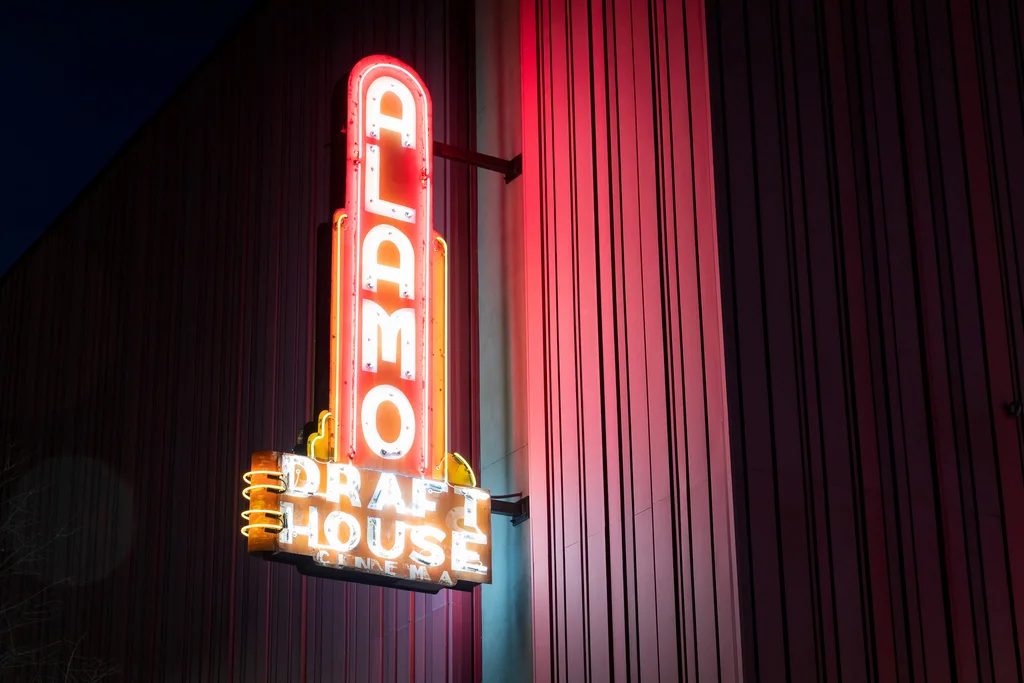
Alamo Drafthouse began in 1997 in Austin as the brainchild of Tim and Karrie League, a husband and wife team. The initial location showed specialty programming not available at other theaters, hosted themed events, reunion screenings, and director retrospectives, and served a limited in-house menu. Since then, Alamo has grown into an enterprise with around 40 locations nationwide, and it was acquired by Sony Pictures Entertainment in 2024 for an estimated $200 million.
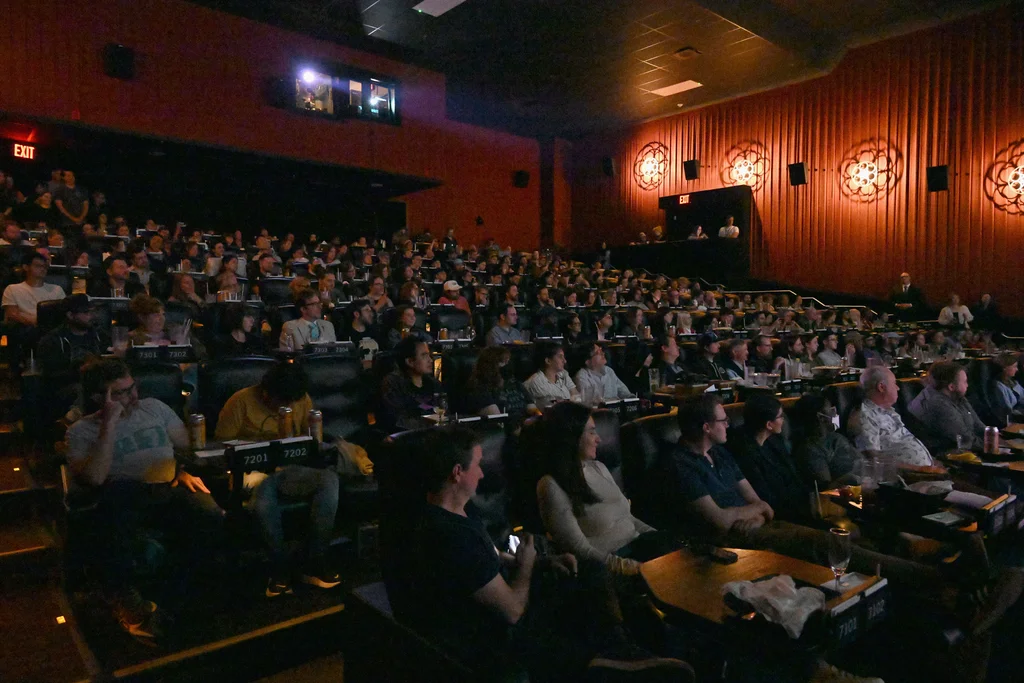
Today, the brand programs more films than any other circuit every year, still hosts events, and serves food and drinks (though now with a much more expansive menu). And, until recently, Alamo relied on a purely analog system to take customers’ orders. Viewers would look at physical menus placed at their seats, write their orders on a slip of paper, and use a call button to let employees know that their order was ready to be collected. At the end of the night, receipts were doled out by waiters and payment was collected from the aisles.
Behind the scenes, though, Alamo had been working on a new mobile ordering system for years—one that uses a scannable QR code menu and digital ordering interface rather than pens, papers, and call buttons. The new system officially rolled out in February, and is now the standard across the company’s locations.
Why Alamo Drafthouse is in hot water with fans
It’s not difficult to see why Alamo’s new mobile ordering policy has ruffled so many feathers, considering how staunch the brand has been about preventing viewers from using their phones in the past.
From its second month of operation to the present, the chain has invested in hundreds of “Don’t Talk” public service announcements (PSAs) informing viewers of its no talking or texting policy, assuring them that violators would be permanently banned from theaters. The people delivering the message varied—from Jamie Lee Curtis to Ryan Coogler—but the takeaway remained the same: Do not, under any circumstances, take your phone out during a movie.
To be clear, phones were never actually banned in Alamo locations—in fact, it’s been standard protocol at many locations for years for guests to show waiters their digital tickets from their seats. Still, Alamo’s decades-long “Don’t Talk” campaign has undoubtedly caused guests to view Alamo theaters as phone-free spaces—and, for many fans, that meant that the new ordering system felt like a betrayal.
One statement on the matter from the Austin Film Critics Association reads, “‘Don’t talk. Don’t text’ has been the Drafthouse’s mission statement since its earliest days as a single-screen cinema in Austin. Its growth into a national cinematic institution has been in no small part due to audiences knowing they can have a disturbance-free experience, and that staff will intervene to prevent the distraction of cellphone usage.”
That sentiment is echoed by dozens of posts on the Alamo subreddit, many of which express a belief that the change reflects a broader loss of Alamo’s identity after its Sony acquisition. Under a post titled “Never coming back,” one commenter wrote, “Any business that’s remotely good in this capitalist hellscape will inevitably be bought up and ruined by one of 5 insatiable conglomerates (sorry ‘investment firms’ via the conglomerates they control) or else gradually succumb to enshittification on its own due to the endless compounding factors that are killing third spaces.”
In online discussion forums, horror stories about the rollout of the mobile ordering system abound. Alamo has said that it’s listening to feedback and working on some minor updates to the interface, like fixing bugs, updating the text message reminding guests to close their tab, increasing font size, and reordering the navigation.
Broadly, though, sources at the company tell Fast Company that the online backlash against the new policy stands in stark contrast to in-theater results.
Why Alamo scrapped pen and paper
As Alamo’s new mobile ordering system has rolled out, it seems as if the old pen-and-paper ordering system is being viewed through rose-colored glasses—when, in fact, that system came with its own host of problems. According to an Alamo spokesperson, the company has received complaints from fans for years about the design of its food delivery system.
To start, analog ordering meant that, any time a viewer pressed their call button for refills, silverware, napkins, or a dessert course, an employee would need to return to the theater and walk through the aisles in front of other guests to collect their paper. In order to apply add-ons like season pass discounts or loyalty rewards, guests would need to talk directly to a concierge or waiter. Then, during the third act of the film, employees had to print out and organize physical receipts for every seat and complete each transaction face-to-face—a process that often landed during the movie’s climax.
“We’ve always innovated as much as we could around the paper, pen, and server model,” the spokesperson told Fast Company. “Our teams had to invent really complex and very manual order management systems—literally sorting paper—to balance their own capacity. They’d also have to do a last call check-in three-quarters of the way through the movie, and then a check drop often close to the climax—two distractions that guests didn’t love. Technology has enabled us to substantially improve the system to limit disruptions and increase operational efficiencies.”
The new mobile ordering system is built to reduce the number of times that employees need to walk in front of guests during films as well as eliminate time-consuming receipt-printing processes behind the scenes. Now, employees are able to see all orders digitally and drop off refills and silverware in one stop, rather than making repeated runs through the theater to collect paper orders and again to deliver the items. Eventually, the spokesperson adds, guests will also be able to save favorite orders, order ahead, and schedule items throughout the film to better pace their experience.
While some fans have raised concerns about how this new system might impact employees (especially after Sony’s 2024 acquisition led to a wave of layoffs), Alamo says that it hasn’t laid off any employees due to the QR rollout, and hourly workers are retaining their base wages. In fact, the spokesperson says that the system has allowed employees to manage high volumes of attendees more efficiently, contributing to higher average hourly take-home pay for the majority of workers.
And, despite the online backlash, mobile ordering doesn’t seem to have dented Alamo’s business results. Subscribers to Alamo’s season pass have jumped, and food and beverage orders are up since the new system rolled out. The spokesperson says any claims about guests constantly pulling out their phones during films are hyperbolic. The company’s data shows that 85% of orders are placed before the movie, and only 15% come during the run time.
Kustermann stresses that, ultimately, food and drink ordering is only one small part of Alamo’s business. He’s focused on maintaining the brand’s other core pillars—like its diverse film line-up, custom ad-free preshow, screening events, and annual festival—and, for those reasons, he says, “We need Alamo Drafthouse to be strong in an industry filled with volatility.”
It’s clear that mobile ordering has taken a toll on some fans’ perception of Alamo’s brand—but, ultimately, it might just be the right choice for the brand operationally.
“We believe it’s worth it because it makes our business model more sustainable, puts more money in the pockets of our hardworking hourly venue team members, and can create less distraction for our guests,” Kustermann says.
