

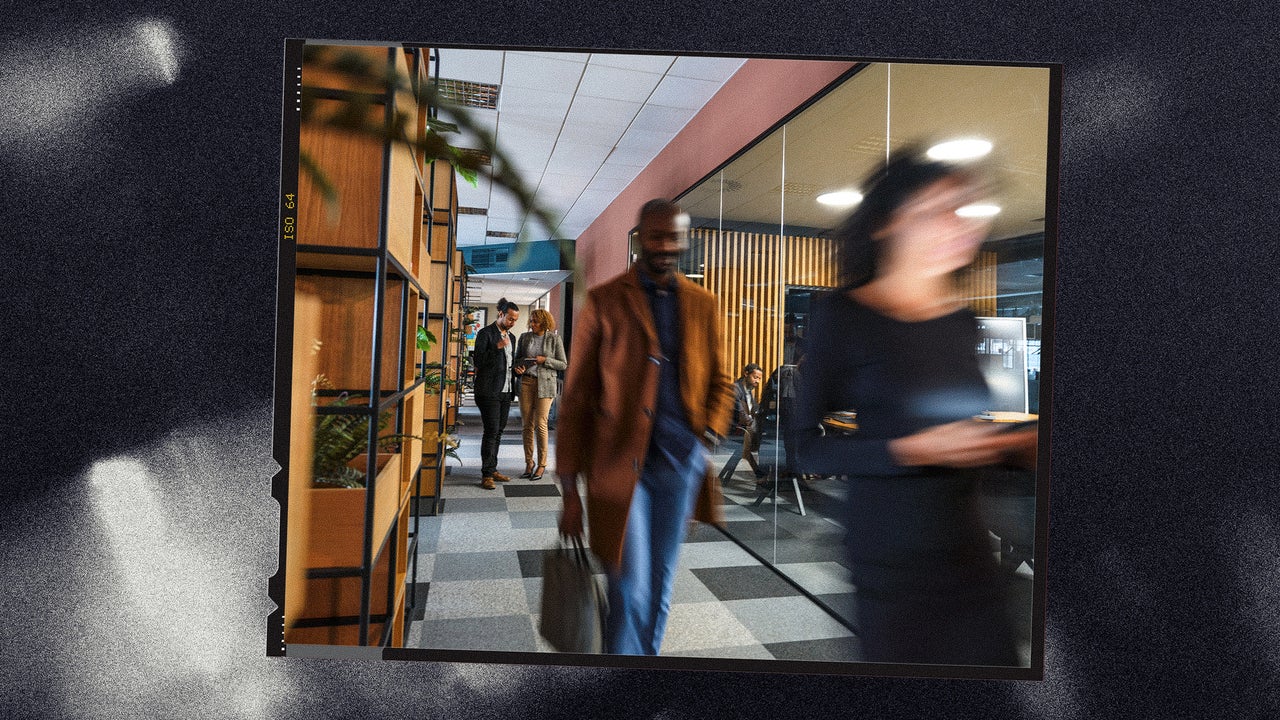
In the past few years, job listings have increasingly touted remote or partially remote work alongside other perks like gym memberships and childcare benefits. The assumption is baked in: employees prefer remote work. It implies that companies that care about employee well-being give them the freedom to work from home.
But the tide is shifting. I heard a term recently that made me chuckle: FOMOW. Fear of missing out at work. Professionals, and Gen Z in particular, are feeling the drawbacks of not going to the office. Nearly half of Gen Z and 30% of millennials reported that office working increased their quality of life, according to one study.
As a business owner, I’ve seen the benefits of working in the office, beyond quality of life—for learning, collaboration, and more. What’s more, it’s an investment in our employees’ careers and growth.
The leaders getting in-office work right aren’t just reopening offices—they’re rethinking what those offices are for and how to frame policies for employees. Here’s how.
Shifting the narrative from mandate to value proposition
The pandemic spurred a global proliferation of remote work, but by 2024, a survey of 764 companies that were fully remote during the pandemic found that 87% were returning to the office by 2025: 64% already had. Nowadays, some companies compromise with a 60% in-office policy, and others wait to see how top talent navigates the market—whether they’re willing to accept fully in-office roles. Essentially, companies follow employees’ lead.
But I think this does a disservice to professionals. It treats working in the office as a punishment rather than a value proposition.
The most effective return-to-office strategies flip the script. They position the workplace as a high-value environment employees can and should choose to engage with, not one they’re required to endure. They frame working in the office as a perk rather than a mandate.
The narrative surrounding your company’s return-to-office policy can have a powerful effect on employees’ perspectives. The most successful companies emphasize the value for employees and their growth.
The question becomes: How can companies make that value tangible? Companies that have successfully navigated the transition don’t simply tell workers to come back—they articulate what employees gain from being there.
Rebuilding the invisible infrastructure of work
Thanks to research published in Nature Human Behaviour, we know that remote work tends to hurt collaboration and connection—employees were less likely to collaborate in groups than when they were in the office. Remote workers became more siloed. They exchanged less information. The researchers concluded that the long-term implications were decreased productivity and innovation among information workers.
It makes sense. Communication simply isn’t as fluid when it must be scheduled via a Zoom call or Google Meet. Spontaneous interactions, informal mentorship, and meaningful yet casual trust-building moments slip away when work is fully remote. But they can boomerang back by returning to the office.
Leaders who want to bring employees back with enthusiasm can reimagine offices as hubs for collaboration, creativity, and effective decision-making—and make those benefits crystal clear.
Take this statement from Dell CEO Michael Dell:
“What we’re finding is that for all the technology in the world, nothing is faster than the speed of human interaction. A 30-second conversation can replace an email back-and-forth that goes on for hours or even days.”
Or this note in a staff email from Microsoft HR leader Amy Coleman:
“If you reflect on our history, the most meaningful breakthroughs happen when we build on each other’s ideas together, in real time.”
Outline the benefits that matter to your organization, and it will draw talent that cares about the same.
Making in-person time intentional
While the interpersonal connections that occur at the office are essential to an engaged workforce, the value of focused, individual work can’t be given short shrift. It matters just as much.
The most effective leaders don’t treat office attendance as a blanket requirement. Instead, they define what in-person time is for—sharing ideas and information, and building relationships. One way to reinforce that message is by designating shared spaces for tasks that require collaboration, such as brainstorming, planning sessions, onboarding, and high-stakes decision-making.
At Jotform, for example, our cross-functional teams have shared workspaces with whiteboards, big desks, space to stretch out, and doors that close. But we also have designated areas for individual work, where employees can shut out the noise, literal and figurative, and focus on tasks that demand quiet, independent thinking.
Building a workplace that encourages collaboration while giving employees the autonomy to carve out time for individual work strikes the balance that makes the office a comfortable, effective, and productive place to work.
The office is no longer the default setting for work. Instead, it is a deliberate tool that supports both work that benefits from being together and tasks that demand being alone.
