
Close Menu
    What's Hot

    Sudan says China has waived $50m loan: What’s in it for Khartoum, Beijing? | Debt News

    France Recorded 1,000 Excess Deaths During Heat Wave, Officials Say

    Andy Burnham, the UK’s Likely Next Prime Minister, Promises Shift of Power Out of London

    Facebook X (Twitter) Instagram
    Trending
    • Sudan says China has waived $50m loan: What’s in it for Khartoum, Beijing? | Debt News
    • France Recorded 1,000 Excess Deaths During Heat Wave, Officials Say
    • Andy Burnham, the UK’s Likely Next Prime Minister, Promises Shift of Power Out of London
    • Pocket raises $11M in bet on rising demand for AI note-taking devices
    • Could Comcast and NBCUniversal Do Deals After They Break Up?
    • AI wakes up the sleepy US power sector
    • SpaceX is joining the Nasdaq-100 index: Timeline, date, impact on QQQ, 401(k) plans, and more
    • Opinion | Why Was Keir Starmer So Disastrously Ineffective?
    interluknewsinterluknews
    • Home
    • Business
      • Corporate News
      • Industry Insights
      • Startups & Entrepreneurship
      • Technology & Innovation
    • Economy
      • Economic Policy
      • Financial Analysis
      • Inflation & Interest Rates
      • Trade & Markets
    • Global
      • Conflicts & Security
      • Diplomacy
      • Global Trends
      • International Affairs
    • Lifestyle
      • Fashion
      • Food & Dining
      • Personal Development
      • Travel
    • Opinion
      • Columns
      • Editorials
      • Expert Opinions
      • Reader Voices
    • More
      • Politics
        • Elections
        • Government & Policy
        • International Relations
        • Political Analysis
      • Sports
        • Cricket
        • Football / Soccer
        • International Sports
        • Local Sports
      • Technology
        • Artificial Intelligence
        • Cybersecurity
        • Gadgets & Reviews
        • Tech News
      • South Africa News
    Facebook X (Twitter) Instagram
    interluknewsinterluknews
    Expert Opinions

    The Right Way to Tackle Developing Countries’ Cancer Crisis by Thompson Ayodele

    adminBy adminJune 29, 2026No Comments5 Mins Read
    Share Facebook Twitter Pinterest Copy Link Telegram LinkedIn Tumblr Email
    The Right Way to Tackle Developing Countries’ Cancer Crisis by Thompson Ayodele
    Share
    Facebook Twitter LinkedIn Pinterest Email


    Some health advocates believe that weakening intellectual-property protections and capping prices for the most advanced cancer treatments would expand access in developing countries. But this well-intentioned argument overlooks an inescapable reality: without strong incentives for innovation, such treatments would not exist.

    LAGOS—In Nigeria, a cancer diagnosis is often a death sentence. Nearly 130,000 Nigerians receive one each year, and nearly 80,000 die of the disease. An average of 33 women per day in Nigeria are infected with cervical cancer, and 22 women per day die from it. The problem is not that interventions do not exist, but that Nigerians—and developing-economy patients more broadly—lack access to them.


    1. British Prime Minister Keir Starmer standing in a formal government setting, looking ahead with a serious expression during an official engagement, with aides and institutional surroundings in the background.


      Isabel Infantes/Pool via Getty Images


      Reversing Brexit Is Labour’s Best Hope

      Anatole Kaletsky
      sees a compelling political and economic case to be made for re-engaging with the European Union.


    2. Ukrainian soldier with an autonomous drone.


      Diego Fedele/Getty Images


      The Strategic Logic of the AI Arms Race

      Charles Ferguson

      Ukraine has become the world’s most important laboratory for AI-powered warfare, demonstrating how drones, software, and battlefield data are redefining strategic advantage. Its success shows how quickly the balance of power can shift toward countries that innovate and adapt to autonomous hard power.

      says that Iran and Ukraine herald an era in which autonomous weapons determine how wars are fought and won.


    3. A protester holding an anti-AI placard outside OpenAI offices in King’s Cross, London, during a march against unregulated artificial intelligence and data centres.


      Vuk Valcic/SOPA Images/LightRocket via Getty Images


      Will AI Yield Abundance Without Purpose?

      Carl Benedikt Frey
      explains why the technology poses a three-pronged threat to the sources of human meaning.


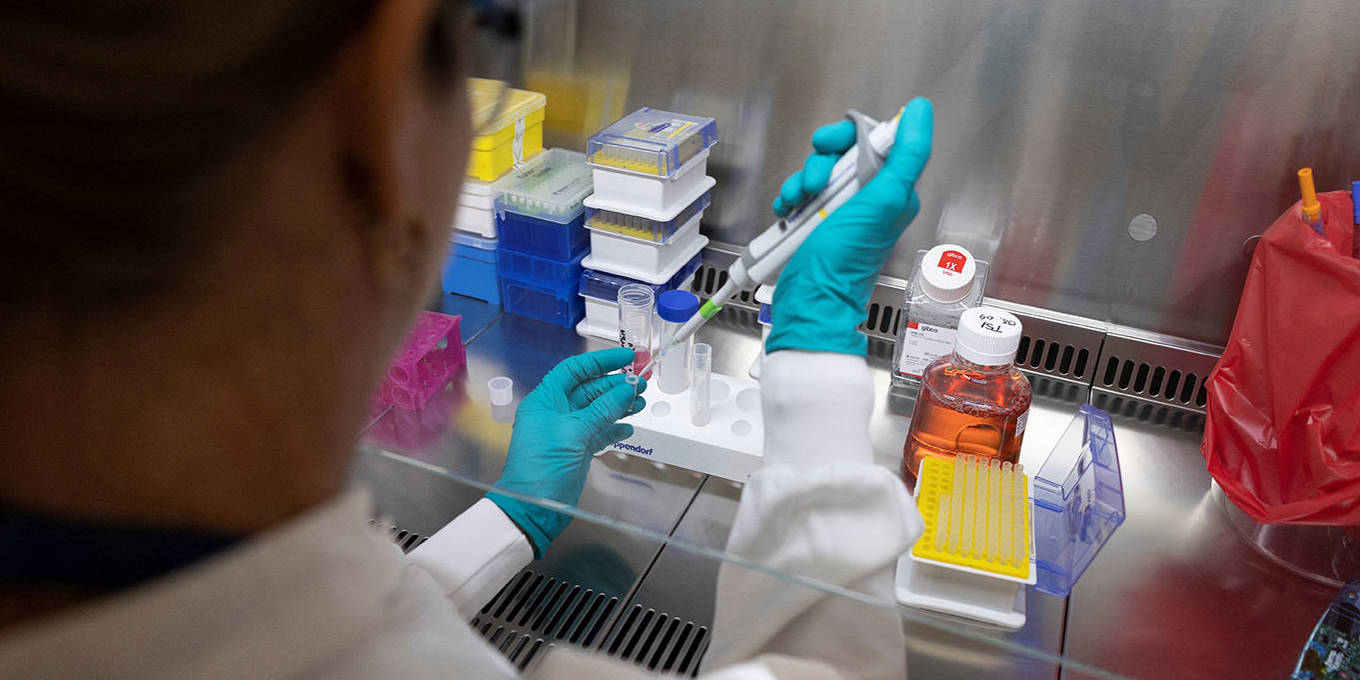
    Breakthroughs in cancer treatment, especially immunotherapy, have drastically reduced the disease’s mortality in recent decades. A mere generation ago, the idea that the immune system could be trained to fight cancer sounded like science fiction. Today, it represents the most promising front in cancer research, with more than 30 immunotherapies, treating 25 different forms of cancer, now approved by the US Food and Drug Administration.

    The results speak for themselves. Patients with advanced melanoma were once expected to survive a mere 16 weeks. But, thanks to immunotherapy, they now have a one in three chance of living a decade or longer. Likewise, for some lung cancer patients, prognoses that were once measured in months are now measured in years.

    But Nigerian patients rarely have access to immunotherapies or other innovative treatments. Even at major hospitals in Lagos and Abuja, doctors routinely find themselves unable to prescribe what they know could help their patients. So, while cancer patients in rich countries live longer than ever, Nigerians—like patients in many developing countries—continue to die.

    Some believe that the best way to close this gap is to weaken intellectual-property protections for medical innovations and force drugmakers to give away their treatments at little or no cost. They argue that patent rules and high prices create unfair barriers to health care. But this well-intentioned argument overlooks an inescapable reality: without strong incentives for innovation, advanced treatments like immunotherapy would not exist at all.

    The development of new cancer therapies requires immense investment and carries staggering risk. Since most new prospective drugs never succeed, the few that do must make up for the costs of the failures. Nigeria, like many developing countries, does not yet have the economic or scientific infrastructure required to develop its own cancer breakthroughs at scale, so it remains dependent on discoveries made in countries like the United States. If we dismantle the system that rewards their innovative activities in the name of faster access, progress will slow, and future patients in rich and poor countries alike will suffer as a result.

    Patents expire, and when they do, low-cost generic versions emerge. In the meantime, several pharmaceutical companies and NGOs have launched initiatives designed to expand access to medicines in developing countries. The system might not be perfect, but at least it allows the breakthroughs to keep coming.

    In any case, the biggest barriers to access to accurate cancer diagnosis and effective treatment in developing countries are not patents at all, but regulatory delays, weak health-care infrastructure, and poverty. Instead of attempting to dismantle incentives for innovation, governments should work on reducing bureaucratic red tape, speeding up approvals for imported medicines, and expanding health-care infrastructure and capacity, which is in particularly short supply in rural areas.

    Policymakers should also take action to improve overall living standards. Expanding trade and liberalizing markets are among the most effective ways for developing countries to boost economic growth and dynamism. Faster growth, in turn, would enable higher investment in infrastructure and health care, while creating job opportunities that increase household incomes.

    When lifesaving medicines are out of reach, calls for quick solutions are understandable. But a short-sighted approach risks turning today’s tragedy into tomorrow’s catastrophe. Weakening the incentives that underpin medical innovation will slow the pace of progress. And it is progress that is essential to prevent a cancer diagnosis from becoming a death sentence.

    Ayodele cancer countries crisis developing Tackle Thompson
    Follow on Google News Follow on Flipboard
    Share. Facebook Twitter Pinterest LinkedIn Tumblr Email Copy Link
    Previous ArticleFor These Teens in Mexico, Soccer Is Life. Now, the Cartels Want In.
    Next Article Here’s What 250 Years of Fashion in America Looks Like
    admin
    • Website

    Related Posts

    Opinion | Parents Can’t Give Their Kids Everything. Siblings Can Help.

    June 29, 2026

    Enforce AI Guardrails Before It’s Too Late by Gabriela Ramos & Emilija Stojmenova Duh

    June 29, 2026

    China Emerges as a Relative Winner From Strait of Hormuz Crisis

    June 29, 2026
    Leave A Reply Cancel Reply

    Demo
    Latest Posts

    Sudan says China has waived $50m loan: What’s in it for Khartoum, Beijing? | Debt News

    France Recorded 1,000 Excess Deaths During Heat Wave, Officials Say

    Andy Burnham, the UK’s Likely Next Prime Minister, Promises Shift of Power Out of London

    Pocket raises $11M in bet on rising demand for AI note-taking devices

    Latest Posts

    Subscribe to News

    Get the latest sports news from NewsSite about world, sports and politics.

    Advertisement
    Demo

    We are a digital news platform delivering timely, accurate, and insightful coverage of politics, global affairs, business, economy, sports, and more. Our mission is to keep readers informed with reliable news, clear analysis, and stories that truly matter.
    We're social. Connect with us:

    Facebook X (Twitter) Instagram Pinterest YouTube

    Subscribe to Updates

    Get the latest creative news from FooBar about art, design and business.

    Type above and press Enter to search. Press Esc to cancel.

    Powered by
    ...
    ►
    Necessary cookies enable essential site features like secure log-ins and consent preference adjustments. They do not store personal data.
    None
    ►
    Functional cookies support features like content sharing on social media, collecting feedback, and enabling third-party tools.
    None
    ►
    Analytical cookies track visitor interactions, providing insights on metrics like visitor count, bounce rate, and traffic sources.
    None
    ►
    Advertisement cookies deliver personalized ads based on your previous visits and analyze the effectiveness of ad campaigns.
    None
    ►
    Unclassified cookies are cookies that we are in the process of classifying, together with the providers of individual cookies.
    None
    Powered by