

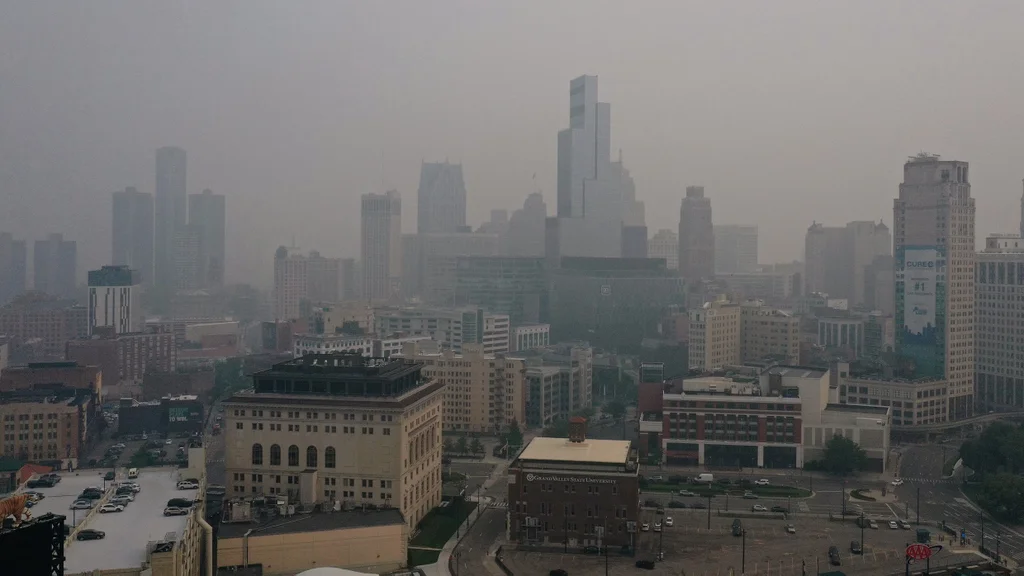
As hundreds of wildfires burn in Canada, smoke is drifting across the United States, worsening the air quality in cities from Detroit to New York.
It’s a stark example of how climate change is affecting us all, even if we live far from where fire, floods, and other disasters are most common—and yet another rebuke of the idea that there are any true “climate havens.”
‘There’s no escaping’ climate impacts
The upper Midwest, including cities like Detroit; Duluth, Minnesota; and Buffalo, New York, has been called a climate safe haven. The Great Lakes region has abundant freshwater and typically provides a more temperate climate, which buffers it from some climate impacts.
One 2021 book even named Michigan the best place to live by 2050 because of climate change.
But this week, those areas weren’t immune from those wildfires, which have been exacerbated by climate change and our continual burning of fossil fuels.
Duluth saw an “all-time record” for hazardous air quality as Canadian wildfire smoke cloaked the city in haze.
Some areas of Michigan saw Air Quality Index (AQI) levels near 1,000; a measurement of 300 or higher is considered “hazardous,” with everyone likely to be affected by the health impacts of that bad air.
“There’s no escaping it,” Jesse M. Keenan, director of Tulane University’s Center on Climate Change and Urbanism, says of climate change.
In Keenan’s book North: The Future of Post-Climate America, he works to dispel this mythology of climate havens. “There is no such thing as a climate haven,” he writes, “there are merely better and worse places to live.”
Those worse experiences, even in the better places, are becoming more frequent thanks to climate change. Keenan says his family decided not to go on a usual trip to Minnesota this summer because smoke from Canadian wildfires was so strong last year, as well.

Smoke exposure is life-threatening
Wildfire smoke can reach far beyond its origins, and even when that smoke drifts to other areas, it’s dangerous.
Wildfire smoke is full of PM2.5, ultra-tiny particles of pollution that can get into our lungs and bloodstream, worsening asthma and other lung conditions and even increasing the risk of heart attacks, strokes, and premature deaths.
Smoky days have been linked to an increase in medical visits, just as days of extreme heat have.
“We’ve moved from a situation where smoke has been a kind of summertime nuisance to a broader recognition that smoke exposure can be truly life-threatening,” Keenan says. “That’s a shift that has slowly accelerated in the past several years.”
While there are parts of the country, like Oklahoma, that historically haven’t gotten much wildfire smoke exposure thanks to how the atmosphere operates, more and more people are being affected by this climate impact.
Smoke from wildfires in Canada and the Mountain West of the United States impact the most populated parts of our country, he notes. With these current fires, cities like New York, Philadelphia, Boston, and Washington, D.C., have all been affected, and they encapsulate the highest population density in the country.
“You really can’t escape these kinds of smoke events,” he says.
Heat, home insurance, diseases: other broad climate impacts
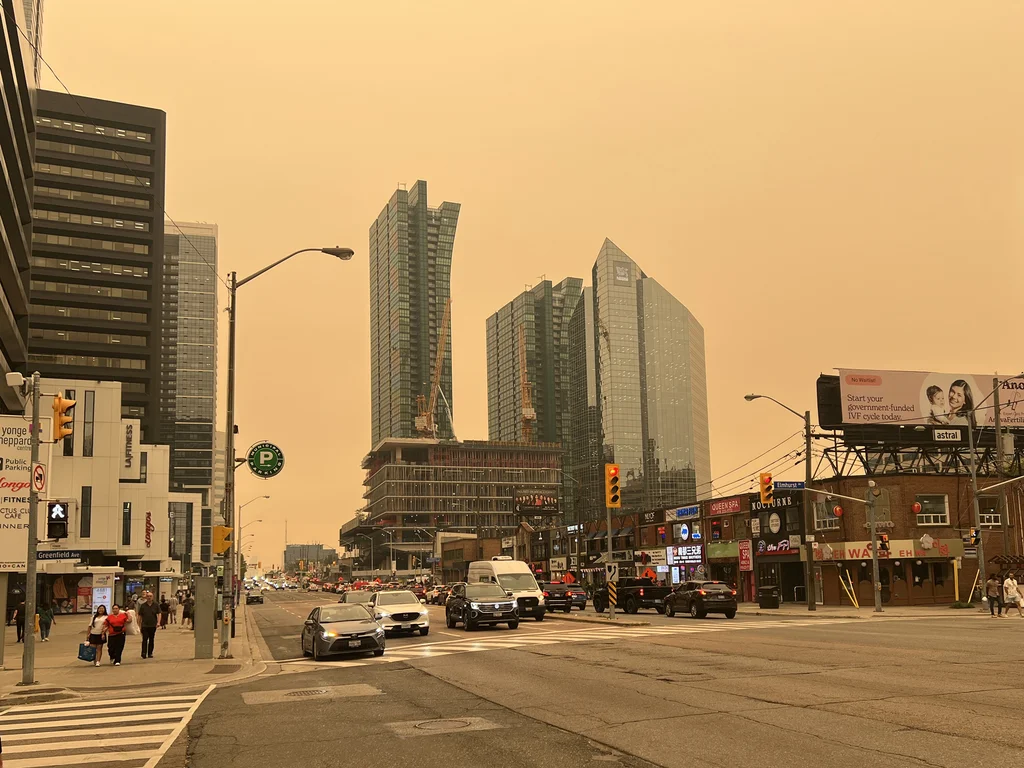
As smoke turned skies hazy across the Midwest and Northeast, people online fretted over whether to send their children to summer camp or go outdoors at all.
Climate scientist Katharine Hayhoe is in Ontario, where many of the fires are actively burning, and says she has been “blanketed in thick smoke and orange skies for several days,” and has had to keep inside with her windows shut and AC off.
“It’s wishful thinking to imagine that climate havens exist,” she says.
She still hears that Canada, as such a cold place, won’t be as affected by global warming. In reality, “the further north you are, the faster your local conditions are warming,” she says.
Many areas of the country have been experiencing extreme heat simultaneously with wildfire smoke, which exacerbates the effects of the smoke, keeping pollution closer to the ground.
And aside from smoke and heat, there are other climate impacts that are spreading to all sorts of places: tick-borne diseases are increasing; home insurance rates are rising for everyone as extreme weather becomes more frequent and intense; rising costs of food.
“Even if our lives and our homes are not directly impacted, we still feel the pain,” she says. “Climate change affects us all, and it’s affecting our day-to-day lives in ways we might not realize but are already very real.”
But there are still climate solutions that can avoid the worst impacts of this fossil fuel-caused global warming, she adds: “Clean energy, efficiency, sustainable agriculture and land management, urban greening to reduce heat and flood risks, and much more: the solutions are all around us.”
