

The casual bikeshare rider in San Francisco could be forgiven for not actually knowing who is behind the service they’re using.
Since 2019, the region’s Bay Wheels program—along with a few dozen other bike share systems around the world—has been run by Lyft. Better known for its rideshare service which helped it make $1.6 billion in revenue in 2025, the company has spent the past decade or so diverging from its main competitor, Uber, by narrowing in on the global bike share market. Now, in the Bay Area, Lyft is making that side of its business more apparent. Starting today, Bay Wheels will be Lyft Bike.
But the rebrand is more than just a prominent surfacing of the Lyft name. It’s also a large-scale redesign of the hardware of the Bay Area’s bikeshare system. With custom-designed pedal and e-bikes, and a charger-ready modular docking station design that can work in San Francisco, New York, London, or Madrid, Lyft is using the Lyft Bike system as a launching pad for what could be a broader takeover of bikeshare systems all over the world.
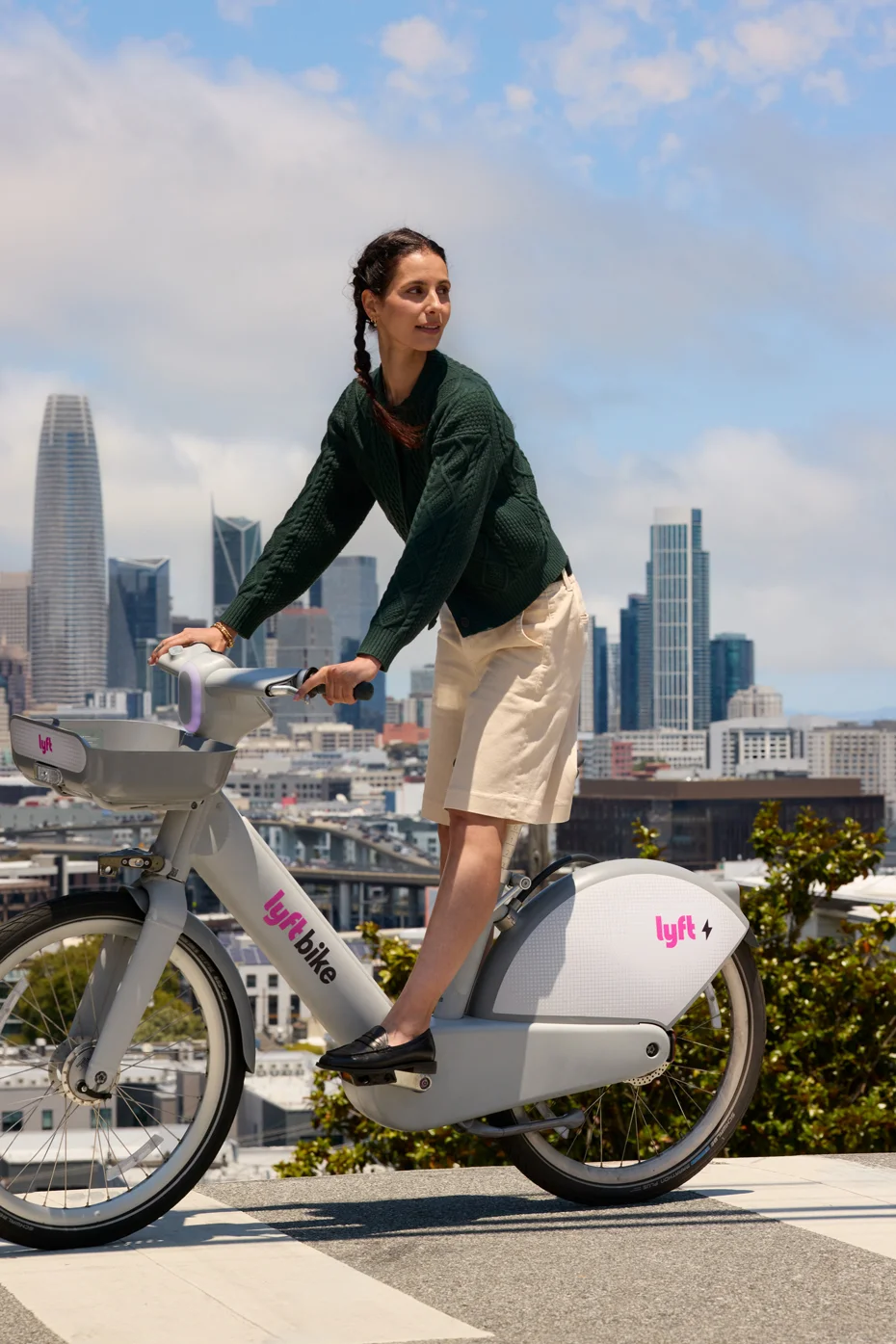
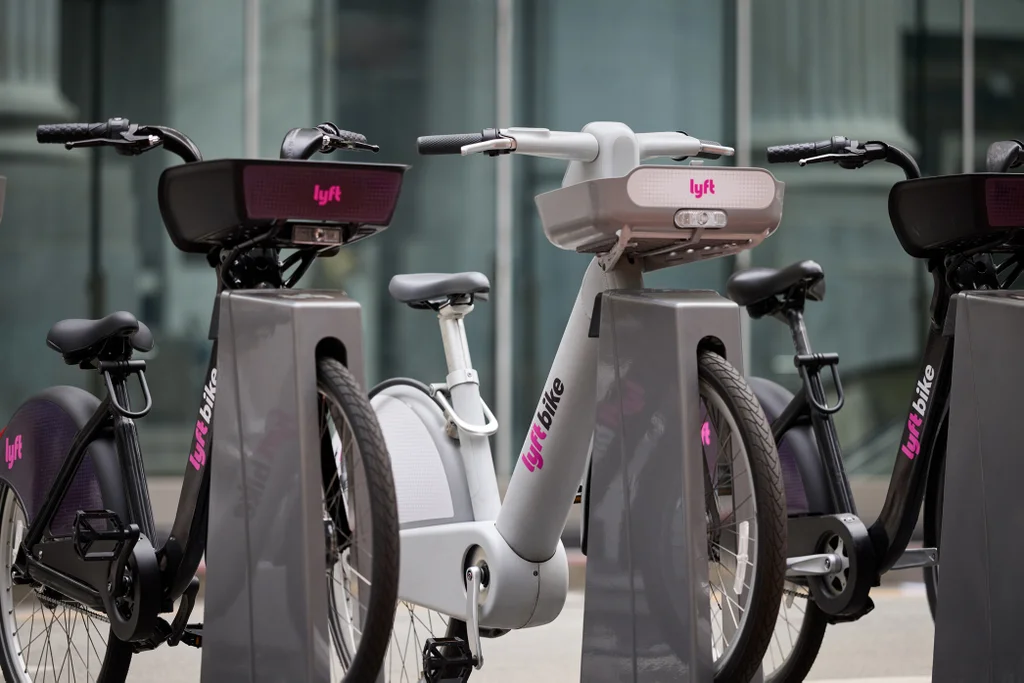
Two newly designed bikes—one pedal driven, the other equipped with an electric assist motor—will spread across the system, which covers five cities and includes more than 6,500 bikes. New docking stations will pop up throughout the network in a modular fashion, enabling anything from a vast multi-dock station at a transit hub to a single dock in a residential area.
All of this has been created in-house by Lyft’s San Francisco-based team of designers and engineers, pulling on experience in consumer electronics, automotive design, software design and manufacturing, as well as Lyft’s years operating Bay Wheels and other systems, like Chicago’s Divvy Bikes, Boston’s Bluebikes, New York’s Citi Bike, and providing hardware and software to systems in Mexico City, London, and Barcelona. It’s also an effort to test out how this hardware might work in those cities and beyond.
“We are piloting a new product in San Francisco that we hope will scale at some point in the future,” says Michael Brous, head of Lyft Urban Solutions, the company’s micromobility arm.
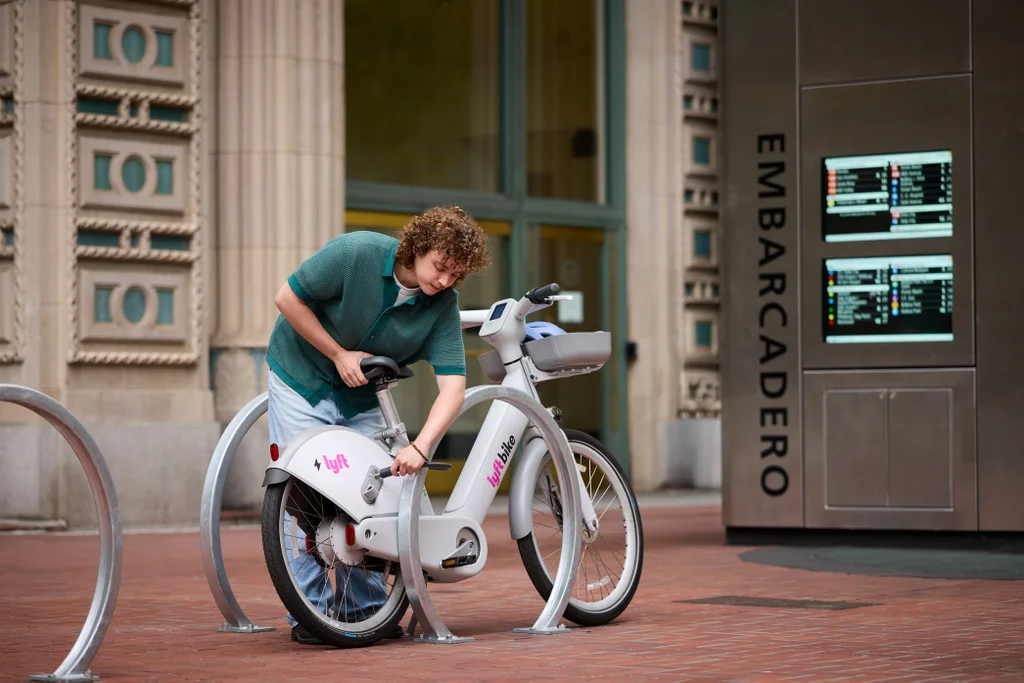
Behind the design of the new Lyft bikes
The new bikes are the third iteration of bikeshare vehicles introduced by Lyft, and the second designed completely in house. The new ebike, named Astro, has a proprietary electric assist drivetrain, compact 24″ wheels, a swappable battery mounted behind the seat post, a custom-made retroreflective powder coating, and a built-in rear wheel lock that can be activated away from a docking station.
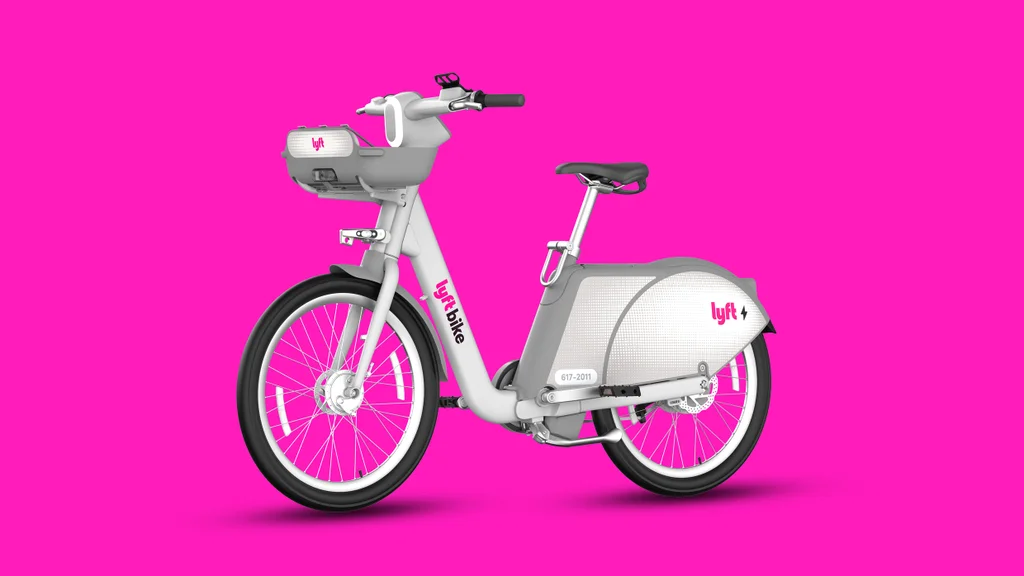
The pedal bike, named Metro, has all the same features as Astro, aside from the electric assist. Both are designed to fit riders between 4’11” and 6′ 4″, and be easily used by both regular bikers and people who haven’t ridden a bike in years. “It’s a very wide demographic of riders. We want it to feel not too techy, not too scary, very approachable to all different types of riders,” says Erik Askin, senior staff product designer at Lyft.
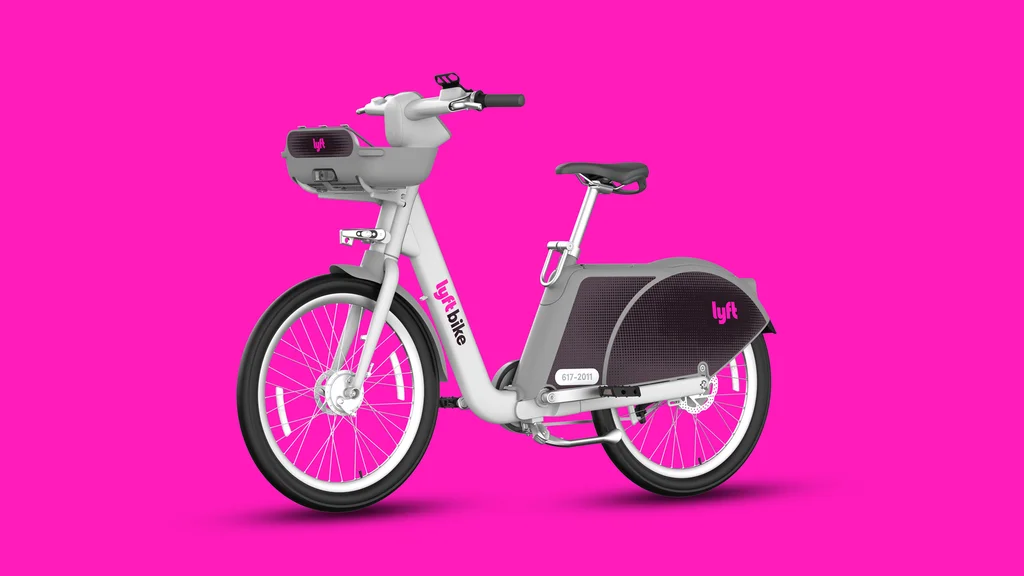
Both bikes were built using the same frame, simplifying manufacturing and maintenance, which adds up for bikeshare systems like the Bay Area’s that can log millions of rides per year. Based on Lyft’s bikeshare experience all over the world, the design team examined how bikeshare bikes survive (or don’t) in the wilds of city streets, from the damage that comes from vandalism and attempted theft to the threat of salt spray on bicycle chains to the thousands of seat stem readjustments the bikes endure. The new bikes have been designed and tested extensively to ensure they can withstand all that nature and human nature can throw at them.
“They’re out there all year long, but they’re also getting used a ton more than any sort of commercial or personal bike,” says Benny Wu, a staff product manager at Lyft. He says the designers and engineers paid careful attention to the high-wear touch points of the bike, like the seat stem, to make sure it could perform through the tens of thousands of adjustments it would undergo.
They also brought in outsiders to try to break the bikes or steal components. Wu shows a video of one of these tests in which a person slams a hammer directly into the bike’s screen, located near the handlebars. “It’s a very physical process of prototyping,” he says. “Having these be reliable, having them available whenever people need them is a huge challenge that we tackle by building things from the ground up.”
Docking stations with an urban impact
The other new part of the Lyft Bike rebrand are the upgraded docking stations. Lyft will be rolling out across the Bay Area’s bikeshare network. Designed as a modular system of bollard and kiosks, the new docking stations can be installed piecemeal instead of in large clusters as they were previously. “Our new stations are more like parking meters,” Askin says. “They’re very easy to deploy. They can be placed in many different configurations that are not bound by a hardwired system.”
Each station is powered by an internal battery and a solar panel, allowing it to operate off-grid. A single station can be placed at an intersection and still function, or a group of stations can be chained together and paired with a kiosk geared toward casual riders. They’re all pre-wired to be able to connect to the grid and offer ebike charging when bikes are docked, which is becoming the norm for bikeshare systems in Europe.

“We’re building all the charging components into both the bollards and the kiosk so we can easily convert stations to charging because we really believe this is the path forward for bikeshare,” Askin says.
That has implications for the bikes themselves, which have been designed for the potential of charging while docked in the station, and for better fitting into the European bikeshare market.
They have small, 24″ wheels, and lighter batteries with shorter ranges, making the bikes lighter and easier to maneuver while relying on their in-dock charging to keep them powered up. Built-in charging would also have the effect of limiting Lyft’s battery swapping, the costly and time-consuming process of driving a van full of batteries around the city and installing them in dead bikes.
This new station design also cements the bollards and kiosks as foundational elements of Lyft’s bikeshare approach—in contrast to the dockless systems that have irked cities by scattering bikes and other vehicles haphazardly on sidewalks and other public spaces.
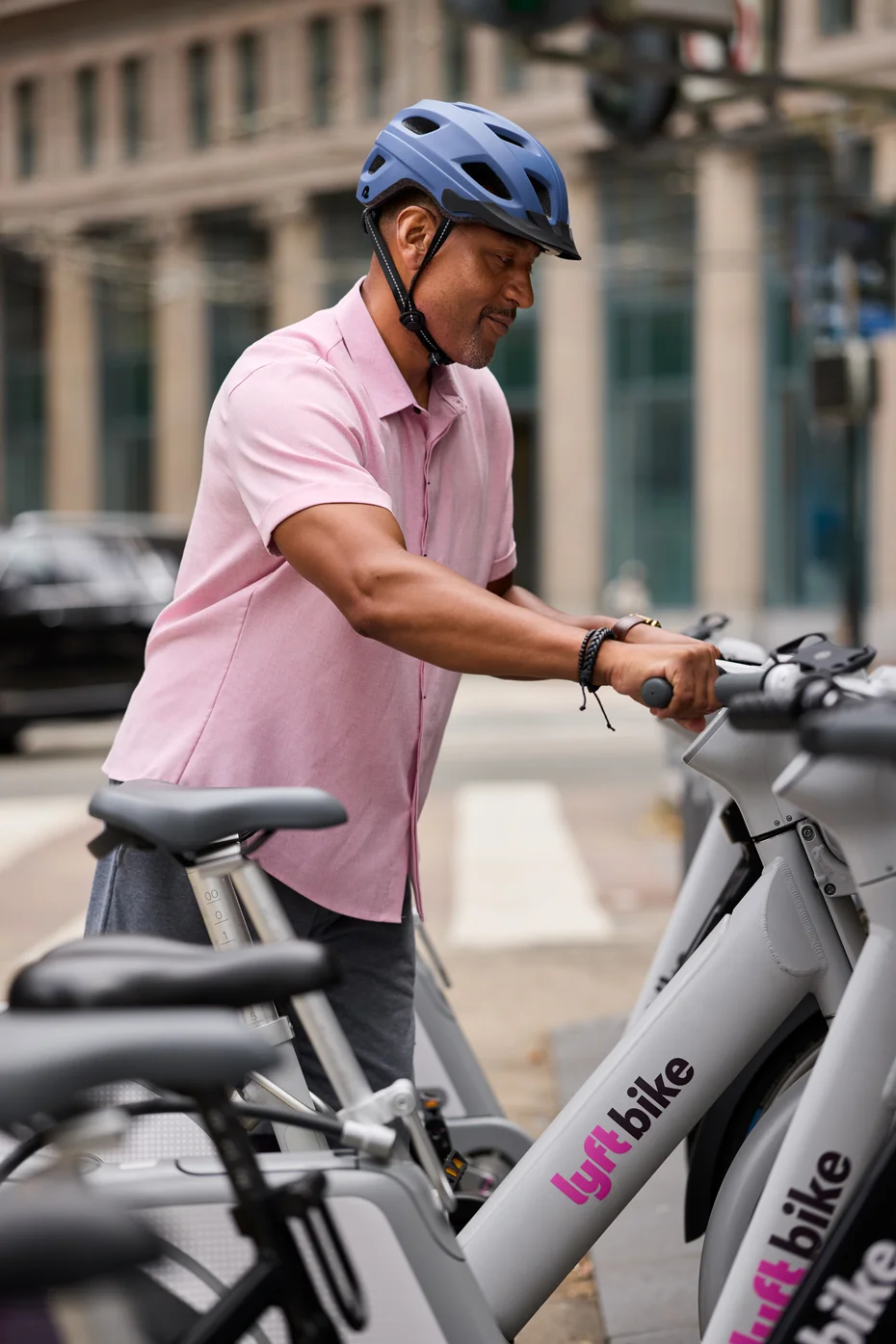
According to Caroline Samponaro, vice president of Lyft Urban Solutions, stations also just make bikeshare better. “The most successful bikeshare programs have an infrastructure component,” she says. “The station itself is this reliable fixture within the network that people can count on.”
The stations can also become tools for helping cities achieve their own city planning goals. Samponaro says that in San Francisco, Lyft has collaborated with local officials to plan out where its docking stations are located as a way of improving sightlines at busy or dangerous intersections.
Placing a few bollard docking stations at each corner of an intersection instead of parked cars creates much more visibility, improving pedestrian safety while also spreading the docking stations beyond a single spot at an intersection. Anonymized trip-level data from GPS devices in each bike can also be used to inform local planning, showing popular routes. “That gives them desire line insights to help support their planning efforts, and also support the community case they’re making to build a bike lane,” Samponaro says.
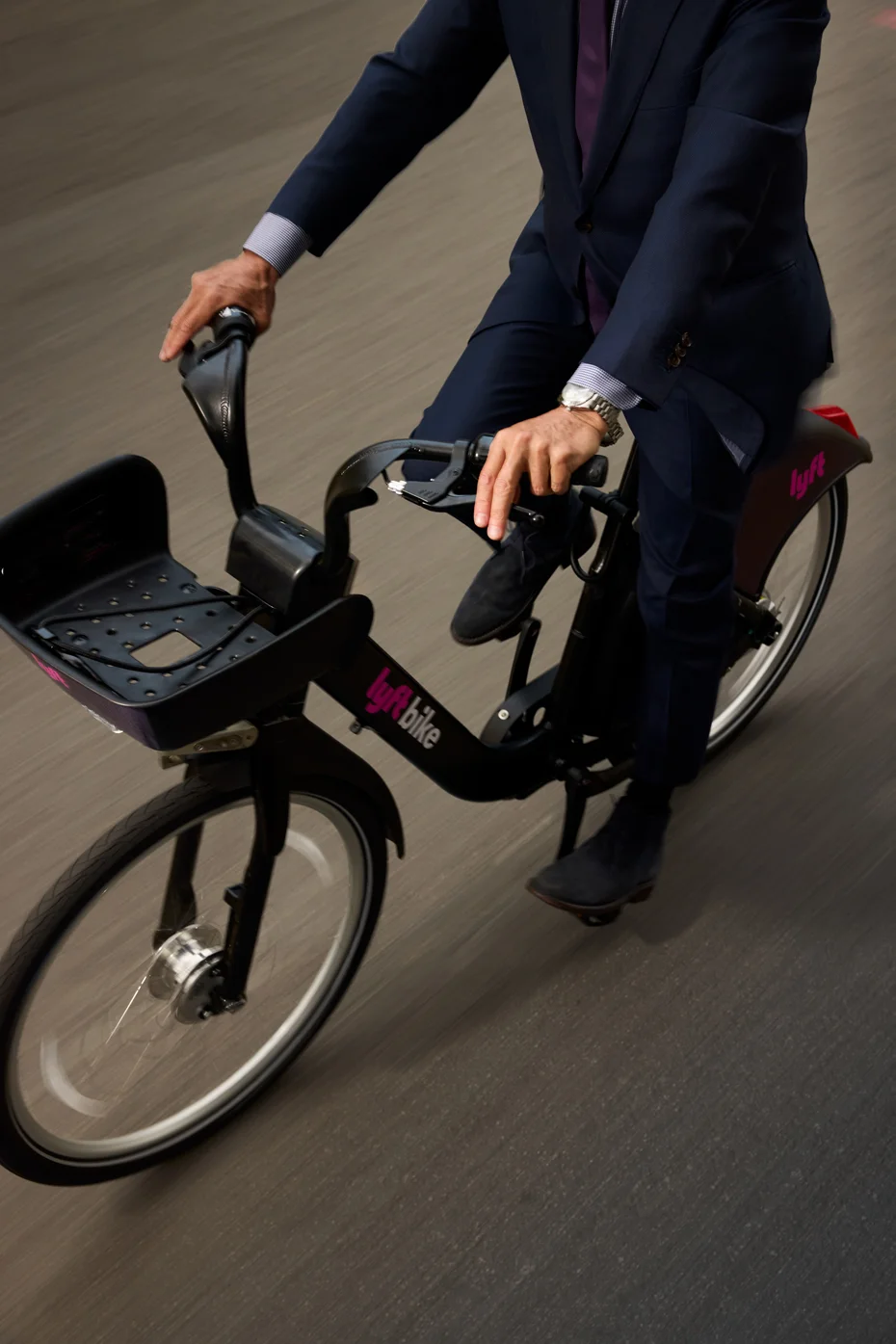
Brous says the design of the new Lyft bikes and stations enable these kinds of benefits for the company’s two main stakeholders: cities and riders. “Controlling the design, controlling the operation, maintaining the relationship with the end customer, whether it’s the rider or the city, we’re able to take all that feedback and quickly build and iterate,” he says. “It allows us to innovate at a faster speed than relying on third party partners.”
It’s also part of the way Lyft is building its case as a premier bikeshare operator, in the U.S. and beyond. The company is hoping to expand on the 55 programs it directly operates or provides hardware and software solutions to, including the recently announced planned acquisition of the Spanish bikeshare operator Serveo.
Brous argues the new Lyft bikes and stations position the company for even further expansion. “This will be a platform that we’re really excited about to take across Europe and help support the overall company’s growth ambitions,” he says. “I think San Francisco is really the first stop along this journey.”
