

When Cherien Dabis entered the doors of Fast Company’s lower Manhattan offices, she was the picture of grace: Willowy and effervescent, she greeted me with the air of an old friend, though we had only connected once before.
Dabis is an acclaimed actress, writer, and producer whose work on shows like Quantico, Ramy, and Ozark, and Mo has landed multiple accolades: Emmy nominations, a Peabody Award, and a Tribeca Film Festival award.
Her identity as a Palestinian-American has long influenced how she approached film, eventually leading her to direct, write, and produce the 2025 drama All That’s Left of You.
Executive produced by Mark Ruffalo and Javier Bardem, the historic drama—which follows the lives of one Palestinian family over 75 years—premiered last year at the Sundance Film Festival.
It was honored at multiple film festivals, including at San Francisco International Film Festival and Sydney Film Festival, and it even made the Oscars consideration shortlist for Best International Feature Film, selected by Jordan, where it was partially filmed.
Despite the recognition, the subject matter was deemed too risky for Hollywood, and Dabis was unable to find a distributor.
To Dabis, it was a familiar kind of rejection: one that hid its reasoning behind corporate jargon when it was really risk-aversion. This left her with one choice: omit parts of the story to create an industry-acceptable version that erases its intent or release it unfiltered in a different way.
She chose the latter and created Visibility Films to self-distribute the movie rather than wait for permission.
Visibility co-released the movie with Watermelon Pictures, another independent film distributor designed to uplift and empower Palestinian and Arab media representation.
Its limited release in North America netted glowing reviews on places like Rotten Tomatoes and RogerEbert.com.
According to Dabis, the crushing reality of what it meant to be Palestinian in the U.S. struck at the height of the Gulf War. She said that negative media representation of Arab Americans bled into real-life hostilities that her family experienced first-hand, with little authentic inclusion of Arabs themselves.
Traditional film distribution models are falling apart, and filmmakers are being pushed toward building direct relationships with audiences.
In a recent conversation with Fast Company, Cherien shared her views on why she thinks the old distribution model is broken, what it takes to build an alternative, and the importance of preserving authentic storytelling in the face of setbacks.
This interview has been edited and condensed for clarity.
Tell us about your film, All That’s Left of You.
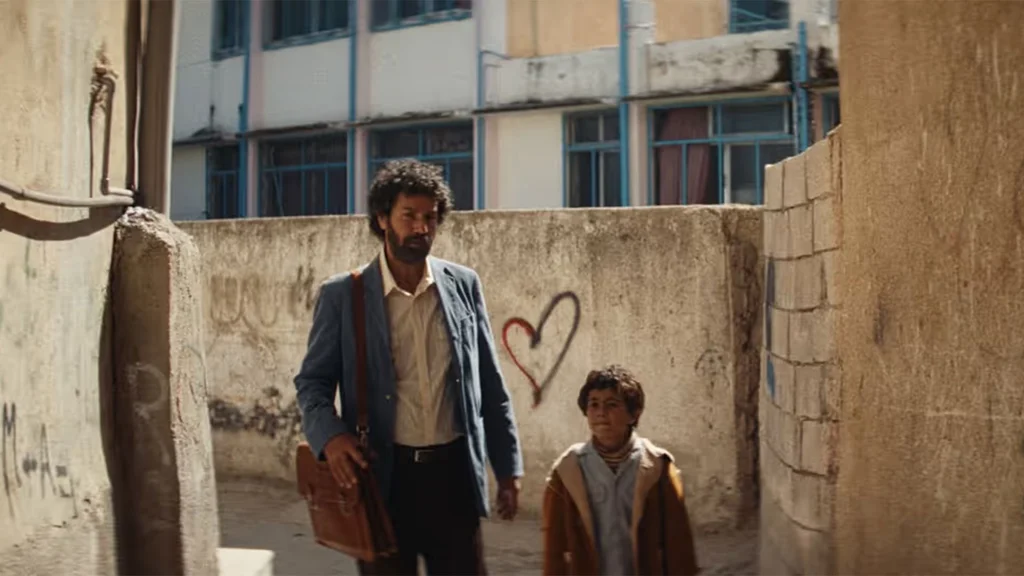
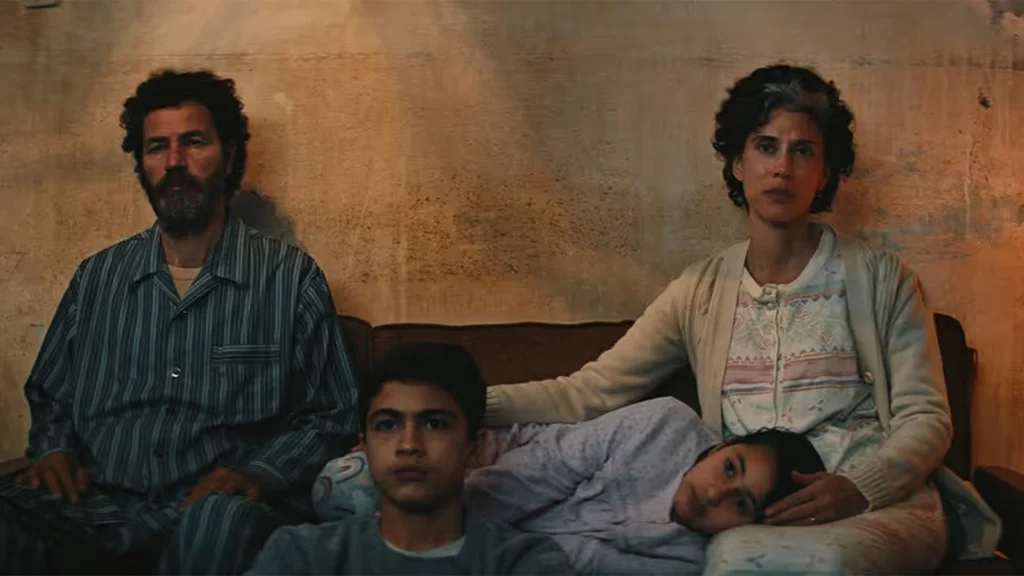
The film is an intergenerational epic that follows one family over nearly 75 years of history and really takes a look at how they survive decades of political turmoil. It’s really through the lens of three generations of men: grandfather, father, and grandson. And in many ways it really traces the passage of trauma from 1948, the Nakba, all the way to nearly the present day.”
No major distributor was willing to pick up your film, in part because they were fearful of the topic. Instead of waiting for permission, you built your own distribution company. Tell us about that.
I did start thinking the industry is contracting. The model is not working. Most filmmakers don’t get major distribution . . . The future really feels like it’s artist-to-audience . . . In fact, the producer, Ted Hope, who’s amazing and a huge champion of this film, said to me recently, ‘We need to be spending as filmmakers, we need to be spending at least 25% of our time actually audience-building now.’
Traditional distribution is just not filmmaker-friendly. It’s not artist-friendly. The last people to see profit are the filmmakers and the producers and the investors who took the biggest risk in the actual production . . . I wanted to just really rethink distribution, and I built the company and co-distributed the film with Watermelon Pictures.”
As a Palestinian American, how has your own family’s history shaped the decision to build Visibility Films?
My dad comes from very humble origins . . . He was educated for free under Nasser in Egypt . . . I really witnessed my dad fulfill the American dream.
I made a really bold choice that broke from tradition, and I was not supposed to make that choice . . . Even my dad said, when I told him I wanted to be a filmmaker, “You can’t be a filmmaker. You’re Palestinian. No one will care what you have to say” . . . I think wanting to start the company really came out of, for me, a need.
I felt like there was a gap in the marketplace. I felt like no one has really explored filmmaker-friendly distribution, and it needs to be artist-centered . . . Here we are putting all of our blood, sweat, and tears into what we create—sometimes literally making films that are our own family’s story—and yet at the end of the day, it’s like we don’t own them, can’t exploit them, can’t make decisions about them . . . When I was confronted with that choice post-Sundance, when I saw what a bleak landscape it was, I didn’t feel like I had a choice.
We hear a lot about getting a seat at the table, but you went ahead and built the table. How do you navigate that tradeoff?
For me, it’s much less risk, because I can hopefully build a business model that makes more sense… This is a distribution company that is about visibility for third culture kids — this is about stories of immigrants and brown people, where we don’t see enough of those films on a wider scale. Those films are really being ghettoized.
The other thing I really want to do with this company is organize us as an audience. Our communities aren’t necessarily used to supporting our filmmakers or going out to the cinema to see these films, but there’s a level of education that needs to happen within our community . . . of taking back the narrative ourselves. Because that’s how we’ve gotten to this place, where there are such horrible stereotypes out there that we are being targeted.
Do you find yourself adjusting the language you use to describe the film to make it more palatable, depending on who you’re pitching to?
I think there are certain contexts where I feel more comfortable . . . For me it comes down to my own comfort—how safe do I feel in this environment, what outlet am I speaking to, and who am I speaking to with at that outlet.
But at the end of the day, I’ve had to go for it at the same time. Because look at the time that we’re living in, look at what we are witnessing, this genocide that we’ve been witnessing. It feels like a time where, for me, I just have to speak my truth.
You had a vision for making the film as organic and authentic as possible—working with local artists in Palestine, sourcing historical artifacts. What was that like?
I really wanted to make the movie in Palestine . . . My production designer grew up during the first Intifada . . . he was able to bring to the film the underground schools, because all of the schools were closed, so Palestinians had to figure out how to create these classrooms in underground places where they wouldn’t be discovered, to educate their kids.
We amassed a giant warehouse of beautifully crafted, carefully curated props and set dressing from all the time periods . . . We went and found an actual bus from the 1940s that was used in the Nakba to transport people fleeing their villages, and we secured that bus to use—but then we ended up not being able to shoot in Palestine. We ended up in October of 2023, two weeks away from shooting.
We ended up having to flee and evacuate and figure out how to make the movie outside of Palestine because of everything that was happening. Ultimately, we ended up going to Cyprus . . . We shot most of the film in Jordan, in the Palestinian refugee camps in the north, and then finally we finished in Greece.
You’ve talked about fans following the filmmaker rather than the distributor. Why do you think that model is working now?
Ted Hope’s been saying it for at least 10 years . . . For 10 years, he’s been building an audience on Substack and advocating for filmmakers to build their own audiences. And I think we’re [there] now, because the industry is contracting, because distributors are becoming more and more risk-averse . . . a lot of these distributors are admitting there’s no profit in distribution.
I would love for the audience to realize how important it is to follow the artists you like as opposed to the company — it’s the artist who took the risk, the artist who made the work that you’re a fan of. The distribution company comes in at the very end.
There’s a pressure that comes with being one of the few people telling a story that’s largely invisible in mainstream media. How do you decide when to work within an industry’s expectations versus forging your own path?
If you’re telling a story that hasn’t been told, or that carries any kind of stigma or perceived controversy—and in this case, this would be considered taboo still in many countries, including this one—you don’t have a choice. There’s no way you’re going to find financing within the industry. With all of my films, I have financed them independently and internationally.
So I knew from the beginning I was going to have to find financing independently, and a large part of it was public funds in Europe and the Middle East, as well as private equity and donations from incredibly kind individuals who wanted to see this story told.
It was quite disappointing to get to the point where we premiered the film, and distributors were so fearful and risk-averse that they literally told us they were afraid of the subject matter. That’s when I had to sit with what the landscape looked like, and after months of feeling actually quite depressed, I realized I had to do something myself about it—that I had to learn how to distribute my own film.
