

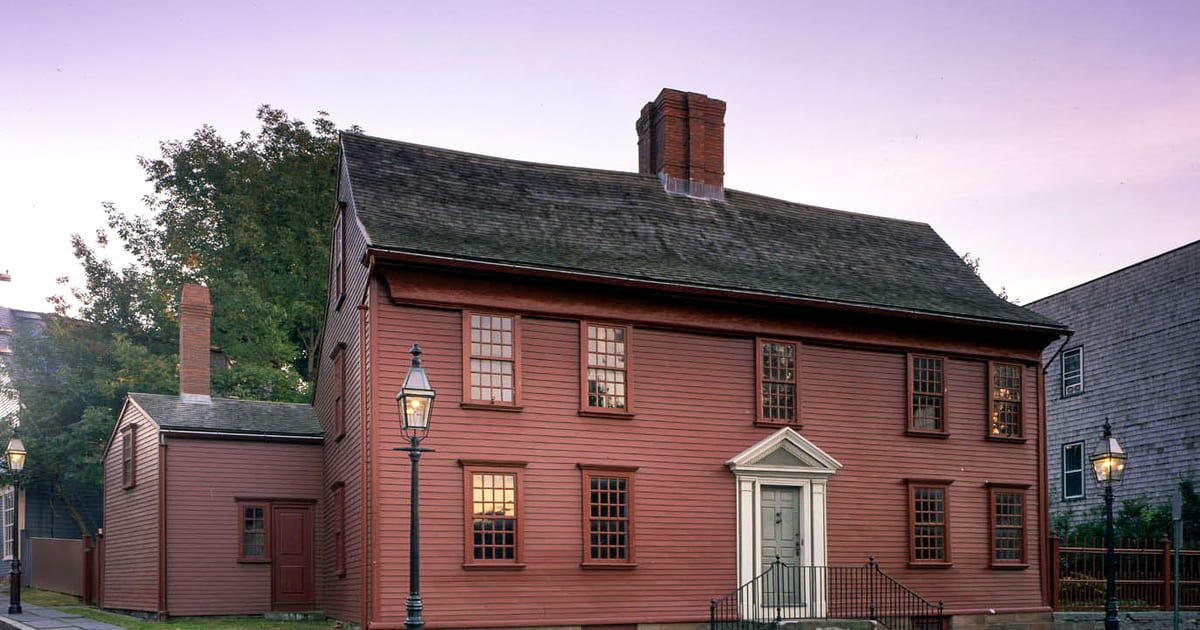
Newport, Rhode Island, has a rich and compelling African American history that might come as a surprise to anyone who assumes the city’s story begins and ends with its collection of Gilded Age mansions.
Starting in the 17th century, the harborside town’s Black residents have included enslaved Africans, free persons of color, prosperous homeowners in the Point neighborhood (featured in Season 3 of HBO’s The Gilded Age), and many generations more of widely varying backgrounds and classes.
The Newport Historical Society launched its Voices Campaign to preserve and amplify that history and digitize records so that modern-day families can connect their lineage with Black and Indigenous Newporters of the past.
Now that project is getting a permanent home called the Edward W. Kane & Martha J. Wallace Center for Black History, set to open to the public on Juneteenth (June 19).
In addition to housing 5,600 church records, business papers, ship logs, and other relevant documents, the center will have exhibits that draw on the archives as well as the work of artists to chronicle for visitors the lives and contributions of Newport’s African American community.
The facility itself occupies a noteworthy historical landmark: the Wanton-Lyman-Hazard House (pictured at the top of this page), which was built around 1697 and is considered the oldest surviving home in Newport.
Owned in its early years by a succession of merchants, British loyalists, politicians, and others, the house also held enslaved occupants during the 1700s, records show.
Enslaved Africans named Briston, Jenny, Casen, and Cardardo lived and labored here during the 18th century. One of them might have left the “African spirit bundle” containing a cowrie shell and other items found hidden under the building’s attic floorboards in 2005, according to the historical society.
Other significant Black history sites in Newport
The new center isn’t the only spot in Newport where you can become better acquainted with the city’s Black history and pay your respects to its notable figures.
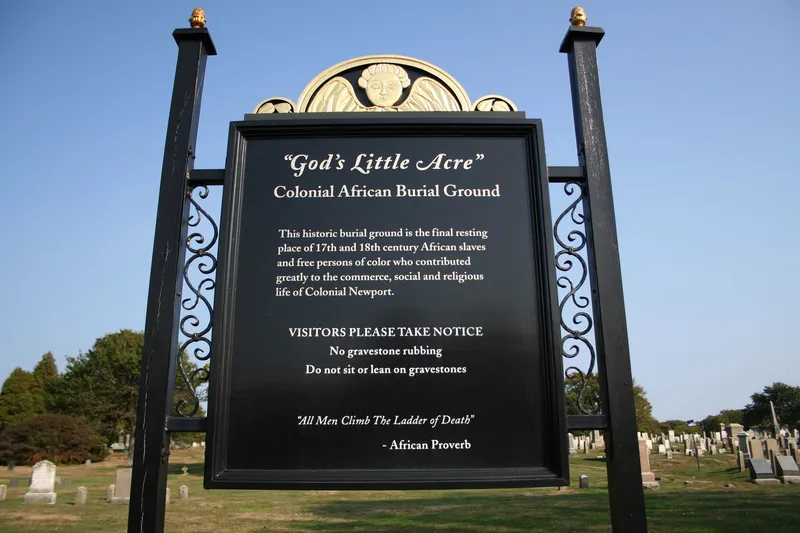
God’s Little Acre, located about a 10-minute walk north of the Wanton-Lyman-Hazard House, is the “largest intact Colonial-era African burying ground in the country,” the National Trust for Historic Preservation explains.
Among the graveyard’s markers you’ll find “monuments to mysterious souls who left no records except a few words etched in stone, as well as people who led exceptional and well-documented lives,” the nonprofit asserts.
Toward the “exceptional” end of the spectrum, a stroll around the waterfront Point neighborhood in northwest Newport will take you through a historic residential district where affluent Black folks lived in the 19th century, as depicted onscreen in the third episode of The Gilded Age‘s third season.
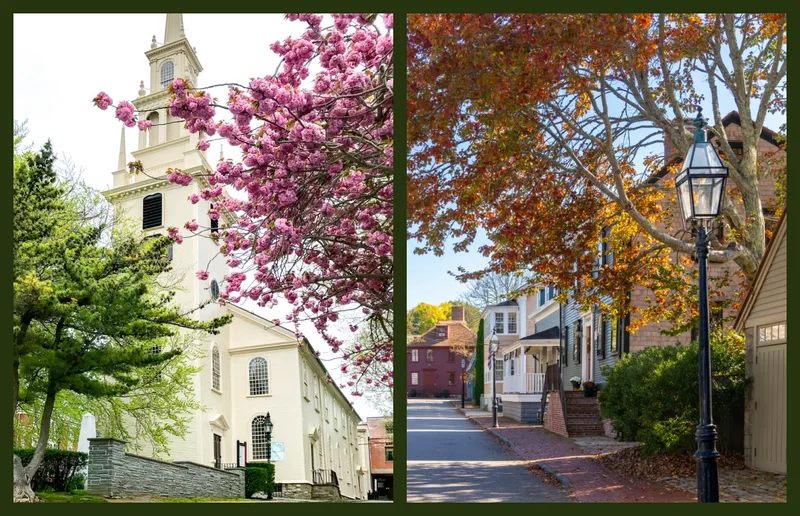
For a deeper dive, the Newport Historical Society offers “Creative Survival,” a walking tour about local Black history. The 90-minute tour is available June–October and scattered dates in the offseason. Tickets cost $25 for adults, $15 for kids ages 12 and younger.
One person you’ll probably hear about during that experience is George T. Downing (1819–1903), a restaurateur, abolitionist, activist, and subject of a soon-to-be-unveiled statue in Touro Park across from the Newport Art Museum. The piece will be Newport’s first public artwork to honor a person of color. (An installation date hasn’t been announced.)
