

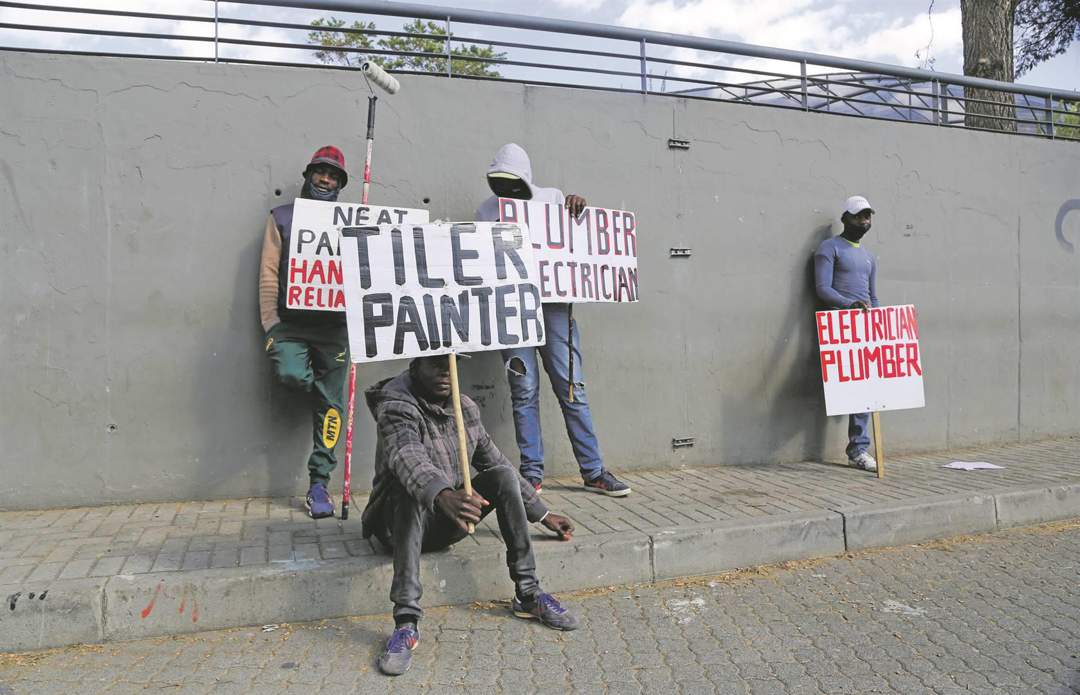
The official unemployment rate of 31.4% reflects 7.8 million people who are actively looking for work.
- The official unemployment rate decreased to 31.4% in the last quarter of 2025, the lowest number since the third quarter of 2020.
- While there were job gains in construction and finance, there were big losses in mining, manufacturing and trade.
- A clampdown on informal trading during the G20 summit in Johannesburg had an impact.
- For more financial news, go to News24 Business.
The official unemployment rate decreased by 0.5 of a percentage point to 31.4% in the last quarter of 2025, from the previous three months.
This was the lowest number since the third quarter of 2020, Bloomberg reported.
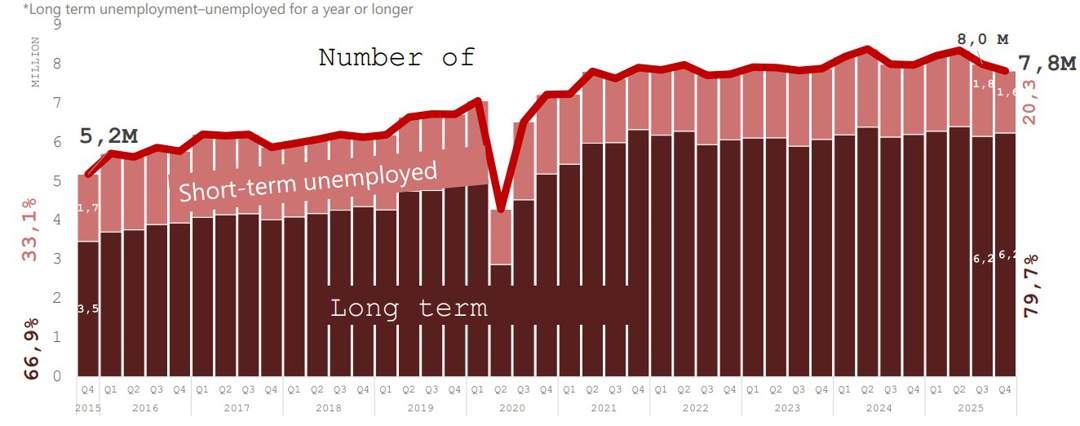
The number of unemployed persons in South Africa.
South Africa has now posted three straight quarters of net job growth.
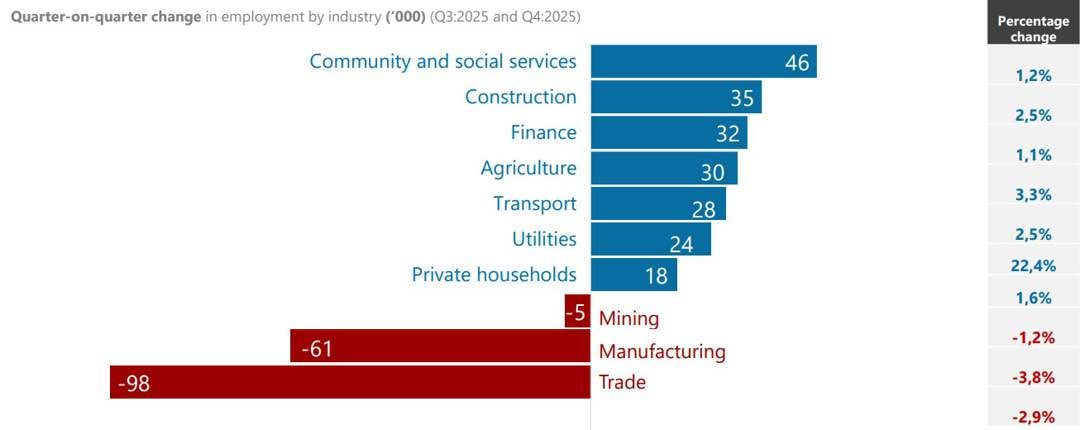
However, Statistics SA data showed big employment losses in trade (-98 000 jobs) and manufacturing (-61 000). Despite booming metal prices, the mining sector also shed more than 1% of its jobs.
In the past quarter, most jobs were created in the mostly state-run community and social services sector (46 000), as well as the construction (35 000) and finance (32 000) sectors.
“We are starting to turn the corner. We are starting to see our unemployment rate decline,” said Risenga Maluleke, Statistician-General of South Africa and head of Statistics SA.
But while there was a big increase (+320 000 jobs) in formal sector employment in the fourth quarter, and households (+18 000) also created more jobs – informal employment declined by 293 000.
Maluleke said this was, in part, due to a clampdown on informal trading in Gauteng during the G20 summit, which was held in Johannesburg in November last year.
“(As) we were heading to the G20 what we saw in Johannesburg particularly … was a removal of most of the informal trade, particularly those who were not properly accredited with the City of Johannesburg.”
Stats SA’s informal employment data has come under intense scrutiny after former Capitec CEO Gerrie Fourie argued that it massively undercounts informal economic activity. Minister of Employment and Labour Nomakhosazana Meth was among those who acknowledged that the official data may need to be combined with other indicators including mobile money flows and bank transactions for a clearer picture of unemployment.
The official unemployment rate of 31.4% reflects 7.8 million people who are actively looking for work.
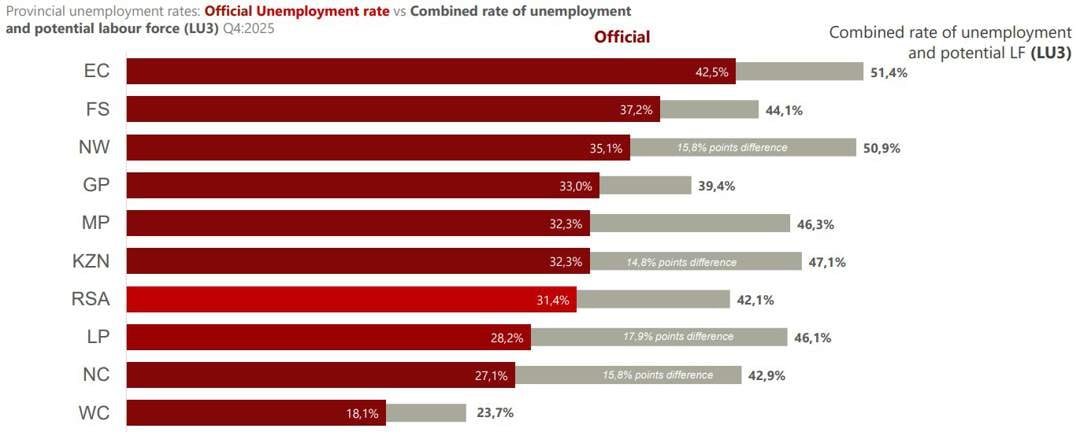
But, when combined with those who are available to work but have given up looking for a job or have other reasons for not searching, that number increases to 12.4 million, or 42% of the working age population.
More than a third of young people (3.5 million) aged 15 – 24 years were not in employment, education or training in the fourth quarter last year.
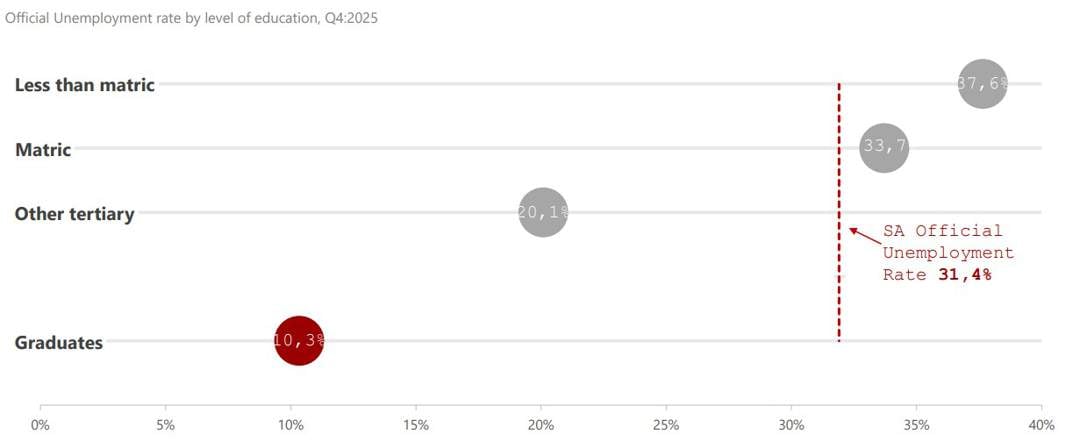
Graduate unemployment declined to 10.3%, while more than a third of South Africans with just a matric are unemployed.
The Eastern Cape has the highest unemployment rate, with Western Cape maintaining the strongest labour market.
Since 2015, the number of unemployed South Africans has increased from 5.2 million to 7.8 million.
The unemployment rate among black Africans (35%) remains much higher than the national average.
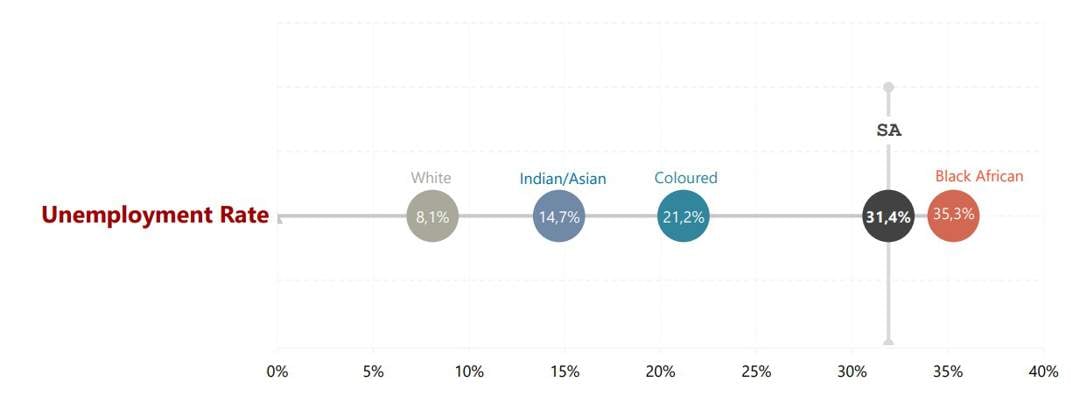
Official unemployment rate by population group, Q4: 2025
Only the coloured population has seen a decline in joblessness over the past decade.
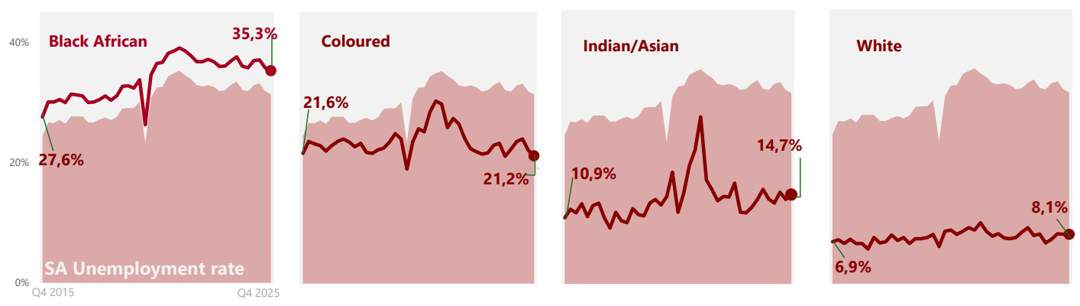
Official unemployment rates by population group, Q4: 2015-Q4: 2025
