

Opinions expressed by Entrepreneur contributors are their own.
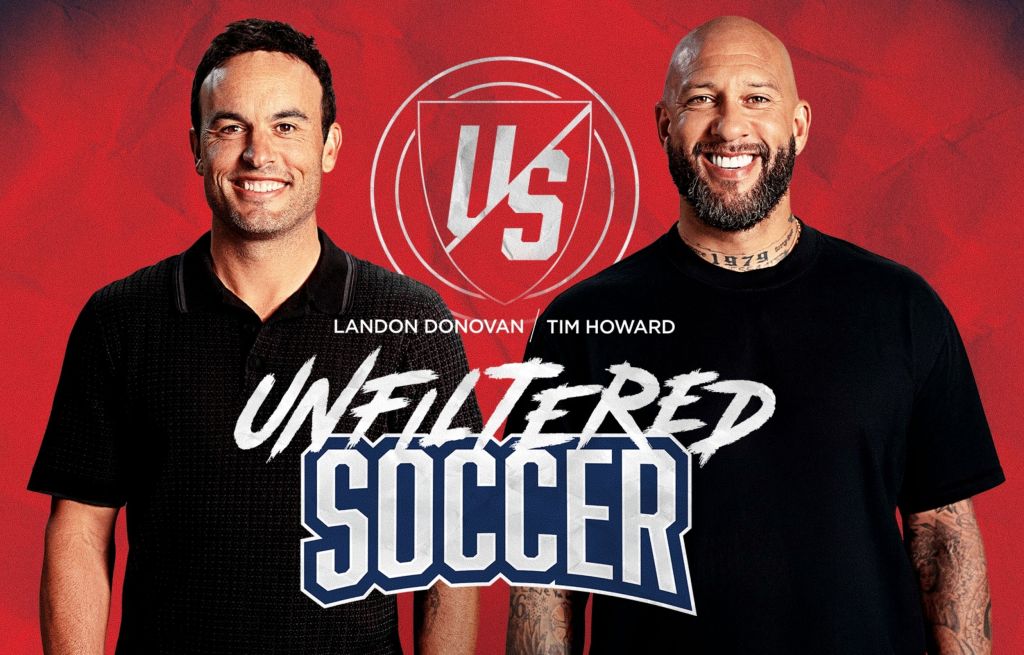
As cohosts of the hit podcast Unfiltered Soccer, US soccer legends Tim Howard and Landon Donovan are capitalizing on America’s soccer boom ahead of the 2026 FIFA World Cup while warning about the rising costs of youth soccer’s pay-to-play system.
Although it’s the world’s most popular sport, soccer has historically existed on the fringes of American fandom. But this summer, the United States will host the World Cup, which is expected to be the biggest soccer event in history, and could mark another turning point for the sport domestically.
“In 1994, we weren’t ready for a World Cup,” legendary U.S. Men’s National Team goalkeeper Tim Howard tells Entrepreneur. “Soccer was still in its infancy, and American sports fans weren’t going to watch on the weekends.”
Today, that’s started to change. Major League Soccer, which was born out of that same 1994 World Cup, will now help provide the infrastructure for the tournament’s return to the U.S. more than 30 years later.
“In 1994, there was no league, so the jump from zero to 60 was huge,” Howard explains. “We’re in such an amazing place in soccer now that I don’t think the next leap is going to be this massive leap. It’s going to be a step.”
Howard and fellow World Cup legend and USMNT all-time leading goalscorer Landon Donovan are guiding the next step through their podcast, Unfiltered Soccer, produced with AMP Media.
Since launching in November 2025, the show has quickly grown into the No. 1 soccer podcast in the United States, capitalizing on the sport’s accelerating popularity ahead of the World Cup.
“Soccer’s growth in the United States is impossible to ignore right now,” says Richard Cooke, Vice President of Audio Programming at Sinclair, Inc. “Talent-led content is leading the media industry, and we believed there was significant potential in creating a platform where we can reach fans wherever they consume content.”
Keeping the ball rolling
Donovan and Howard have known each other for years, having played together in multiple World Cups for the US team. But the idea to start a show didn’t come about until after their playing careers were over.
“I didn’t necessarily envision anything in particular,” Donovan says of his post-career outlook. “I always just knew that I was going to be at peace stopping. Most players have a lot of anxiety around stopping. I didn’t know exactly what I was going to do. I was excited to try a bunch of different things.”
Howard had a similar outlook.
“When I was still playing, I had ideas, I just didn’t know if there was gonna be one path for me,” he says. “But I wasn’t going to sit on my hands.”
The two independently experimented with various soccer-related ventures: Howard took an ownership stake in USL club Memphis 901 and wrote a book about living with OCD, while Donovan co-founded his own USL club, the San Diego Loyal, where he served as president, and also worked in broadcasting for Fox Sports’ soccer coverage.
The two stayed connected through a shared agency, and eventually, AMP Media came along with an offer.
“It was almost like Kismet,” Donovan says. Whether it was Kismet or just good planning, AMP, Donovan and Howard worked out a deal and got the show off the ground in 2024, giving it two years to build an audience before the World Cup.
“We’ve always had this moment as the key milestone,” says Richard Cooke. “There’s going to be a massive influx of casual fans engaging with the game more deeply, and we wanted to position Unfiltered Soccer early as a trusted, recognizable voice leading into, during, and beyond that moment.”
“My first experience with soccer was the ’94 World Cup,” adds Landon Donovan.
“I don’t know how you quantify the millions of kids who will fall in love with soccer after watching this summer,” he says. “There will be short-term measurable impacts, but long-term, it’s about how many new fans we create.”
That’s because those fans don’t disappear once the Cup ends. Their interest fuels a massive youth soccer ecosystem that has become an attractive space for entrepreneurs and investors, with billions poured into competitive leagues, facilities, training, and development programs.
“What we’re seeing from sponsors, from entrepreneurs, so many people are putting their money behind the game of soccer because the youth system in this country is so strong,” says Howard. “When you invest in grassroots soccer, that’s what sustains our leagues and our national teams. You have to keep cultivating the next generation.”
The cost of The Beautiful Game
Despite its rapid growth, America’s youth soccer system is far from perfect. Donovan believes that too many investors and operators have become overly focused on maximizing profits in a space where that mindset can ultimately hurt the sport long term.
As Donovan explains it, many community-based nonprofit clubs became financial success stories because they were trusted local institutions. Eventually, outside investors saw an opportunity to commercialize that success.
“I respect the American spirit of wanting to capitalize on something and make it more profitable and grow it,” Donovan says. “But at the same time, I care about soccer in this country.”
For Donovan, the risk of over-commercialization is significant. “I’ve had lots of conversations with lots of people with lots of money that are willing to invest in this world, but want to do it the right way,” he says.
What qualifies as “the right way” is complicated, but Donovan believes the wrong way is easier to identify. As a soccer parent himself, he has experienced firsthand what he sees as an exploitative system, built around exorbitant fees and pressure on families.
“You have to go through their wheel,” he explains, describing how organizations charge families thousands in initiation fees while requiring them to pay for uniforms, travel programs, private training, and additional services tied to the club.
Donovan believes many parents are manipulated into thinking every extra expense is necessary for their child’s future success. “They feel like they’re letting their children down if they don’t do private lessons or all the other BS,” he says.
The fight for soccer’s future
Ultimately, Donovan believes youth soccer should prioritize creating lifelong fans of the sport, not simply maximizing revenue. In his view, if kids leave the experience loving soccer, the sport wins in the long run. Still, even he concedes someone has to pay the coaches and the fees.
“I don’t think the pay-to-play model is going away,” says Tim Howard. “But I think people like Landon Donovan getting into the space and creating opportunities that run alongside pay-to-play so that we’re engaging more kids is great.”
Howard’s biggest concern with the current system is accessibility, particularly for families on the socioeconomic fringes who are often priced out of competitive soccer altogether.
“It’s going to take a real revolution,” Howard says. “Outspoken former players, business owners, private equity people willing to push money into that space so soccer becomes affordable to everyone, like in the rest of the world.”
As cohosts of the hit podcast Unfiltered Soccer, US soccer legends Tim Howard and Landon Donovan are capitalizing on America’s soccer boom ahead of the 2026 FIFA World Cup while warning about the rising costs of youth soccer’s pay-to-play system.
Although it’s the world’s most popular sport, soccer has historically existed on the fringes of American fandom. But this summer, the United States will host the World Cup, which is expected to be the biggest soccer event in history, and could mark another turning point for the sport domestically.
“In 1994, we weren’t ready for a World Cup,” legendary U.S. Men’s National Team goalkeeper Tim Howard tells Entrepreneur. “Soccer was still in its infancy, and American sports fans weren’t going to watch on the weekends.”
