

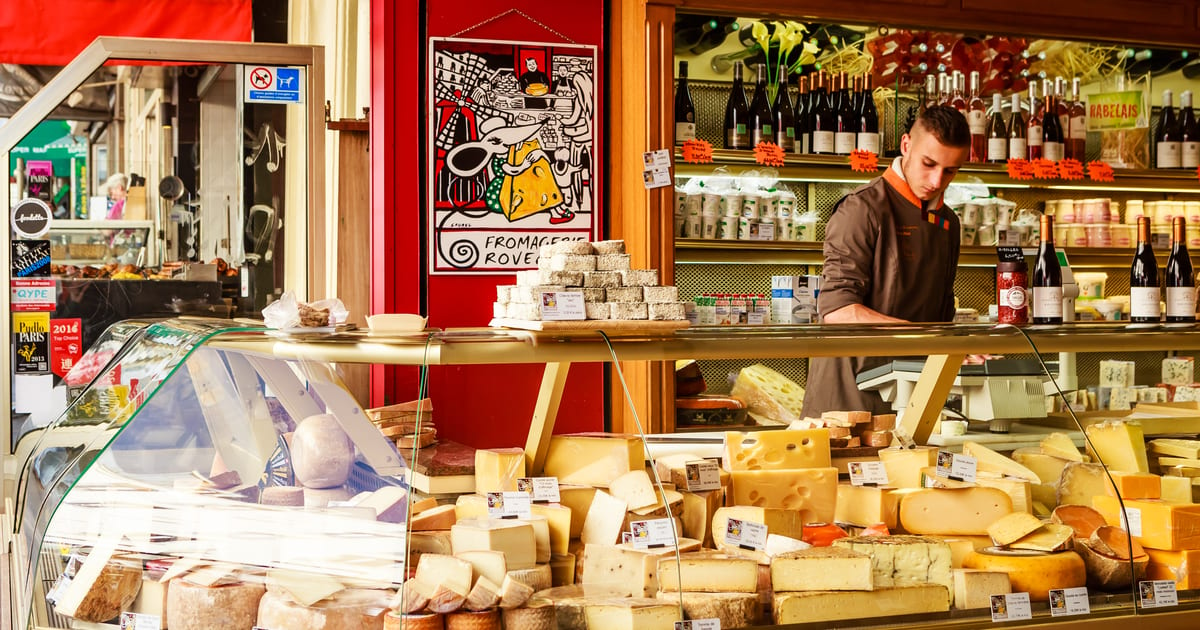
There are a lot of silly stereotypes about France, but the country’s fondness for cheese is real. The average French person consumes 24.4 kilograms (about 54 pounds) of the stuff each year, and has, according to estimates, anywhere from 400 to 1,500 different varieties of cheese to choose from, many with governmental protected status ensuring quality and place of origin.
Beyond the sheer abundance of the flavorful dairy product, French fromage is truly a revered cultural icon with its own carefully observed rules, customs, and traditions.
For example, a traditional French dinner, whether in a restaurant or private home, still includes a cheese course before dessert. Typically, two to five cheeses of varying textures are served, and travelers can easily commit a faux pas.
If you remember nothing else, keep in mind that if you’re presented with a wedge of brie, don’t just lop off the end or scoop out a chunk of cheese from the rind. Proper etiquette requires cutting a slice that assures everyone at the table an equal ratio of cheese-to-rind.
Moreover, taking too much cheese at a dinner party can be considered an insult to the host, since your oversized portion implies you didn’t enjoy your meal and remain hungry.
If this all seems complicated, don’t fret. We’ve compiled a list of cheeses to try in France, along with helpful tips and tricks for indulging with confidence.
Traveling back to the U.S. with cheese
But first, how are you going to get your tasty souvenirs back home?
U.S. Customs allows the import of cheese for personal consumption, though there are some restrictions.
Cheeses that are too soft—or “creamy,” in the Transportation Security Administration’s lingo—are subject to airport liquid limits, meaning any amount beyond 3.4 ounces must go in checked luggage.
Additionally, cheeses that contain meat (which aren’t common in France anyway) or those made with raw milk or an aging process less than 60 days are not allowed into the U.S.
For more information, see the U.S. government’s website on traveling with food and other agricultural products.
If you’re planning to bring back a cheesy souvenir, most French fromageries (cheese shops) will vacuum seal your purchase for you. Just ask to have it packaged sous vide.
Where to shop for cheese in Paris
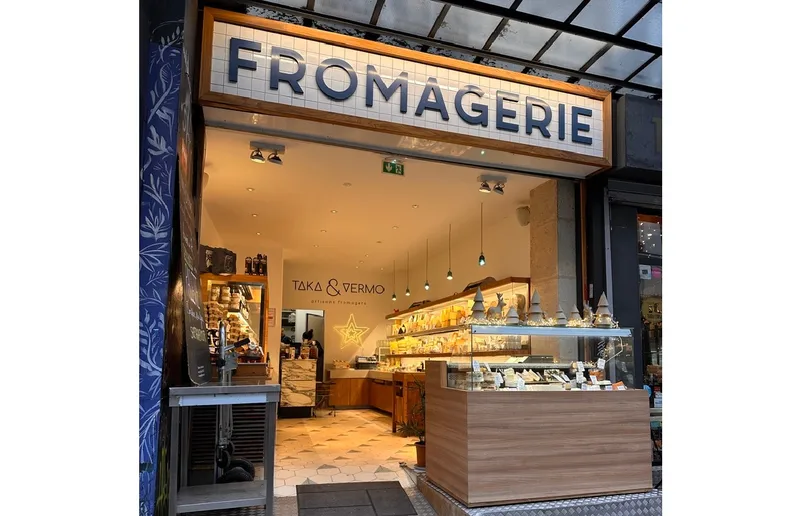
If you’re in Paris with no idea where to start, some of the city’s best fromageries include Fromagerie Chez Virginie, La Fromagerie Goncourt, and Taka & Vermo.
With two locations in Montmartre, Chez Virginie has been upholding traditional cheesemaking traditions since 1946. The shop specializes in sourcing farmhouse-produced raw milk cheeses and has its own maturing cellars on site.
Located in the 11th arrondissement, Fromagerie Goncourt offers the best-quality French cheeses from small producers at reasonable prices and minus the sort of pretentiousness many novices find intimidating. Don’t be afraid to ask the staff here for recommendations—they’re more than happy to offer samples as well as flavor advice.
Founded in 2015 in the 10th arrondissement, Taka & Vermo embraces modern cheesemaking. The shop, which also has an aging cellar on site, specializes in innovative creations, combining cheeses with herbs, spices, nuts, fruits, and vegetables. The owners aim to think outside the box and offer tasting workshops and master classes.
What do the labels mean?
If you’re planning to purchase cheese from a grocery store or cheese shop, having a basic grasp of the labeling system is key to understanding what you’re buying.
The most common labels are the AOP, IGP, and Label Rouge designations.
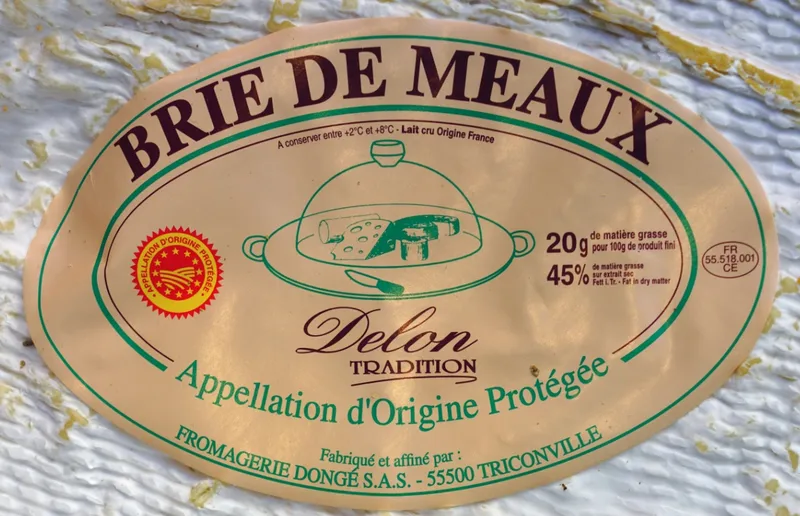
The highest level of protection, AOP stands for “Appellation d’Origine Protégée” (Protected Designation of Origin) and certifies that the cheese has been produced entirely within a specific region using specific traditional methods.
IGP stands for “Indication Géographique Protétegée” (Protected Geographical Indication) and means that the cheese has been produced, in whole or in part, in a particular region and according to regional standards, but the label doesn’t guarantee specific methods were used.
Finally, Label Rouge (Red Label) is a quality certification denoting exceptional taste, texture, and production methods independent of region.
Check out this article for more detail.
6 cheeses you have to try while in France
There are far too many different types of French cheeses to give a comprehensive overview, but the below sampling of frequently eaten and well-known varieties is a good place to start. Feel free to try other cheeses that pique your interest, too.
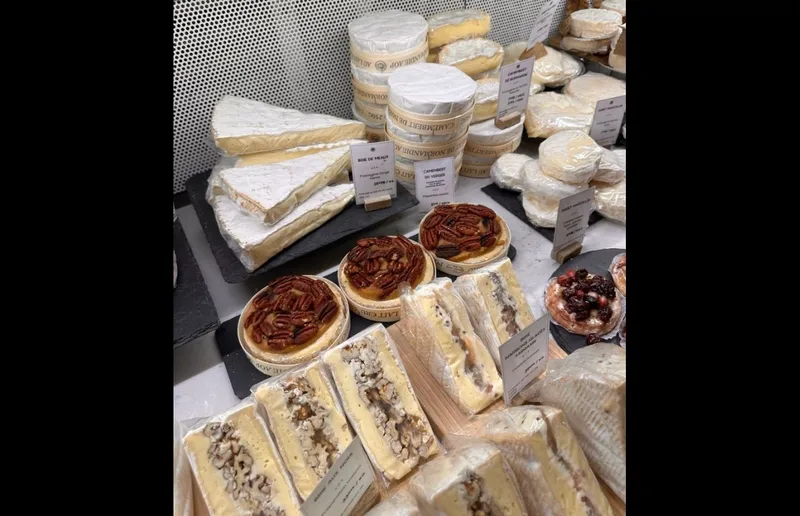
Brie
Flavor: mild, creamy, buttery
Texture: soft
Can I eat the rind? Yes! In fact, it’s considered bad manners to cut it off.
Can I take it home with me? not recommended in carry-ons as it may be too soft
Brie is a soft-ripened cow’s milk cheese that has been produced in the northern region of Brie (no surprise there) since the Middle Ages. One of the most famous varieties is Brie de Meaux, nicknamed the “king of cheeses,” which bares the prestigious AOP label.
Brie is a crowd pleaser. Its mild, buttery flavor makes it unlikely to offend, and its velvety, spreadable texture makes it a versatile addition to salads, sandwiches, cheese boards, and baked dishes. Don’t be afraid to try the various filled versions found in French fromageries—these are often stuffed with nuts, honey, or truffle.
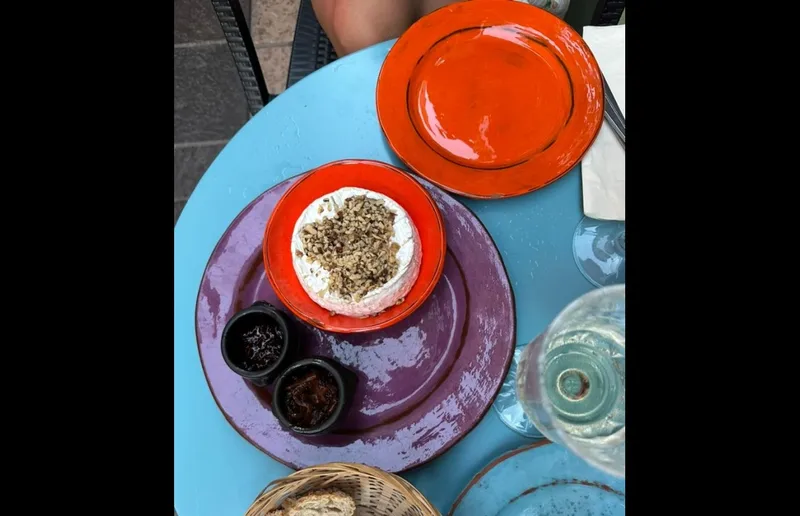
Camembert
Flavor: creamy, umami, musty
Texture: soft
Can I eat the rind? Yes! In fact, it’s considered bad manners to cut it off.
Can I take it home with me? not recommended in carry-ons as it may be too soft; unpasteurized varieties are not allowed by the TSA
A personal favorite, camembert is velvety and ultra-meltable. In the U.S., the flavors and textures of camembert are often nearly indistinguishable from brie. But in France, camembert is a whole different (and far stinkier) animal.
Compared to the U.S., France has much less strict laws around pasteurization—and with camembert, that makes all the difference. One of the best ways to eat this cheese, which you’ll often find as an appetizer in French restaurants, is melted in a pan in the oven with toppings like honey, herbs, and nuts.
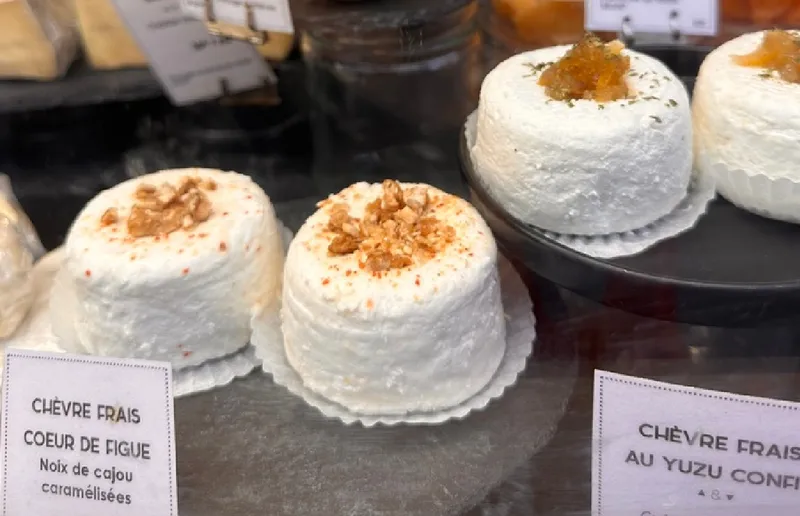
Chèvre
Flavor: creamy, goaty, slightly sour
Texture: soft
Can I eat the rind? Yes! In fact, it’s considered bad manners to cut it off.
Can I take it home with me? not recommended in carry-ons as it may be too soft
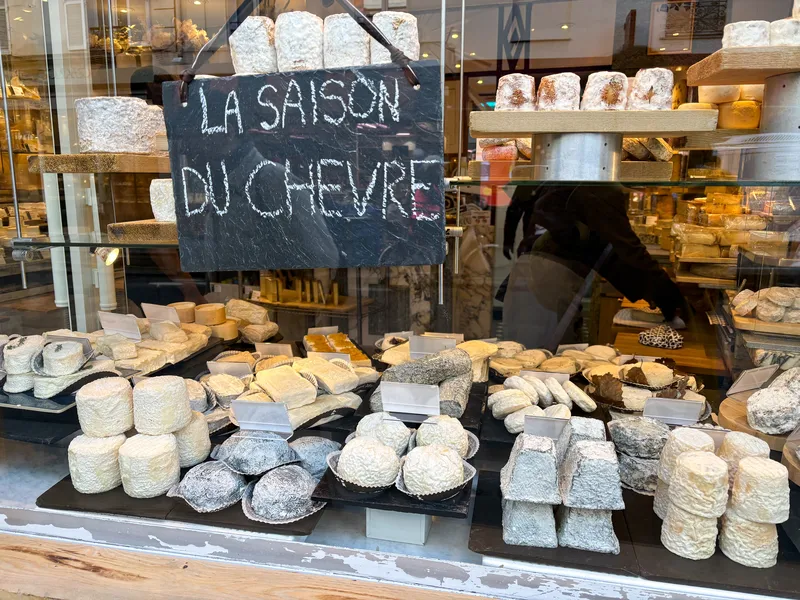
Chèvre means “goat” in French, so the term can be applied to a variety of goat cheeses, but most often refers to a soft cheese log wrapped in a rind and usually sliced into coins.
Chèvre is divisive—either you love it or hate it. It has a stronger, earthier, slightly sour flavor that instantly differentiates the cheese from a cow’s milk variety, and that funkiness puts some people off. Chèvre is often melted in crêpes bretonnes (savory buckwheat crêpes) or added to salads and sandwiches.
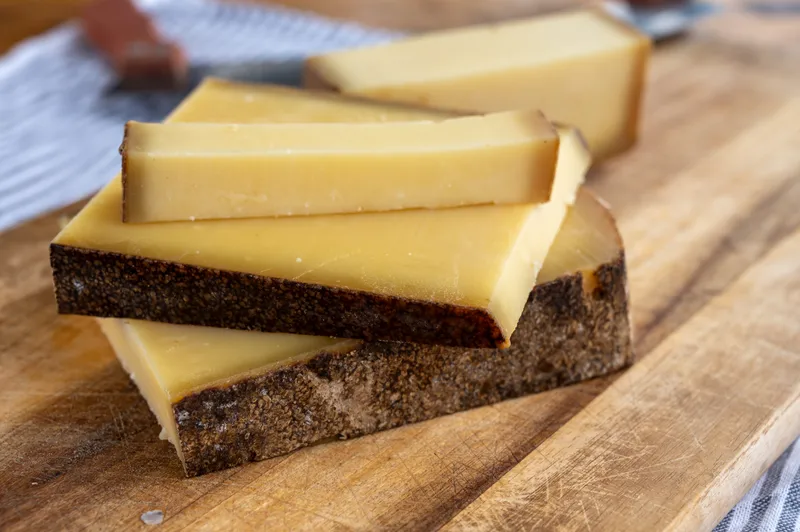
Comté
Flavor: fruity, salty, lingering aftertaste
Texture: hard
Can I eat the rind? not recommended
Can I take it home with me? yes
Comté is a hard cow’s milk cheese from the Jura Mountains along France’s border with Switzerland. It’s what you might call an “adult cheese”—i.e., you probably would have spit it out as a kid, since the flavors are lingering and complex.
For a grownup, though, comté pairs wonderfully with dry white wines and apples. The flavor of the cheese recalls parmesan, but not as salty.
If you enjoy strong cheeses, opt for an aged variety (18+ months). Oherwise, go for a young (4–12 months) or middle-aged (12–18 months) sibling.
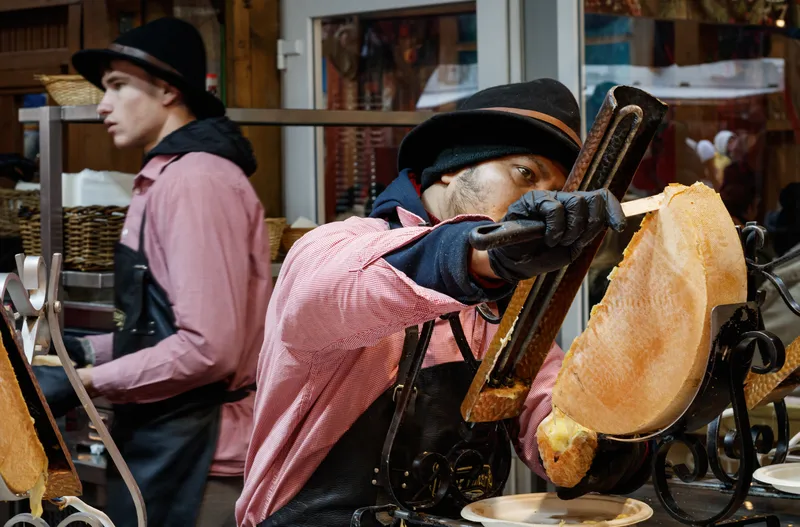
Raclette
Flavor: buttery, rich, pungent
Texture: semisoft
Can I eat the rind? yes
Can I take it home with me? yes
Although eaten in Valais, Switzerland, for centuries, raclette was popularized by French ski resorts in the mid-20th century. Milder than their Swiss cousins, French varieties of raclette, particularly Raclette de Savoie (IGP), have become a winter staple in French homes. The name comes from the French word racler meaning “to scrape,” referring to the manner in which the cheese is melted and scraped over potatoes and other foods.
At Christmas markets, you’ll find the cheese torched and generously poured over a fresh baguette to form the most decadently ooey-gooey grilled cheese you’ll ever taste. You’ll usually smell the raclette stand before you see it, since this cheese has a slightly more pungent flavor than cheddar or jack.
In French homes, raclette is often eaten family-style, melted using a kitchen appliance specifically for that purpose before getting poured over boiled potatoes, charcuterie, and cornichons.
If you don’t have your own raclette-maker at home, a nonstick pan will do the trick.
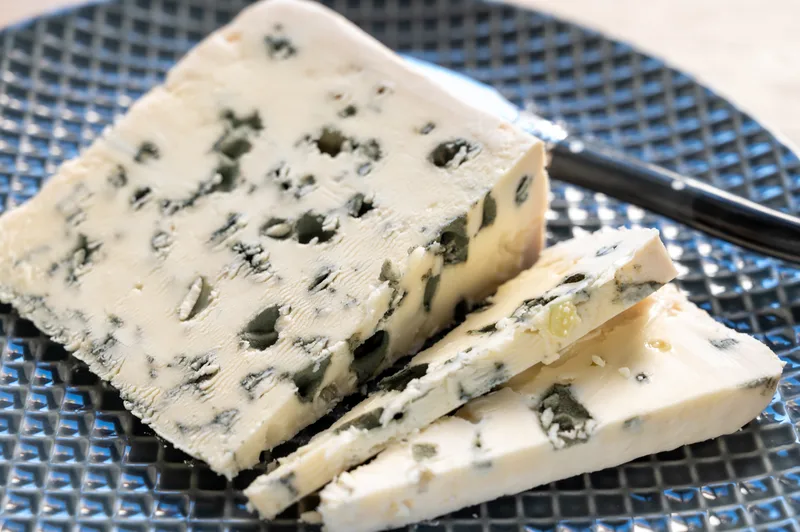
Roquefort
Flavor: strong, funky, tangy
Texture: semisoft
Can I eat the rind? yes
Can I take it home with me? yes
One of the oldest known cheeses, Roquefort was reportedly a favorite of Charlemagne. This most iconic French blue cheese is made from raw sheep’s milk aged in limestone caves that promote the growth of the mold Penicillium roqueforti, which gives the cheese its distinctive flavor.
Another divisive category, blue cheese is not for everyone. But even if you are a blue cheese skeptic, consider giving Roquefort a try—in small quantities, at least.
You might conclude that this one works best as a subtle flavor enhancer or topping. (I once had mussels steamed in a Roquefort sauce that I still dream about to this day.)

Frommer’s France
Take the guesswork out of vacation planning. Frommer’s hires only seasoned experts, journalists who live in France either full-time or part-time, which means their advice doesn’t have to be second-guessed. It’s savvy, dependable, and not based on one or two short trips to France, but on a lifetime o…
Get the book
Frommer’s France
Take the guesswork out of vacation planning. Frommer’s hires only seasoned experts, journalists who live in France either full-time or part-time, which means their advice doesn’t have to be second-guessed. It’s savvy, dependable, and not based on one or two short trips to France, but on a lifetime o…
