

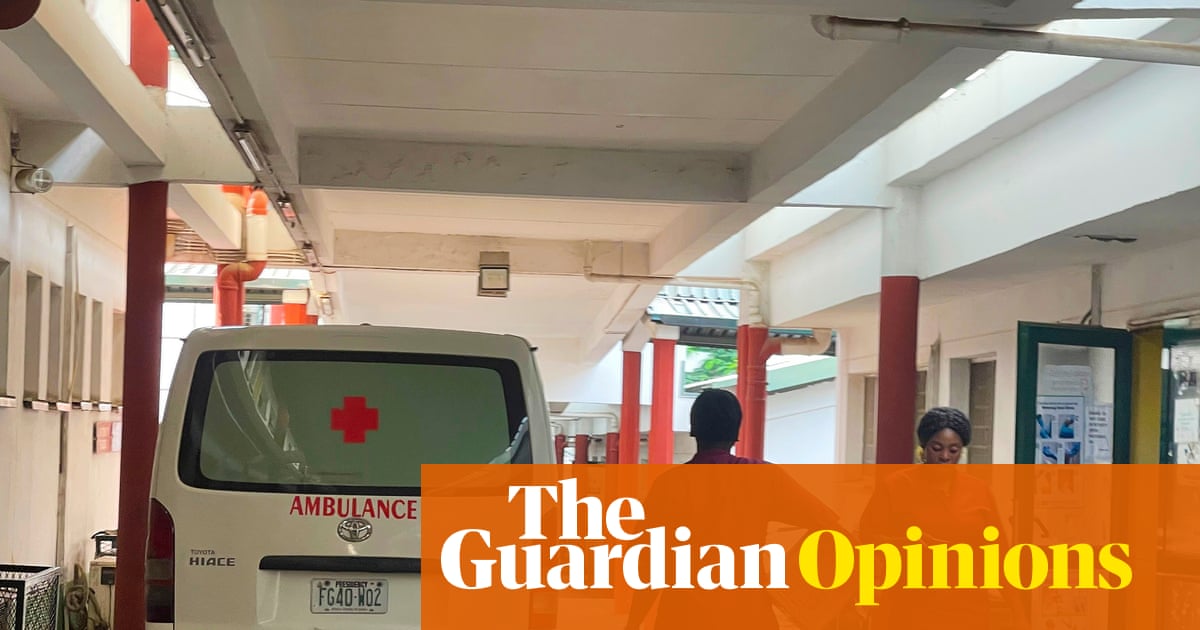
The death from a snakebite of singer Ifunanya Nwangene in an Abuja hospital last Saturday, allegedly after a frantic and failed search for antivenom, sent a familiar shudder through Nigeria. It was a profoundly personal tragedy, yet it felt grimly systemic. Within days, it became part of a devastating triad of events framing a national crisis. A few weeks before, the country had grappled with the death of novelist Chimamanda Ngozi Adichie’s young son in a premium private hospital in Lagos, amid allegations of negligence. Just before that, there were the images of boxer Anthony Joshua, after a serious car crash near Lagos, being helped by bystanders with no ambulance or emergency service in sight.
A cobra in an upmarket apartment, a fatal error in a high-end facility, a wrecked car on the roadside. These seem like disconnected misfortunes: in truth, they are interconnected. They represent a diagnostic map of a health system in collapse, a system where survival is determined by a lethal lottery of geography, wealth, and sheer chance.
To view these events as isolated is to misunderstand the depth of the failure. They are not accidents; they are predictable outcomes. The 2025 SBM Intelligence Health Preparedness Index (HPI) provides a cold, data-driven diagnosis. It rated Nigeria’s health system as “dangerously unprepared” nationally, with not a single state achieving even 30% readiness for a health crisis.
Each tragedy aligns precisely with a core failure the index measures. The snakebite incident is a classic failure of supply chain and stock management. The inability of a leading federal hospital in the country’s capital to have a complete stock of life-saving antivenom is not an anomaly. It is the standard in a system in which critical drug shortages are chronic, procurement is broken, and storage is undermined by unreliable electricity. The private hospital tragedy points directly to the human resource catastrophe SBM’s HPI highlights: a patient-to-doctor ratio that can exceed 15,000 to one in some areas, a direct result of the “Japa” syndrome brain drain (japa is the Yoruba word for escape).
This exodus leaves remaining staff catastrophically overworked, leading to burnout and fatal errors, even in settings with better funding. Joshua’s accident exposes the nonexistent emergency and trauma response network. The lack of ambulances, coordinated paramedic services, and trauma centres means that for most Nigerians, a medical emergency is a solitary battle.
These three cases dismantle the comfortable myth that the problem is merely a lack of funding for public hospitals. They reveal a total system failure. It encompasses broken logistics, a hollowed-out workforce, a culture of non-accountability where denials are routine, and an utter lack of functional emergency infrastructure. The system is unreliable at every level.
This failure, however, is not experienced equally. There is a brutal geographical lottery, a concept familiar from everyday Nigerian life. Consider the pattern of snake encounters.
Growing up in Ugbowo, Benin City, in the 1990s, a then newly developing area, snake sightings were common. In the centuries-old, densely builtup centre of Benin, they were rare. Snakes thrive in areas of disturbance and transition, such as farmland, bush plots, and new developments where their prey is abundant.
This ecological truth maps perfectly on to the country’s public health disaster. The highest risk of snakebite falls on farmers and rural communities where such habitats dominate. Yet, the healthcare infrastructure is inversely distributed. In urban centres, while fragile, there is a fighting chance. In rural Nigeria, a snakebite triggers a cascade of failures. Data suggests only about 8.5% of victims attend a hospital. The first response is often traditional first aid, such as tourniquets or making incisions. Hospitals are often hours away, frequently lack antivenom, and represent a crushing out-of-pocket expense for the uninsured, which is more than 95% of the rural population.
The shocking element of Nwangene’s death was its location. It happened in Nigeria’s capital, where the system is supposed to work. In rural areas, such deaths are a silent, neglected epidemic. A study in the Benue Valley estimated an annual incidence of 497 bites per 100,000 people, with a mortality rate of 12.2%. This is not just a health issue, it is a policy choice that sacrifices the rural poor.
After the Abuja tragedy, a predictable wave of nostalgia for traditional remedies has swept social media. Posts extolled the virtues of chewing cashew tree bark or using specific herbs. This is often mistaken for mere romanticism. In reality, it is a rational symptom of a broken system.
The turn to traditional healers and herbal concoctions is a pragmatic hedge against a state that has failed to provide accessible, affordable or trustworthy care. Research from similar African contexts shows that a majority of snakebite victims use traditional medicine first.
The average time to reach a traditional healer is 15 minutes, compared with more than seven hours to get to a formal health facility. When the state is absent, people will logically turn to the authority that is present and culturally aligned, even if the remedies are unproven or, in the case of scarification, actively harmful.
This is not an argument for or against traditional knowledge, some of which may hold future scientific promise. It is an indictment of a system so dysfunctional that it cedes its life-saving role to unregulated alternatives. Online nostalgia is a testament to a deep, well-founded distrust of the formal healthcare system.
So, will my position cause an uproar?
The answer lies in the nature of the response. There is outrage, yes. A furious, weary debate simmers online. But it is layered over a profound and debilitating exhaustion.
Nigerians are exhausted by shortages, by costs, by the relentless need to be their own risk managers, their own emergency services, their own advocates in corridors of medical power.
The political response to the outcry following Adichie’s loss and the international embarrassment caused by the images of Joshua’s car crash – the announcement of a ministerial taskforce on patient safety – is telling. It is an admission of “systemic challenges” but naturally it is viewed with deep public scepticism. It feels like yet another committee to treat symptoms, while the disease rages unchecked. It does not address the root causes: the broken supply chains, the haemorrhage of professionals, the infrastructural decay, or the foundational inequity between city and village.
The fundamental truth laid bare by these three tragedies is that Nigeria’s health system is not just under resourced: it is fundamentally unreliable. It has abdicated its basic social contract. For the wealthy, this manifests as a need for extreme due diligence, even within premium care, and a standby ticket for medical tourism. For the middle class, it is a precarious existence where a simple shortage can be fatal. For the poor, especially in rural areas, it is a sentence to suffer and die from treatable conditions.
Until this system is rebuilt from its foundations, with equity and reliability as its core principles, every Nigerian remains at the mercy of that lethal lottery. The exhaustion will persist because it is the rational response to a state that has, for too long, failed to guarantee the most basic of human dignities, the preservation of life itself.
