


Full disclosure: I’m writing this while stranded in Chicago.
I waited too long to make a move on a flight that I knew, in the back of my mind, would be canceled by a snowstorm hitting my hometown of New York City.
But because I am here for the just-completed Chicago Travel & Adventure Show, and thus in the company of other travel experts, I’ve been able to observe a slew of aviation savants deal with the chaos unfolding at airports across the East Coast.
Here’s my advice, some of which I gleaned from the actions of others.
Move fast.
If your airline warns that a storm may disrupt your flight and gives you the option to change, do so immediately.
Because I had a speaking engagement, I wasn’t able to fly out earlier. But I should have changed my reservation to a flight a day later. Those who did are likely getting out just one day late.
But since I waited until my flight was canceled, the earliest options United Airlines gave me (beyond the standby list) were 3 full days after my original flight.
I ended up canceling my return ticket and booking on another airline, Spirit, that could get me out 2 days after my original flight. But even with the refund of the original flight, I ended up paying more than I wanted and am flying a carrier I usually try to avoid because of its uncomfortable seats and multitude of extra fees.
If you’re already at the airport when your flight is canceled, get on the nearest line to talk with an airline rep but also get out your phone so that you can call or text with your airline.
The person who gets help quickest usually gets on the soonest flights. Sometimes pressing the button for the Spanish language helpline—even if you don’t speak Spanish—will get you to an airline representative faster and they should be able to help you in English.
Use apps to track the location of the plane you’re changing to.
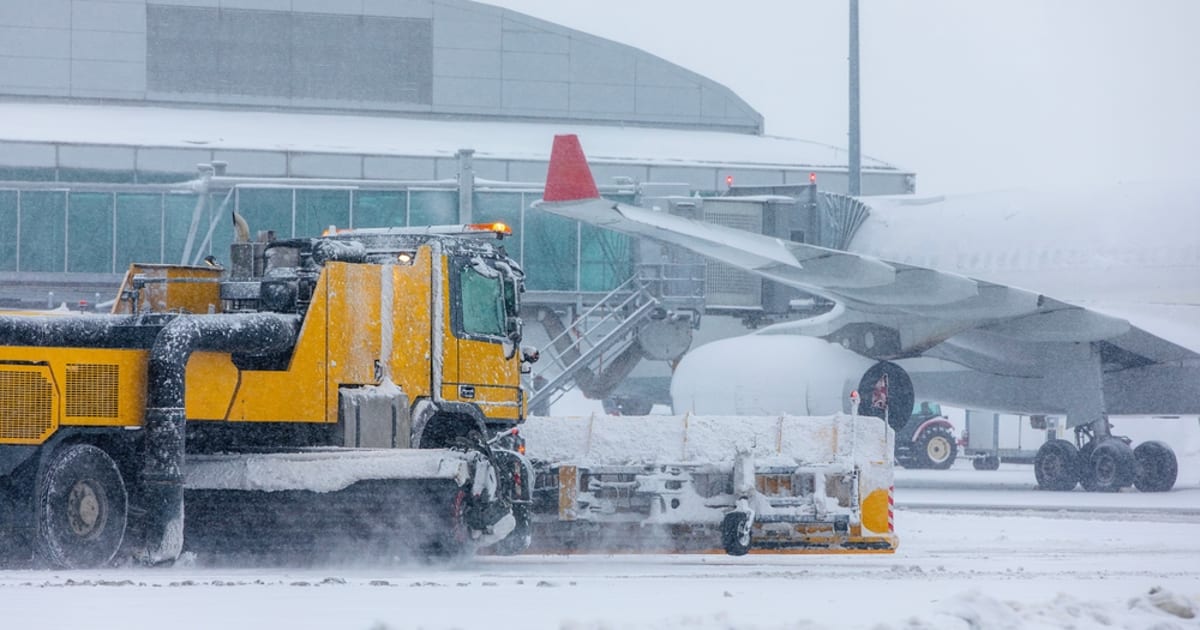
Why is this important? If a plane is coming to you from an area that’s been hit with a huge amount of snow, it may have to be deiced or dug out, which could lead to delays or even cancellations if the process of getting too many airplanes flight-ready in adverse conditions causes crews to “time out” (i.e., stop working because they’ve reached the end of a shift).
By booking a flight on a plane that’s coming from an area not affected by bad weather, you increase the chances of the plane arriving where you are on time—and leaving on time, too (unless of coure you’re in a region where flights can’t leave due to weather).
Flighty is the app most of my fellow experts use to suss out choices. You can also get this type of info from many airline apps and from FlightAware.
Consider mixed modes of travel.
You may be able to switch to a flight that is just outside of the range of an impending storm and then either take the train or drive the rest of the way to your destination.
Of course, you shouldn’t try to drive in blizzard conditions. But if you think you’ll be able to hit the road or hop a train before the really ugly part of the storm starts, this method may be worth a try.
Best of luck to all who are stranded—including me. Here’s hoping we stay safe and stay warm.
