

BYD just destroyed any remaining argument against electric vehicle adoption. At a March 5 launch event in Shenzhen, China, it announced the Blade Battery 2.0, a new battery that can drive more than 621 miles on a single charge. In the process, the company has exposed just how far behind the rest of the electric vehicle industry has fallen.
Gasoline cars have held onto two supreme advantages for a century: the five-minute pit stop and the typical 400-mile range that enabled people to take long road trips without worry. Meanwhile, EVs have suffered from long charging times and short ranges that induced range anxiety in potential buyers, who mostly preferred to stay with internal combustion engine cars or hybrids. With the release of its new Blade Battery 2.0 and Megawatt Flash Charge 2.0 architectures, the fear is over.
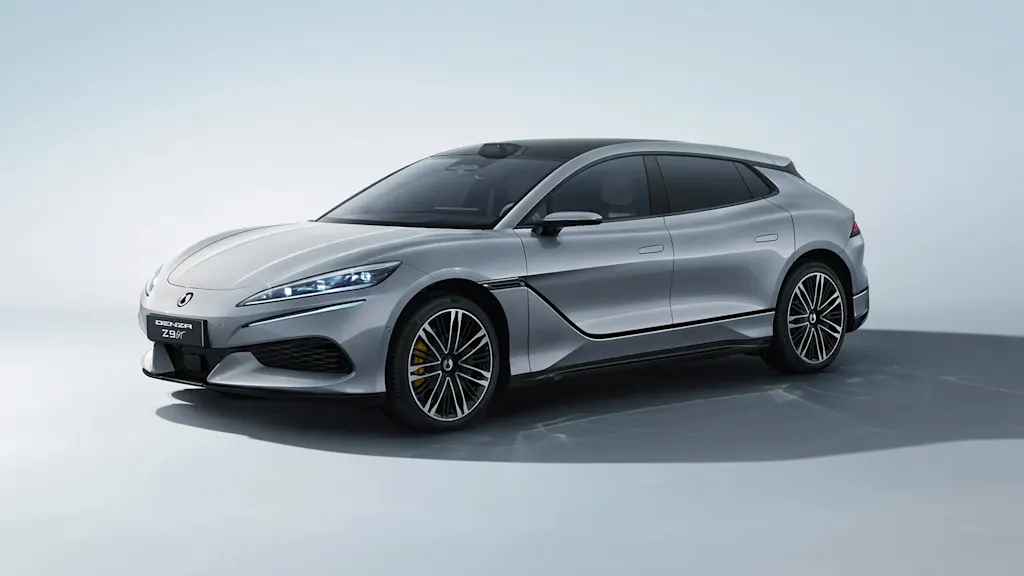
According to the official figures announced in the event, high-volume production BYD cars like its new Denza Z9GT now can drive over 621 miles on a single charge, add roughly 250 miles of range in the time it takes to order a coffee, and rely on a battery pack that refuses to die before the car does, with a guaranteed 620,000-mile lifetime unheard of in any EV.
BYD’s latest battery and charging tech makes current other electric vehicles look like Model Ts— at least for now. As the second largest manufacturer of batteries in the world, BYD is currently the batteries to other manufacturers like Toyota, Kia, Hyundai, and even Tesla itself.
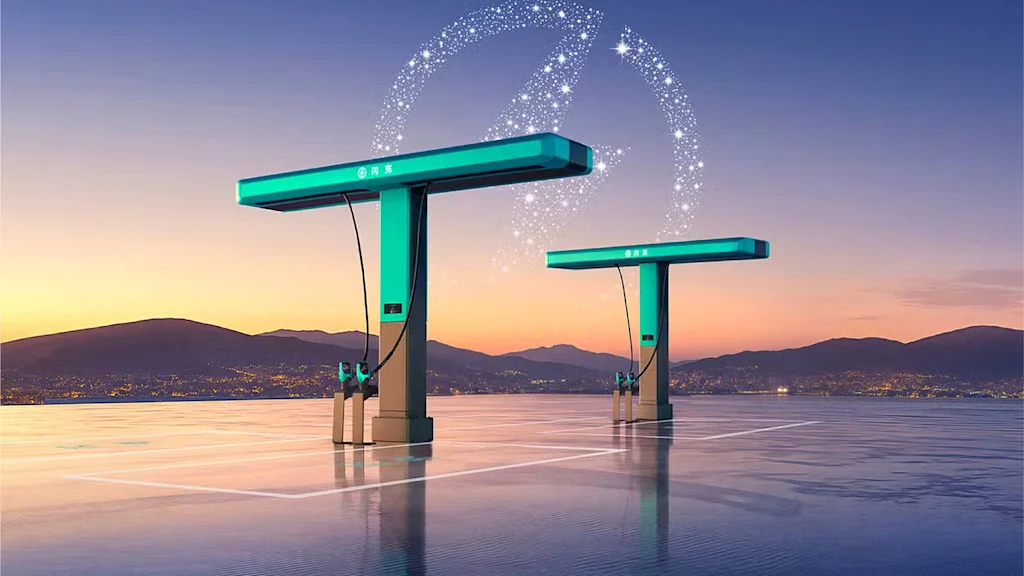
BYD’s new charging architecture kills the ICE pitstop advantage entirely by pushing 1,500 kilowatts of peak power through a single cable, or up to 2,100 kilowatts if using a dual-gun setup. To understand the sheer power of that electrical flow, you have to look at the current industry standard.
Think of kilowatts as the width of a water pipe filling a swimming pool. A standard home charger trickles power overnight at roughly 7 kilowatts, like a garden hose. A Tesla Supercharger—long considered the gold standard of public fast-charging—maxes out around 250 kilowatts. BYD is unleashing six times that amount of energy, effectively hooking the car up to a high-pressure municipal water main.
During a live demonstration on stage, BYD plugged in its new Han L sedan, making the battery jump from 10% to 80% capacity in exactly 6 minutes and 30 seconds. On the keynote screen, BYD officially declared a charging speed of “1 second = 2 kilometers.” Translated to real-world driving terms, five minutes plugged into this hardware yields between 250 and 310 miles of driving range.
Of course, a 1,500-kilowatt charger is useless without a network to plug into. To solve this, BYD confirmed it is rolling out 15,000 of these megawatt charging stations across China by the end of 2026. The company is building over 4,000 of these stations independently, while deploying the rest through joint ventures. They also plan to deploy a European 3,000-charger network by the end of 2026.
Anxiety no more
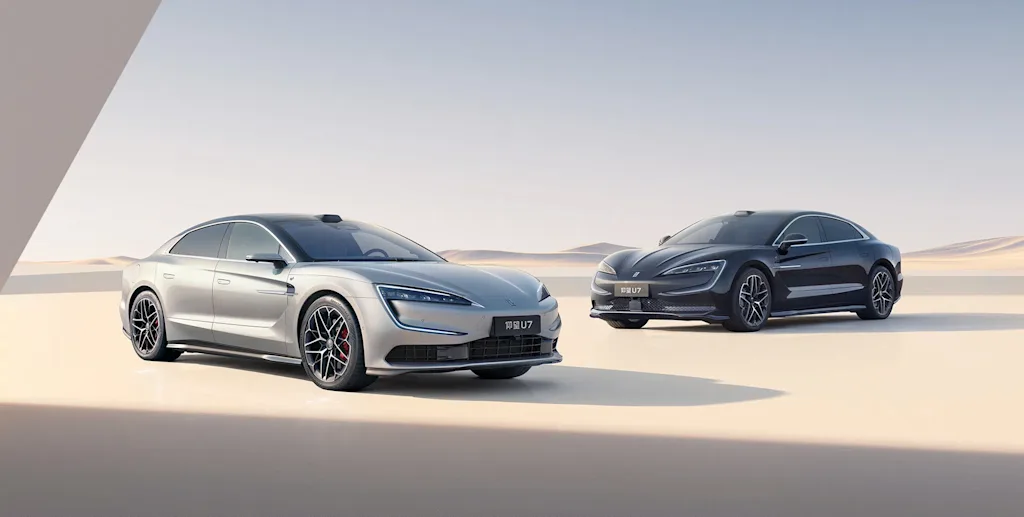
The Blade Battery 2.0 pushes the driving range of upcoming vehicles like the Yangwang U7 past the 621-mile mark, easily beating a standard full tank of gas, which usually taps out around 350 to 400 miles for sedans (although a handful of diesel, hybrids, and gasoline models with oversized tanks can go beyond 600 miles).
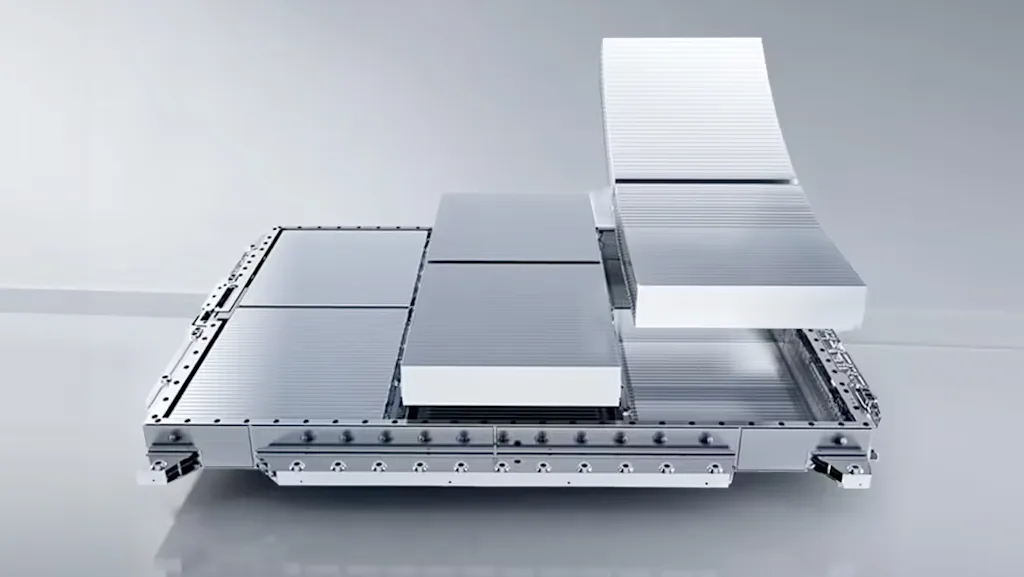
BYD achieved this through a massive leap in energy density, a measure of how much raw electrical energy you can pack into a given physical weight. For years, the auto industry faced a rigid dilemma. You could build a battery using Lithium Iron Phosphate (LFP) chemistry, which is cheap, highly durable, and extremely safe, but the industry standard density hovers at a mediocre 150 to 180 watt-hours per kilogram. The alternate Nickel Cobalt Manganese (NCM) chemistry, which typically packs 200 to 280 watt-hours per kilogram but is more expensive and prone to catching fire. Because of their architecture and chemistry, NCM batteries have low abuse tolerance and release a lot of oxygen when punctured during an accident, which feeds the battery fire and make it virtually impossible to put out. LFP batteries are much harder to puncture and, if it happens, they release minimal oxygen.
The density boost comes from Blade Battery 2.0 new internal structure. First, BYD engineers ground the LFP battery’s chemical materials into an ultra-fine microscopic powder to cram vastly more raw energy into the exact same physical space. Second, they built shorter, direct internal superhighways for the electrical charge, allowing the battery to absorb massive amounts of power in seconds without overheating. This increased the energy density of the new version by 36% to 40% over its previous generation. The new packs hit between 190 and 210 watt-hours per kilogram and, they say, for a lower cost (they didn’t disclose the cost, but BYD claims it will boost their profit margins).
Effectively, the Chinese manufacturer has delivered the promises Elon Musk made back in 2020, when he introduced the idea of his so-called “revolutionary 4680 battery cell” that would dramatically increase range and slash costs. Half a decade later, Tesla’s 4680 rollout has been plagued by manufacturing bottlenecks and underwhelming density figures. Tesla was forced to buy BYD’s first-generation Blade batteries to power the Model Y built in its Berlin gigafactory while using its failed 4680 in some Model Ys at its Texas factory. The Cybertruck uses an improved version of the 4680 called Cybercell, which reportedly has a 272 Wh/kg density.
It gets better
Another big selling point of new battery technology is its lifetime. Batteries represent roughly 30 to 40% of the cost of EVs, so consumers naturally fear the day their battery degrades to the point of a ruinously expensive replacement. Right now, the industry average electric vehicle battery lasts roughly 150,000 to 300,000 miles. The standard NCM batteries used by most competitors tap out after 1,000 to 2,000 charge cycles before losing a severe percentage of their capacity and needing a swap. The Blade 2.0 is rated for over 5,000 charge cycles. While multiplying those cycles by the maximum range yields a theoretical limit in the millions, BYD officially rates the degradation curve to guarantee an operational lifespan of 1.2 million kilometers, or roughly 745,000 miles.
The average American drives about 13,500 miles a year. At that pace, you would have to drive this car every day for 55 years before hitting the end of the battery’s life. The battery will outlast the metal chassis, the seats, and probably the driver.
You would assume these specifications come with a brutal premium, but the financial mechanics here are moving in reverse. BYD managed to lower the production cost of the Blade 2.0 by 15% to 30% compared to its previous generation. While the previous Blade was mostly hoarded by six-figure luxury vehicles, now the Chinese company claims the new batteries and charging architectures are going into high-volume, mainstream 2026 models like the Tang and the Song, which sit in the $19,000 to $30,000 price bracket.
It’s not perfect, however. There’s still one undeniable advantage for the internal combustion engine: bad winters. LFP batteries historically hate freezing temperatures. A gas tank holds the exact same amount of combustible energy at negative 4 degrees Fahrenheit as it does at room temperature. An EV battery, however, usually loses 10% to 20% of its range to heat the cabin, and its chemical reactions slow down so much that fast-charging becomes impossible until the pack warms up.
BYD integrated an internal pulse-heating system and a full liquid thermal management array directly into the Blade 2.0 to avoid losing so much energy and allow for fast charging in extremely cold environments. At -4°F, the Blade 2.0 retains over 85% of its capacity. At -22°F, it keeps 80% of its capacity (previous-generation LFP electric vehicles could drop as much as 50% at this temperature). Standard Nickel Cobalt Manganese (NCM) EV batteries typically retain 70% to 80% of their total capacity at -4°F, falling to roughly 40% to 60% at -22°F.
EVs with the standard NCM batteries also actively restrict or entirely lock out fast-charging at low temperatures to prevent permanent physical damage to the battery cells. But according to the company’s CEO Wang Chuanfu during the event, “the new Blade Battery can be charged from 20% to 97% in less than 12 minutes in temperatures as low as -4°F, enabling a driving range of 483 miles.” That, while not matching the 0% loss of gasoline, is an impressive claim too.
We will have to wait for test drives to see how all these claims pan out. But, judging by how well the previous generation worked, I have no reason to doubt it. Add the fact that all this tech will be available across the BYD entire car range from the luxurious new Yangwang U7 sedan to the budget Dolphin, and apparently we may have entered a new era for electric vehicles. Too bad it will not be arriving in the U.S. anytime soon.
