

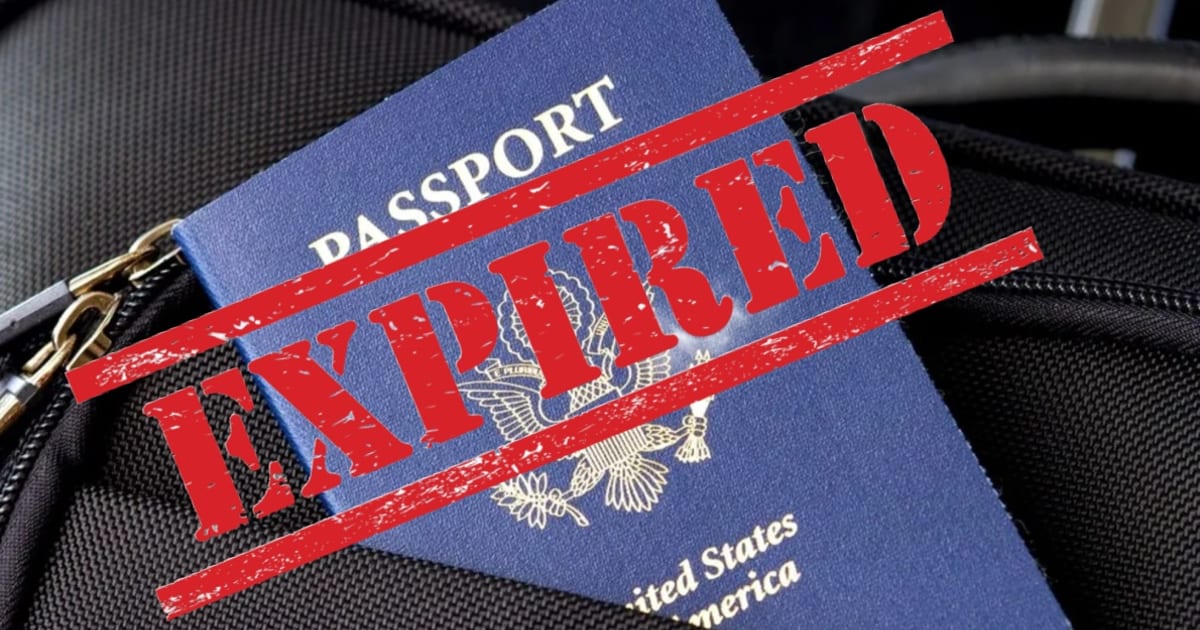
Turns out the Transportation Security Administration will let you fly with expired identification—and for a surprisingly long time.
According to the federal agency’s rules on valid identification for passing through airport security checkpoints, the “TSA currently accepts expired ID up to two years after expiration.”
There are a couple caveats, however.
First, the expired ID must be one that the TSA considers acceptable. That might sound obvious, but there’s something in there that could trip you up.
The TSA’s list of acceptable forms of ID includes U.S. passports and passport cards, Global Entry cards, and, as of May 2025, REAL ID–compliant state-issued driver’s licenses and ID cards. (Click here to see the complete list of TSA-approved IDs.)
So, in other words, you may not fly with an expired state-issued ID that is not REAL ID–compliant (and it is possible to have an expired REAL ID license, given that the first states began issuing the star-adorned cards in 2012).
For that matter, you can’t fly with an active state-issued driver’s license or ID card that’s not REAL ID–compliant.
But if that’s what you’ve got, and you also happen to have an expired U.S. passport that went out of date no more than 2 years ago, the TSA will accept that passport at security checkpoints.
Another important thing to note: We’re talking about domestic flights here. You will of course need an unexpired passport to travel internationally.
In fact, many countries require visitors to have passports with up to 6 months of remaining validity. Even nations that don’t have a 6-month requirement will, at minimum, mandate that your passport remain valid for the duration of your stay.
But if you’re traveling by air within the U.S. and you still don’t have a REAL ID, the TSA will let you use expired official identification such as a passport for 2 more years.
More Reasons Not to Throw Away Expired Passports and Other Government IDs
As tempting as it might be to dump the evidence of your most unflattering photos, there are other good reasons not to throw out an expired government ID such as a U.S. passport or state-issued driver’s license.
For starters, you’ll need the old document to get a new one. In the case of passports, renewing by mail or in person requires submitting the expiring passport booklet with your application (the old passport is eventually returned to you). And even for online renewals, you’ll need to enter info from your most recent passport.
An expired U.S. passport, by the way, remains valid proof of citizenship, no matter how long ago the document expired, as a State Department official confirmed to Reader’s Digest. So if you neglect to renew the passport and need to provide evidence that you’re a U.S. citizen, an expired passport should work just as well as a birth certificate or similar official document.
State-issued IDs may have fewer uses after expiration, but they’re still worth keeping in a safe place so that they don’t fall into the wrong hands, putting you at risk of identity theft.
Related: Can I Fly Without an ID? TSA Rules for Lost or Stolen Identification
