

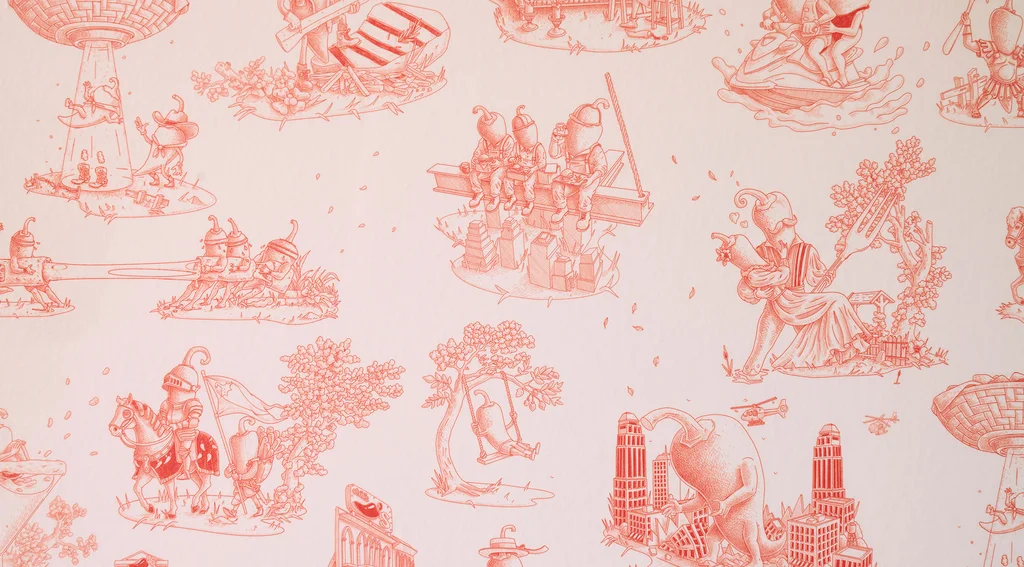
At first glance, the toile wallpaper is pure class: cream-colored and printed with intricate, brick-red drawings. But as I look more closely, I see . . . Wait. Is that a pair of chili peppers riding a Jet Ski? And is that other pepper, the one on a chaise longue, posing nude for a painting?
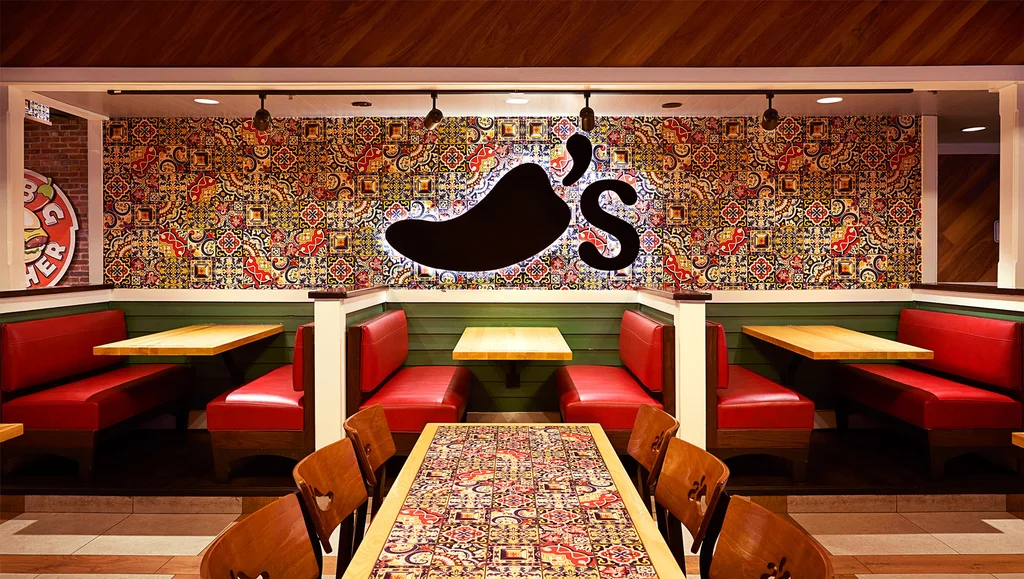
The wallpaper is just one of many decorative flourishes competing for my attention as I sit at a Chili’s restaurant, already on my fourth free iced tea refill. Technicolor tiles blanket the tables and bar, patterned like Mexican ceramics. Neon-light chili peppers and a framed illustration of a cheese pull (that thing that happens when you bite into a gooey mozzarella stick) hang on the walls.
There’s even a chalkboard-style drawing of a bright-red chili pepper at the host stand, just like the one that greeted Chili’s diners throughout the 1990s. In fact, it was made by the same artist, who came out of retirement for the commission.
This restaurant, in the McMansion-filled Dallas suburb of Richland Hills, Texas, looks and feels a helluva lot like the Chili’s of old. You may know what I’m talking about: That salt-crusted gathering place from the days before GLP-1s and inscrutable Uber Eats fees. A place where the Tex always rhymes with Mex, ranch is practically a food group, and no one will judge you for being a grown-up and ordering a dinner that consists solely of appetizers. The spot where your plate of sizzling fajitas snaps necks at other tables when it arrives at yours with a loud sszzzhhhhh.
But it’s actually a prototype for the Chili’s of the future, featuring a retro redesign that will roll out across the company’s more than 1,200 North American restaurants over the next decade, beginning this fall. (Richland Hills is a short drive from Chili’s headquarters in Dallas.) Instead of the cold, industrial interiors that have dominated Chili’s design in recent years, these will be filled with an exuberant mix of color and texture, including that toile wallpaper, which was designed in France.
This shift back to the brand’s maximalist roots is the brainchild of Kevin Hochman, who became CEO of Brinker International (parent company of Chili’s and Maggiano’s Little Italy) in 2022. A veteran of Procter & Gamble and Yum Brands—where he pulled double duty as president of both KFC North America and Pizza Hut—Hochman has spent his tenure at Chili’s executing what Evercore analyst David Palmer calls “the best turnaround story of all time in restaurants.”
Chili’s had been a brand lost for at least a generation. In the years before the pandemic, it was, like so much of the casual-dining industry, bleeding customers to newer fast-casual brands, like Chipotle, and trying to stanch the wound by lowering prices. After COVID-19 hit, its kitchens were so underutilized that Brinker enlisted them for a virtual concept, It’s Just Wings, and dedicated much of the Chili’s marketing budget to the soulless ghost kitchen brand while cutting back on human waitstaff.
Today, Chili’s is on fire. Same-store sales have ballooned 50% over the last three years (and 43% in the last two), while revenue was up by nearly a billion dollars between 2024 and 2025 to reach $5.34 billion. The company has boosted margins from 12% in fiscal year 2023 to a projected 18% in 2026. The brand’s traffic, meanwhile, has grown for two consecutive years as Gen Zers, millennials, Xers, and boomers all make their way to a place that suddenly feels vibrant again.
While casual-dining competitors like Applebee’s are struggling and TGI Fridays may go extinct, Chili’s has courted young diners who fill social media feeds with videos of its dishes. The brand’s Margarita of the Month program—a rotating menu of seasonally inspired $6 drinks—has become such a sensation that it has its own line of merch. Meanwhile, the chain flexes its affordability, needling McDonald’s and other fast-food brands with its 3 for Me deal: a near-half-pound burger, fries, a refillable drink, and endless chips for $10.99—less than a Big Mac meal in some cities.
Nothing about this turnaround was foretold (except by Hochman, who—at his first annual conference as CEO of Chili’s—showed off a mocked-up, aspirational 2025 issue of Fast Company’s sister publication, Inc., with the cover line “Chili’s Is Back, Baby”). And there’s no single trick that created this success.
Instead, in an era when cash-strapped Americans are getting fewer chips in bags and less cacao in their candy, when they’re feeling thinner cotton in their sweatshirts and seeing fewer characters at Disney World—when every damn thing seems to have gotten a lot more expensive and a little worse—Chili’s has reintroduced the lost sensation of middle-class abundance.
“A lot of folks thought casual dining was dead, that people just don’t eat out anymore. That young people just want to order online,” says Hochman. He’s proving critics wrong—and filling dining rooms—by restoring so many of the small details the past decade had stripped from hospitality.
The cheese pull looks scandalous. As mushroom-haired TikToker Dylan McArthur (aka dylaneatss) cracks the breadcrumb shell of a fried mozzarella stick, an elastic band of dairy fats stretches from his lips. His eyes widen. He dangles the strand from his mouth—then consumes the dish with a loud slurp.
This was February 2024. Within days, McArthur’s video had ricocheted around the internet (it’s now been viewed 4 million times). Soon, young people were coming into Chili’s just to order its Triple Dipper combo, which lets you mix and match appetizers like sliders, chicken crispers (aka tenders), wings, and fried mozzarella.
At first, Chili’s wasn’t sure what was happening—were the youths really hungry for cheese pulls? “We were like, I guess it could be this thing on TikTok,” says George Felix, executive vice president and chief marketing officer at Brinker International. “It felt weird for us to be like, ‘Guys, it’s definitely the cheese!’”
Big brands go viral all the time. What’s rare is when they manage to keep those customers around. Chili’s reports that these newbies have been returning two to three times a year, on average, mimicking long-term customer behavior. “We’d made a huge investment to make our restaurants better, so we were ready when our moment came,” says Felix. Or, as Hochman puts it, Chili’s had “gone to the gym.”
As a new generation enters Chili’s dining rooms, they find that the cheese really does pull, that the refills come fast. What’s more, when the Triple Dipper arrives on the table, it feels big. That’s not just because it can exceed 3,000 calories; it’s because dippers are served in an elevated basket. The serving piece works so well as a stage, making food appear more opulent and photogenic, that the director of culinary, Brian Paquette, has transitioned most of the menu to this basket.
It also helps that Hochman and his culinary team have been reformulating and retooling much of the Chili’s menu for better flavor. The burgers have been upgraded with bigger brioche buns. The chicken crispers come in more consistent sizes, thanks to renegotiations with poultry suppliers. The fried items taste better because Chili’s swaps out the oil more frequently, and the fries themselves are cooked longer so they’re crispier. (To get food out faster, the culinary team has even enlarged the holes in the seasoned-salt shakers, cutting the number of shakes needed to season a bowl of fries from 30 to 10.)
The chicken for fajitas, meanwhile, has a marinade that took a full year to develop, and instead of being cooked via a conveyor pizza oven for eight minutes, it now roasts in TurboChef ovens in just two and a half minutes. That means the chicken can be made to order instead of batch-cooked in advance. And that means Chili’s can cut out preservatives and excess sodium. This higher-quality meat is also the foundation for Chili’s new breaded chicken sandwiches.
Felix explains much of this to me in the Richland Hills restaurant. Alongside Chili’s VP of marketing, Jesse Johnson, we’re eating our way through the stars of Chili’s menu. The menu still has weak points, they acknowledge. Chili’s needs to give attention to the long-neglected salads and is eyeing an expansion into a new food category. Competitors have tried sushi, Johnson scoffs. Chili’s is thinking along the lines of tacos.
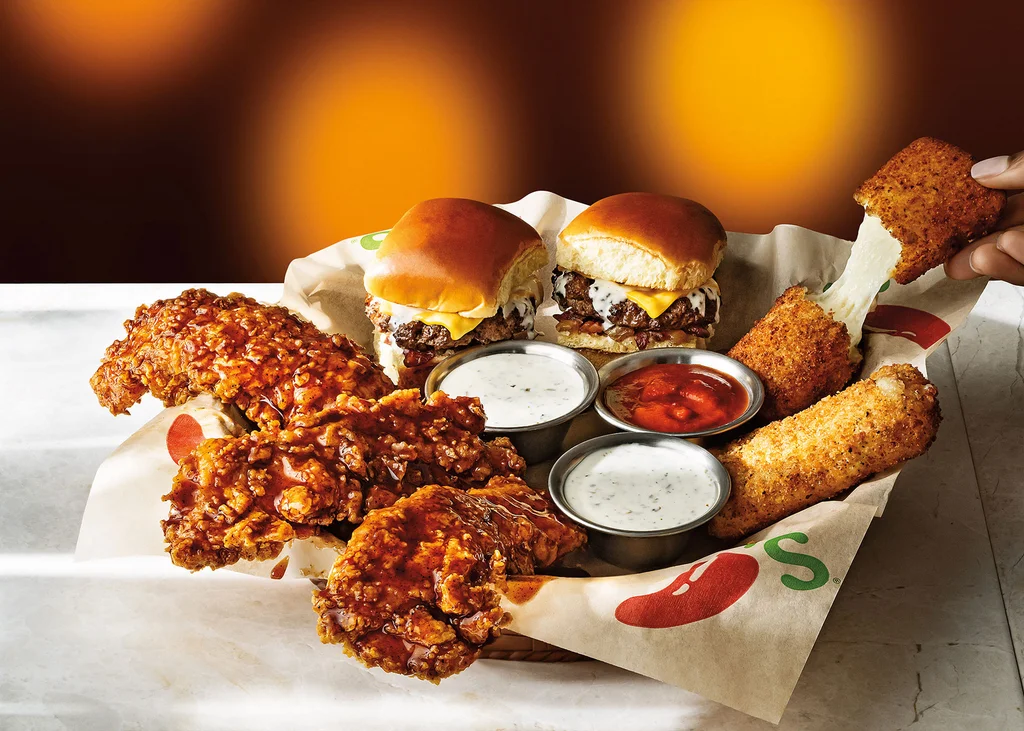
In the meantime, Chili’s is keeping the Triple Dipper buzz going. Shortly after McArthur’s video took off, chief supply chain officer James Butler suggested coating the fried mozzarella in Nashville hot sauce, like a buffalo wing. Nashville Hot Mozzarella launched as a secret menu item via social media within months of Triple Dippers going viral. “It was like, ‘We already have the sauces. We have the cheese. We should take a swing,’” Felix says.
In 2022, Triple Dippers constituted 6% to 7% of Chili’s sales, but in recent quarters, they’ve accounted for 16%—driving the company’s mozzarella consumption from 12 million pounds in 2022 to 65 million pounds annually today.
“Everyone [in the industry], when they talk to us, is like, ‘Yeah, we haven’t unlocked our stunt food yet,’” says Johnson. “We’re like, ‘Oh, that wasn’t what that was. The Triple Dipper has been on the menu for a decade!’ It’s not like we manufactured this. We just paid attention to how people were eating our food and shined a light on it.”
For years, at every Chili’s restaurant around the country, one lucky prep cook would spend the first hour of their shift counting shrimp. To ensure that no extra crustaceans made it onto a plate, the cook would apportion exactly six into little baggies, prepping bag after bag for the coming meal service.
Hochman learned of this chore on a restaurant listening tour that he took shortly after becoming CEO. In the hours before opening, servers and managers would gather in dining rooms. He’d ask for their advice: If you were the CEO of Chili’s, what’s the first thing you’d change?
Employees were hesitant to complain about leaking roofs and stifling hot kitchens. Who was this exec taking his own notes on a laptop? Would he actually care what anybody said? Would they lose their jobs for speaking up? But at some point, someone brought up the shrimp, saying they could save time by just counting out the shrimp before firing up a dish.
Hochman liked the idea and told his colleagues about the new plan. Some wanted to test it. What about shrimp waste?! He insisted they simply make the change. And it was fine: There was no “shrimp waste.”
“Everybody laughs about that story,” he says. “But one hour of that portioning every day, times 1,100 restaurants, is 46 years annually of counting that could just go away.” Many of Hochman’s early changes bubbled up from the frontline staff as they pointed out operational pain points.
Servers told him that orders sometimes disappeared after being typed into their tablets. They’d only realize the problem when they brought meals to the table and someone was missing their food. When Hochman took the problem to his now former chief information officer, he was told: No technology is perfect. But auditing proved that one out of 20 orders was affected. At a restaurant pushing 300 tickets a night, that’s 15 plates that never came out.
This wasn’t just a problem for diners, says Hochman. It was demoralizing for staffers. “At some point, you’re just like, ‘I did everything right. Screw it. I’m done.’”
Hochman’s team fixed the bug—updating both the ordering code and Wi-Fi routers inside Chili’s. It’s part of the $100 million on repairs and maintenance over the past three years that he’s invested in stores—which has nothing to do with the redesign.
He rolled out new tablets for tables so diners could self-check-out and redesigned the point-of-sale tablets carried by servers to save them hundreds of millions of taps a year. He also eliminated around 50 menu items (fried pickles, a turkey club, even chili), while increasing staff by 30% to 40% per store. (Without having to pay minimum wage to servers who earn tips in most states, Chili’s, like much of the industry, relies on customers to help subsidize this extra manpower.)
Hochman no longer has to coax employees for complaints. Stores have a list of items flagged for his attention before he shows up: “80% to 90% of the ideas of this turnaround have come from these restaurant teams,” he says. “And they’re phenomenal.”
It’s Friday night in the Chicago suburbs, and I’ve brought the fam to Chili’s. The place is already buzzing at 5:30. I can barely find a parking spot. Inside, we grab one of a few open tables.
The scene could be a Chili’s commercial: I walk past a joyful 5-year-old celebrating her birthday party, emo teens sipping on Cokes, several tables of young women, and a twentysomething couple on a frugal date night. I note that they’ve opted to course out their 3 for Me meal—starting with free chips, enjoying salads as a starter, and then rolling into quesadillas for their main. They each drink a giant, $6 Lemon Drop, the current Margarita of the Month.
I had arrived at the restaurant with fantasies of using the $10.99 3 for Me menu to feed my family of four for under $45 before tax and tip. (You can spend up to $17 on the 3 for Me menu.) That plan quickly went off the rails. Between margaritas for me and my wife, a Triple Dipper and fries, fajitas, sliders, and a breaded chicken sandwich, I wind up spending $117, with tax and tip. But looking around the table, everyone is happy. And uncomfortably full.
Palmer, the Evercore analyst, laughs when he hears my story, knowing I’d been honeypotted by the Chili’s value proposition, which he dubs “smoke and mirrors.” On the company’s January earnings call, Hochman reported that Chili’s was not only the most visited casual-dining brand of 2025, it was also the most affordable, with a per-person checkout average more than $3 less than its direct competitors and more than $4 less than the entire casual-dining category, according to data from Black Box. But even so, checkout totals have been steadily rising.
In a December 2024 analyst presentation, Hochman noted that while 38% of Chili’s sales had once been tied to “some kind of deal,” including coupons and value-menu items, he’d gotten that down to 30%. Today, despite the company’s marketing of 3 for Me, the value menu accounts for just 18% of sales—and most people order its more expensive options. Otherwise, the company’s “math doesn’t continue to math,” Hochman said on a recent earnings call.
Notably, the 3 for Me menu sits at the very end of the Chili’s elaborate menu, in a drab white box. When I flag this design decision to the Chili’s team, no one wants to admit they’re burying the deal, but it has that effect. The most generous interpretation is that Chili’s isn’t deceiving the frugal customer so much as offering them the license to indulge.
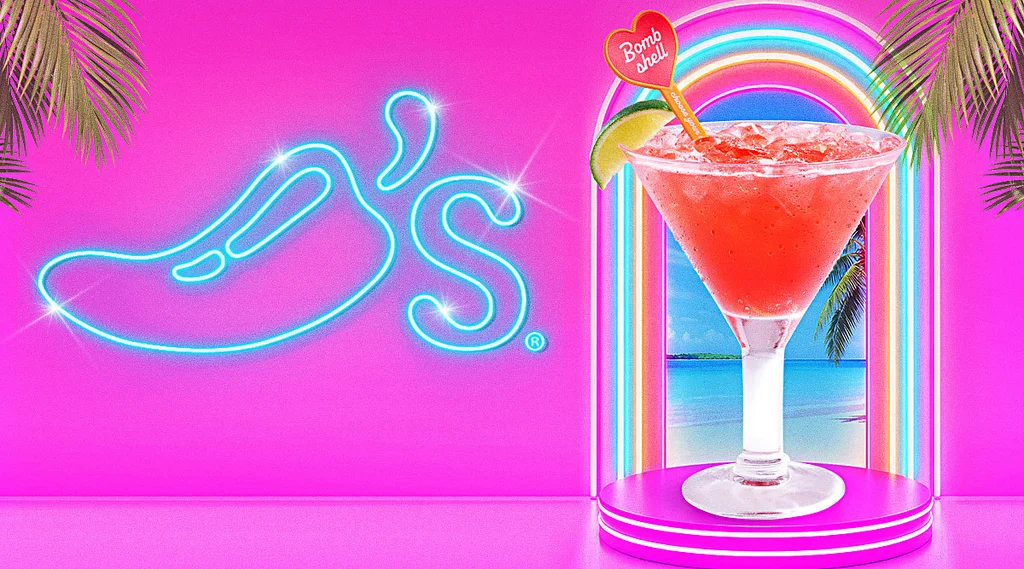
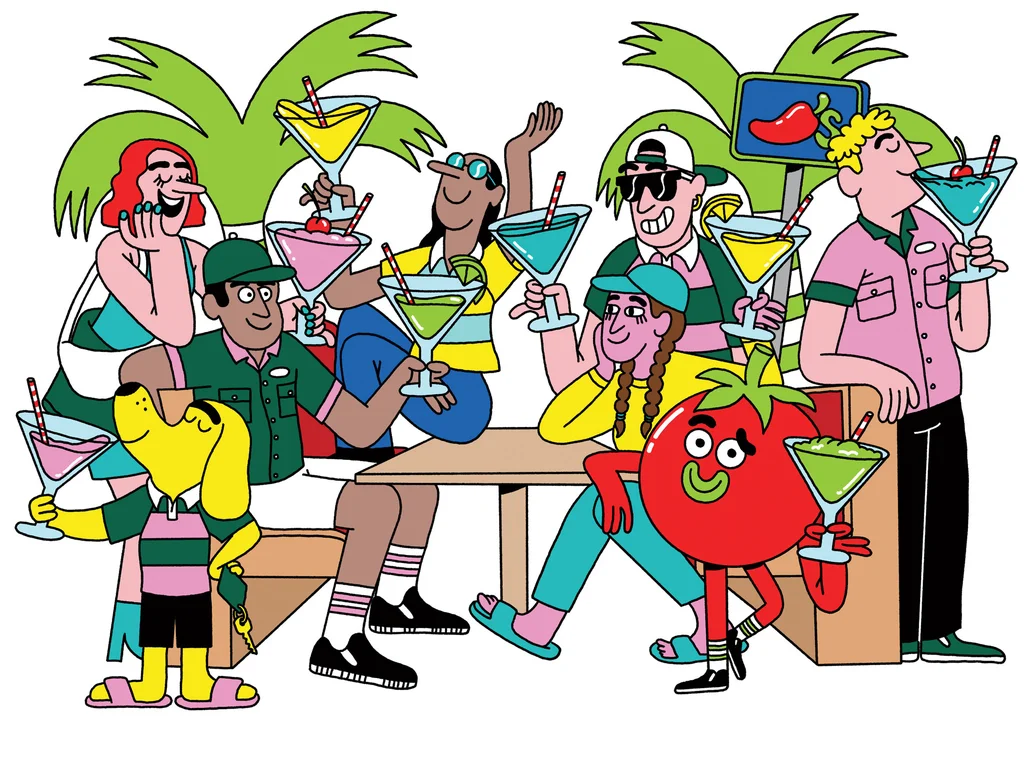
Chili’s has been far less shy with the Margarita of the Month. Served in a comically oversized martini glass—and concocted in eye-catching hues—the beverage promises a party that never ends. But the glass’s sharply tapered edge and an ample serving of ice ensures the drink actually hovers closer to 4 to 6 ounces. The beverage team artfully tunes the alcohol by volume up or down, depending on the costs of spirits.
Chili’s sells more margaritas than any entity in the world. It set a record by moving 1 million Lemon Drops in 2025, and then broke it by selling 2.5 million twin turquoise and fuchsia margs later that year, paired with the launch of Wicked for Good.
The company keeps experimenting. In April 2026, it introduced peach-popping boba margaritas along with a mocktail version to bring younger, or just drier, customers into the mix. (Chili’s is treading carefully with mocktails to preserve its reputation as a place to drink: Its January 2025 margarita was dubbed the Resolution Breaker.)
I’ve tried different Chili’s margaritas over the past few years. Few registered as a margarita on my tongue, and all were far too sweet for me. But halfway through my meal—watching my fellow diners enjoy their giant glasses—I cracked and ordered a Lemon Drop. That’s what happens to a lot of best intentions at Chili’s.
