

Across the Global South, one of the biggest challenges is not just to build more infrastructure, but to build it right. Without institutional capacity and financial depth, the increasingly popular public-private-partnership model can backfire, creating a vicious spiral of debt, delays, and disillusionment.
NEW DELHI – With infrastructure now seen as the leading engine of growth across the Global South, governments are under pressure to build – and fast. But for most, fiscal space is limited; development aid is thinning; and long-promised climate financing remains elusive. As a result, countries are turning to private capital and reviving an old idea with renewed urgency: public-private partnerships (PPPs).
According to the World Bank, in 2024, low- and middle-income countries received $100 billion in private participation in infrastructure (PPI) investment, an impressive 20% increase from the five-year (2019-23) annual average of $83.7 billion. Yet history recommends caution. While the logic of mobilizing private finance is often compelling, the record is mixed. Too often, emerging markets have relied on models proselytized by global development finance institutions without paying adequate attention to local institutional constraints.
Moreover, the bankability of some types of infrastructure projects – meaning a strong risk-return profile – tends to be limited, even in advanced economies. For example, very few highways have been developed by the private sector, which – for obvious reasons – is less inclined to supply non-remunerative public goods and services. This is even more the case with infrastructure projects, which typically come with a heavy burden of long-term debt.
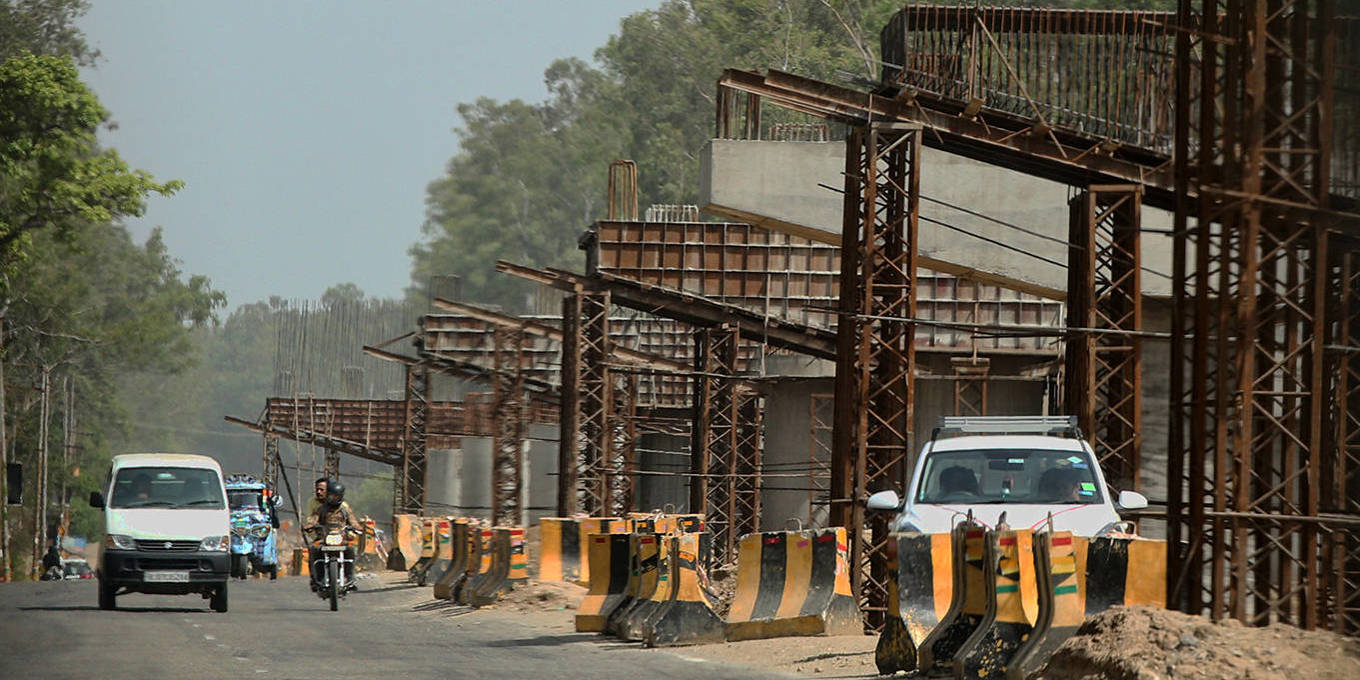
India’s experience is instructive. In the early 2000s, the country launched one of the world’s largest PPP infrastructure programs, hoping to close massive gaps in ports, airports, highways, power, telecoms, and urban services. But the results have been mixed, partly because the expansion occurred just as India’s development finance institutions (DFIs) were being wound down, following financial-sector reforms in the 1990s.
With the government favoring PPPs in the absence of a mature bond market or DFIs, India leaned heavily on public-sector banks to fund long-gestation projects. But these institutions were not equipped to provide longer-term capital, assess risk, or appraise and monitor complex, risky infrastructure ventures. As PPP activity accelerated and private investment in infrastructure surged between 2007-14, so did bank lending to the sector. The share of infrastructure in non-food bank credit rose from 3.6% in 2007 to over 15% by 2015. Nominal bank credit to infrastructure increased more than sixfold, from around ₹1.4 trillion ($15.4 billion) to ₹9.2 trillion.
By the mid-2010s, structural weaknesses had become evident. Many road and power projects ran into land-acquisition issues, execution delays, and overoptimistic demand projections. Revenues underperformed, costs escalated, and developers defaulted. The fallout was severe. By 2018, Indian banks’ gross non-performing asset ratio had climbed to 11.2%, among the highest for major economies. Public-sector banks, which had financed most of these projects, bore a disproportionate share of the stress, with NPAs of 14.6%, compared to 4.8% for private banks. Nearly ₹4 trillion in public money was then spent on recapitalizing banks.
India is not an outlier. Spain’s toll-road PPPs faced a similar reckoning: between 2010 and 2014, nine of ten radial road projects defaulted after traffic volumes collapsed, forcing government intervention. Even the United Kingdom, often cited as a PPP pioneer, ultimately scaled back its Private Finance Initiative, citing high long-term costs and opaque contracts. It has since begun the process of nationalizing its rail network, three decades after privatizing it.
Despite these failures, multilateral development banks have continued to promote PPPs indiscriminately. But it is time to ask why these projects fail, and what countries should do differently. The answer is not to reject PPPs, but to understand where they are viable and where they are not. Then we can focus on the institutional scaffolding that supports viable programs.
Remunerative sectors like ports, airports, telecoms, and power should be viable, in principle, but highways, municipal infrastructure, and railways typically are not. Infrastructure projects are inherently long-term, risk-intensive, and exposed to regulatory uncertainty, whereas medium-term financing is typically the best available. Such projects also require deep financial markets, strong contract enforcement, and competent public oversight. Absent these conditions, PPPs tend to socialize losses while privatizing gains, increasing the likelihood of delays, renegotiations, and eventual bailouts.
There is a growing need to revive DFIs at the national level to supplement the multilateral development banks. National institutions have a unique role to play in developing expertise in infrastructure financing, offering long-term loans, conducting project due diligence, and crowding in private capital through guarantees and co-lending structures.
For example, Helios Towers (an independent builder of cell phone towers) combined modest DFI funding with large-scale private investment to expand telecom infrastructure profitably and sustainably in Africa. India, too, has recognized this gap. In 2021, the government established the National Bank for Financing Infrastructure and Development to act as a catalyst for infrastructure finance and to support projects throughout their life cycle.
But how can DFIs attract long-term funds? The key is to tap domestic savings, particularly from pension funds and the insurance industry, which in turn calls for greater efforts to promote long-term savings through these instruments. It is also important to develop domestic bond markets, as countries like South Korea and Malaysia have done. But these markets do have limitations, owing to the risks associated with private entities’ variable longevity. That is why the most successful bond instruments for infrastructure financing are municipal bonds in the US and Pfandbriefe in Germany. The borrowers in these cases are essentially public agencies supported by an elaborate institutional structure.
Finally, governments need robust project-preparation facilities, realistic demand forecasts, and regulatory capacity, not just legal contracts with private partners. The stakes could not be higher. The OECD estimates global infrastructure needs at $6.9 trillion annually through 2030, with developing countries facing the widest deficits. The climate crisis adds additional urgency: without resilient transportation, energy, and water systems, emerging economies will remain vulnerable.
India’s experience offers a cautionary tale. Without institutional capacity and financial depth, PPPs can backfire, creating a vicious spiral of debt, delays, and disillusionment. For the Global South, the challenge is not just to build more infrastructure quickly, but to build it right.
