

In the 1980s, Big Tobacco started playing a major role in America’s food industry, buying up companies like General Foods, Kraft, and Nabisco.
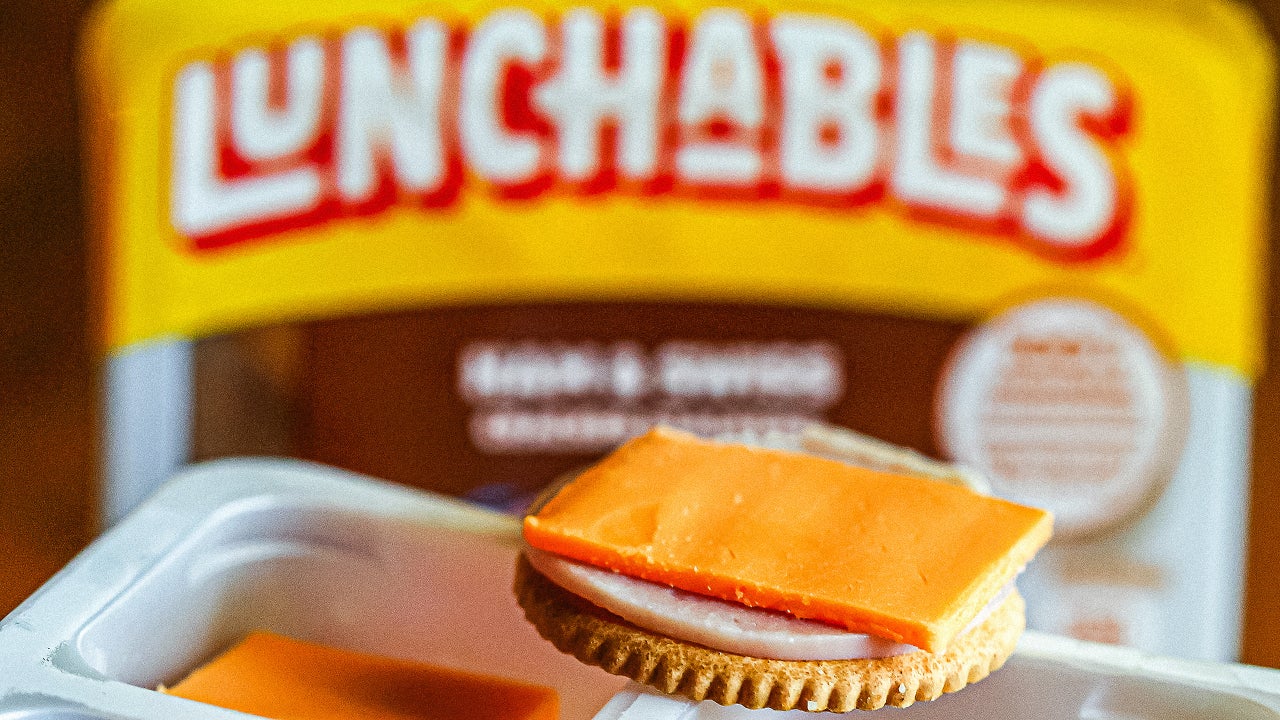
And that role, according to a new study, included using R&D from the cigarette business to make ultra-processed foods, such as the enduringly popular Lunchables brand of kid-friendly prepackaged meals and snacks. Such foods, the study reveals, were engineered “for consumer pleasure and appeal” with help from cigarette-related research on flavor engineering, packaging developments, and more.
The study was recently published in the American Journal of Public Health. It’s one article in an entire issue focused on ultra-processed foods, their connection to chronic diseases and addiction, and how tobacco companies essentially created “the modern ultra-processed foods industry.”
Why Big Tobacco got into the food industry
Laura Schmidt, a professor of medicine and health policy researcher at the University of California, San Francisco, who authored the study, explored the topic by asking why Big Tobacco companies got into the food business in the first place.
Tobacco giant Philip Morris bought General Foods in 1985 and acquired Kraft in 1988. (It was spun out in 2007.) This coincided with the rise of public health concerns, criticisms, and lawsuits against the tobacco industry.
That expansion was more than just a way to diversify at a time when Big Tobacco’s business was facing scrutiny.
“The reason they got into the food business was because they wanted to use tobacco R&D assets to make food,” Schmidt says. She outlines how that happened through a case study of Lunchables, using internal documents made public from litigation of the tobacco industry.
Lunchables were in premarket development at General Foods when Philip Morris bought that company; the products were later released by Kraft. (The two food divisions merged in 1989.) Today the brand is manufactured by Kraft Heinz.
In a statement to Fast Company, Nicolas Amaya, president of Kraft Heinz’s North American market, emphasized that the company hasn’t had any affiliation with Philip Morris since 2007.
“What we can speak to is the food we make today,” Amaya said. “Our portfolio today includes affordable options with more protein, more whole grains, less sugar and sodium, and no artificial dyes.”
Lunchables are still considered an ultra-processed food, part of a category the study connects to the tobacco industry’s R&D process. However, Amaya said, Kraft Heinz continues to “evolve our portfolio based on consumer preferences and feel proud of the role we play in helping people live delicious, healthy and balanced lives.”
“Technical synergies” between food and cigarettes
While Philip Morris owned Kraft, executives spoke about the “technical synergies” between its food and tobacco product lines.
It even created a Technical Synergies Committee to streamline R&D for chemical additives and processing and packaging technologies across both cigarettes and food.
One way Philip Morris used its experience creating cigarettes to make products like Lunchables was through its R&D of flavorings, colors, and chemicals.
“When Philip Morris bought up these food companies, they already had these massive libraries of flavor and colors,” Schmidt says.
Sometimes the company would develop chemical additives that didn’t make it into cigarettes (it had patents on artificial sweeteners, for example), but that R&D was “on the shelf” when it got into the food industry.
The two product lines even shared supply chains for “refined agricultural ingredients and chemical additives,” Schmidt’s paper says, noting that they also used the same processing and packaging technologies, including “chemically encapsulated flavors.”
Fast Company reached out to Altria Group, parent company of Philip Morris USA, for comment.
What distinguishes ultra-processed foods
Philip Morris’s approach, Schmidt says, led to the rise in ultra-processed foods, which now account for 70% of packaged foods in the U.S. and 62% of the calories in children’s diets. Studies have linked ultra-processed foods to a rise in obesity and health concerns like diabetes and cardiovascular disease.
Lots of foods can be considered “processed” (like bread, for instance). And many of the approaches to industrial manufacturing, processing, and marketing could be considered common strategies for all consumer packaged goods companies that reach global audiences.
There isn’t one definition for ultra-processed foods. But food scientists, relying on a validated food classification system, say they are distinguished by their cosmetic additives (which change flavor, texture, and color) and their extreme processing, which includes breaking ingredients down to the molecular level and recombining them with additives in industrial facilities to make what Schmidt calls “something that looks like food.”
“Those two things—that pretty much is the R&D that Philip Morris took from its cigarette division and applied to Lunchables,” Schmidt says. “They’re the same business model. They’re the same formulation strategy. They use the same ingredients. They use the same industrial processing technologies. They use the same product design technologies.”
Tobacco-owned ultra-processed foods, her paper notes, were “disproportionally hyper-palatable,” meaning they contained high levels of fat, sugar, sodium, or carbs, all factors that have been linked to overeating.
“Why should we see them so separate?”
As food companies hopped on the low-fat craze of the 1990s, Philip Morris brought its nicotine flavor researchers over to Kraft to consult on how to make such foods taste better. Kraft researchers credited those nicotine researchers, documents show, as crucial to the development of products like low-fat Lunchables.
Another commonality comes from the strategy of “consumer-driven product development,” which Big Tobacco pioneered. This used psychological research to discover and target customers’ subconscious desires.
For cigarettes, that resulted in marketing like the Marlboro Man and products like Virginia Slims, targeted at women.
For the food business, that shaped the design of Lunchables “around what children really want and need, which is autonomy and freedom to play,” Schmidt says. “That’s why Lunchables were designed to really function like a toy.”
All are examples of how cigarettes and food were approached with similar corporate strategies. The study includes a quote from then-Philip Morris CEO Hamish Maxwell noting “all of our major businesses share common characteristics.”
To Schmidt, this means the two industries should also face similar approaches when it comes to public health policies and regulations.
“If the people who designed and made these foods think that they’re very similar businesses, why should we see them so separate?” she says. “It does start to make you wonder, really, how different are ultra-processed foods from cigarettes?”
