
Close Menu
    What's Hot

    Inside Hegseth’s War on Diversity and Blocked Promotions of Women and Black Officers

    Burnham’s Stunning Victory in Makerfield Election May Trigger Starmer’s Last Stand

    Israel continues attacks on Lebanon despite agreeing to ceasefire | Israel attacks Lebanon News

    Facebook X (Twitter) Instagram
    Trending
    • Inside Hegseth’s War on Diversity and Blocked Promotions of Women and Black Officers
    • Burnham’s Stunning Victory in Makerfield Election May Trigger Starmer’s Last Stand
    • Israel continues attacks on Lebanon despite agreeing to ceasefire | Israel attacks Lebanon News
    • Iran’s Supreme Leader Says He Dislikes Deal With U.S., but Allowed It
    • Trump’s Iran Deal Is Off to a Chaotic Start
    • 5 Numbers Highlighting How Insane The Market Has Become
    • Operation Endgame Disrupts SocGholish Servers, Cleans 14,971 WordPress Sites
    • How (Not) to Conserve Tropical Forests by Bård Harstad
    interluknewsinterluknews
    • Home
    • Business
      • Corporate News
      • Industry Insights
      • Startups & Entrepreneurship
      • Technology & Innovation
    • Economy
      • Economic Policy
      • Financial Analysis
      • Inflation & Interest Rates
      • Trade & Markets
    • Global
      • Conflicts & Security
      • Diplomacy
      • Global Trends
      • International Affairs
    • Lifestyle
      • Fashion
      • Food & Dining
      • Personal Development
      • Travel
    • Opinion
      • Columns
      • Editorials
      • Expert Opinions
      • Reader Voices
    • More
      • Politics
        • Elections
        • Government & Policy
        • International Relations
        • Political Analysis
      • Sports
        • Cricket
        • Football / Soccer
        • International Sports
        • Local Sports
      • Technology
        • Artificial Intelligence
        • Cybersecurity
        • Gadgets & Reviews
        • Tech News
      • South Africa News
    Facebook X (Twitter) Instagram
    interluknewsinterluknews
    Expert Opinions

    How (Not) to Conserve Tropical Forests by Bård Harstad

    adminBy adminJune 19, 2026No Comments5 Mins Read
    Share Facebook Twitter Pinterest Copy Link Telegram LinkedIn Tumblr Email
    How (Not) to Conserve Tropical Forests by Bård Harstad
    Share
    Facebook Twitter LinkedIn Pinterest Email

    Although the Tropical Forest Forever Facility that emerged from the last United Nations Climate Conference is unlikely to succeed, critically important global conservation efforts are not doomed. Through sustainability-linked sovereign bonds and loans, tropical countries can overcome the TFFF’s fatal flaws.

    STANFORD—Six months after last year’s United Nations Climate Conference (COP30), the Tropical Forest Forever Facility (TFFF) has gone from being a headline-grabbing promise to a test of whether climate finance can survive contact with markets, politics, and time.

    1. Trader at the NYSE.

      Timothy A. Clary/AFP via Getty Images

      Is the US Stock Market Too Big?

      Jim O’Neill
      identifies big discrepancies between major economies’ shares of global GDP and domestic equity valuations.

    2. A hand removing an “AI” puzzle piece from a human brain, symbolizing the extraction of cognitive abilities and the integration of artificial intelligence into human thought processes.

      Andrii Dodonov/Getty Images

      Cognition for Sale

      Sami Mahroum
      argues that AI is transforming the economics of expertise, separating independent thinkers from everyone else.

    3. Satirical cartoon of Elon Musk as a gluttonous king.

      Fabio Moderno

      SpaceX Is the New East India Company

      Alessio Terzi & Stefano Marcuzzi

      consider lessons from the three-century era when corporate monopolies operated beyond the reach of sovereigns.

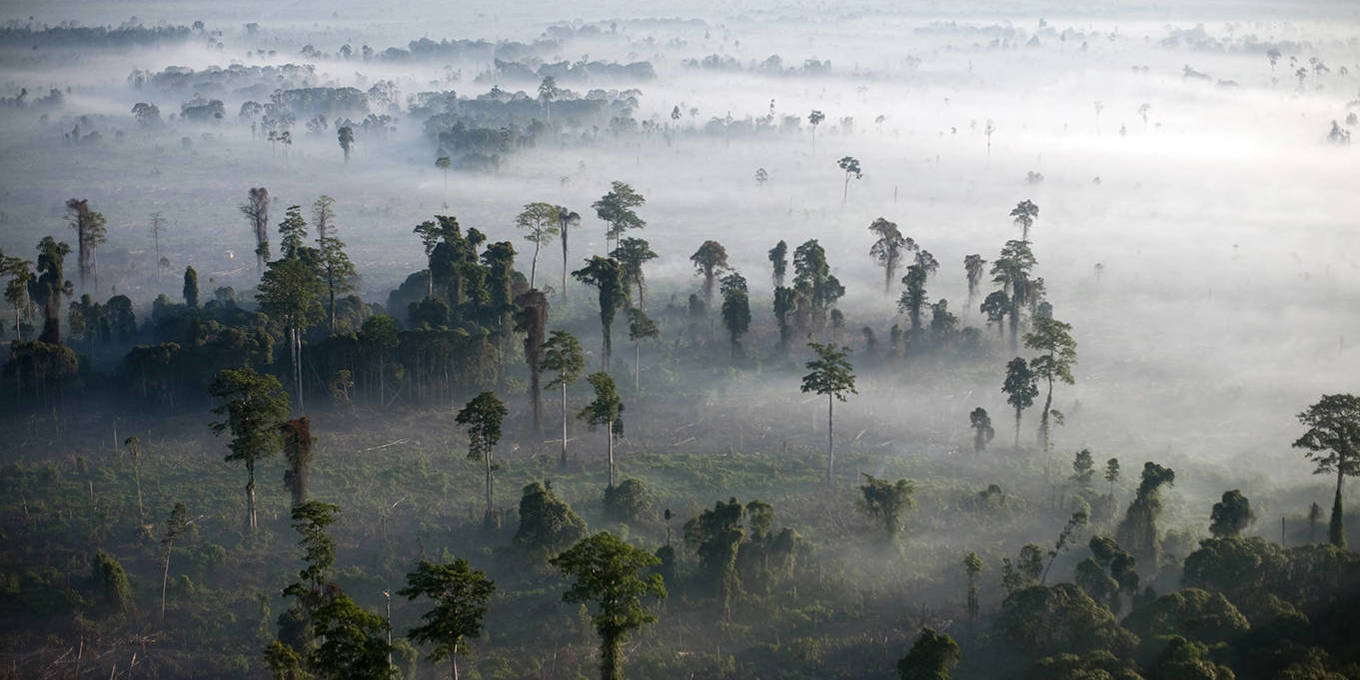
    The TFFF’s purpose—conserving tropical forests—is of paramount importance. Tropical deforestation and land-use changes have contributed to nearly one-fifth of the world’s cumulative carbon dioxide emissions since 1850. Tropical forests are also among the world’s most biodiverse ecosystems and home to many Indigenous Peoples and local communities.

    But tropical countries face opportunity costs when conserving forests, so it falls on northern countries to compensate them for conservation efforts that benefit everyone. Such was the reasoning behind the Brazilian COP presidency’s TFFF proposal.

    Within the TFFF is a Tropical Forest Investment Fund (TFIF) that seeks to raise $125 billion, part of which will be invested in emerging and developing economies. The hope is that, with sponsor capital, guarantees, and a high credit rating, investors will be satisfied with a return of, say, 5%. If the portfolio return is 8%, the difference could be used to compensate countries that have conserved their tropical forests. Depending on the actual return, each eligible country would receive up to $4 per hectare of qualifying standing forest. But the area used to calculate the payment would be discounted for forest loss: each hectare deforested would reduce the payment base by 100–200 hectares, while each hectare of fire-degraded forest would reduce it by 35 hectares.

    So far, the TFFF has raised only $6.7 billion. Although Norway, Germany, France, and others (the facility’s financial arm will be hosted in Luxembourg) are working on raising additional financial support, the main concern is that the scheme is unlikely to succeed. After all, there is no “free lunch” in international capital markets. To satisfy investors and simultaneously retain money for alternative purposes is a tall order.

    Moreover, governments in tropical countries may not be so motivated to conserve, because the sum of the compensation they can expect is uncertain and may not even arrive while they are still in office. Future governments could even reverse the decision to conserve, and with no other consequence than forfeiting future compensation. For these and other reasons, economists have criticized the scheme, and several potential donor countries, such as the United Kingdom, have been skeptical of it.

    Fortunately, there are better alternatives. In 2022, Chile and Uruguay issued sovereign sustainability-linked bonds (SLBs) whose interest rates are linked to whether certain performance targets are met. For Uruguay, one of the targets is forest conservation: If less is conserved, the coupon steps up; if the target is exceeded, the coupon steps down. Similarly, a sustainability-linked loan (SLL) can tie the future interest rate, and even the maturity date, to success in forest conservation.

    In this way, SLBs and SLLs can motivate future governments to continue their predecessors’ conservation efforts. Such instruments therefore address the classic time-inconsistency problem. This problem is not merely theoretical. Brazil’s presidential election this October could well usher in a new government that would not prioritize conservation at all.

    SLBs and SLLs also offer several benefits besides political robustness and time consistency. For example, the government receives the loan up front, so it won’t discount the payment because of lags or uncertainty. No wonder these instruments are increasingly popular. Thailand issued SLBs in 2024, and Slovenia followed in 2025. Their bonds differ in several ways, but both tie yields to whether sustainable performance targets are met.

    To promote tropical forest conservation, the design of SLBs and SLLs can and should be further improved. For example, the coupon adjustments could be larger, and they could vary proportionally with the outcome. The maturity could be longer, and the primary bond buyers should be donor countries and institutional investors rather than private investors. To reduce the risk of selective default, the instrument should include standard sovereign-debt protections. With improvements such as these, the motivation to conserve will be strengthened, and greater sums can be mobilized.

    The upshot is that there are financial structures that can both compensate and motivate tropical countries to conserve forests. Thus, the real risk with the TFFF is not that it will fail to raise funds. It is that it will fail to conserve forests, thus discouraging northern countries from investing in tropical forest conservation in the future.

    That would be a tragic outcome when better alternatives exist. The global value of tropical forests far outweighs the opportunity cost of conservation, but that won’t matter if we cannot get the incentives right.

    Bård Conserve Forests Harstad tropical
    Follow on Google News Follow on Flipboard
    Share. Facebook Twitter Pinterest LinkedIn Tumblr Email Copy Link
    Previous ArticleOpinion | There Are Two Trump Administrations Right Now. And an Empire?
    Next Article Operation Endgame Disrupts SocGholish Servers, Cleans 14,971 WordPress Sites
    admin
    • Website

    Related Posts

    Syria Faces Dilemma in Prosecuting Assad-Era War Criminals

    June 19, 2026

    Opinion | The World Is Full of Chokepoints, and Iran Just Showed How to Exploit Them

    June 19, 2026

    Trump’s Iran Deal Leaves Hormuz Less Than Open

    June 18, 2026
    Leave A Reply Cancel Reply

    Demo
    Latest Posts

    Inside Hegseth’s War on Diversity and Blocked Promotions of Women and Black Officers

    Burnham’s Stunning Victory in Makerfield Election May Trigger Starmer’s Last Stand

    Israel continues attacks on Lebanon despite agreeing to ceasefire | Israel attacks Lebanon News

    Iran’s Supreme Leader Says He Dislikes Deal With U.S., but Allowed It

    Latest Posts

    Subscribe to News

    Get the latest sports news from NewsSite about world, sports and politics.

    Advertisement
    Demo

    We are a digital news platform delivering timely, accurate, and insightful coverage of politics, global affairs, business, economy, sports, and more. Our mission is to keep readers informed with reliable news, clear analysis, and stories that truly matter.
    We're social. Connect with us:

    Facebook X (Twitter) Instagram Pinterest YouTube

    Subscribe to Updates

    Get the latest creative news from FooBar about art, design and business.

    Type above and press Enter to search. Press Esc to cancel.

    Powered by
    ...
    ►
    Necessary cookies enable essential site features like secure log-ins and consent preference adjustments. They do not store personal data.
    None
    ►
    Functional cookies support features like content sharing on social media, collecting feedback, and enabling third-party tools.
    None
    ►
    Analytical cookies track visitor interactions, providing insights on metrics like visitor count, bounce rate, and traffic sources.
    None
    ►
    Advertisement cookies deliver personalized ads based on your previous visits and analyze the effectiveness of ad campaigns.
    None
    ►
    Unclassified cookies are cookies that we are in the process of classifying, together with the providers of individual cookies.
    None
    Powered by