

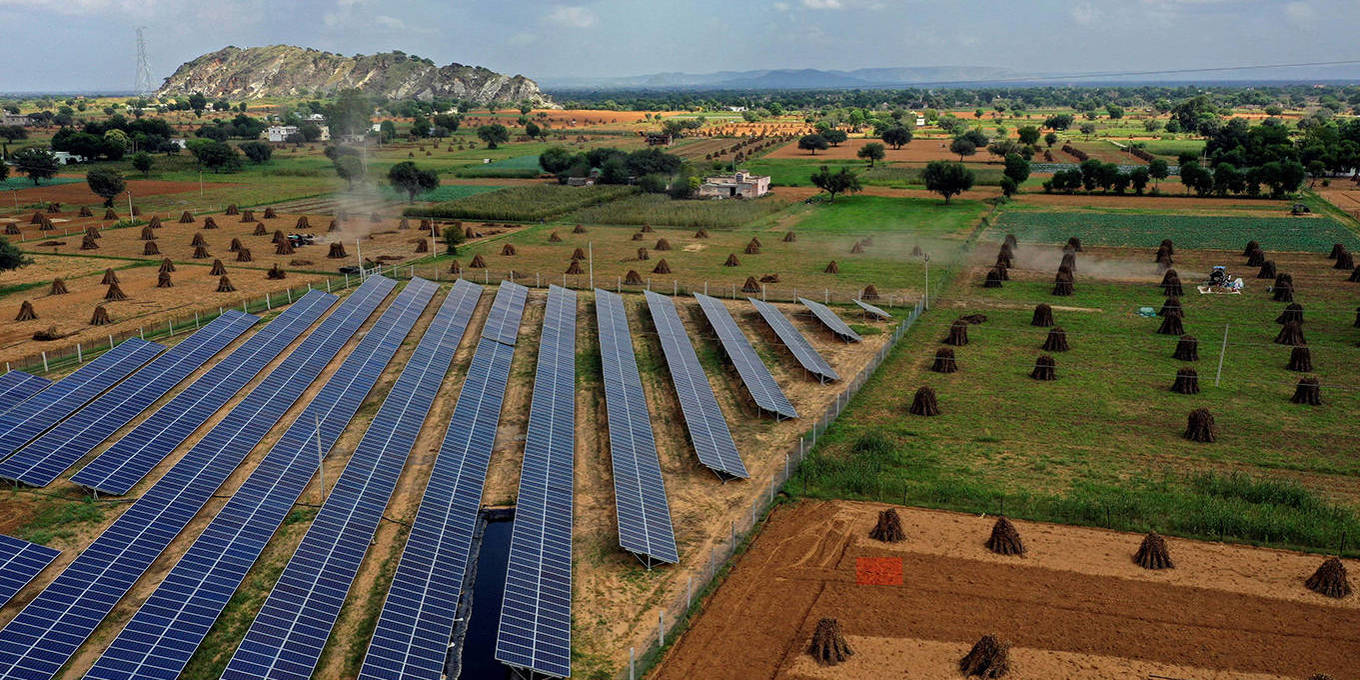
Rather than rely on incremental efforts or one-size-fits-all models, countries hoping to achieve rapid progress on electrification must integrate distributed and centralized systems, make the most of AI-enabled tools, and send credible signals that attract private capital. India and Nigeria have shown how this can be done.
NEW DELHI/ABUJA – Since the turn of the century, India has nearly doubled the share of its households that are connected to electricity, from 56% in 2000 to nearly 100% today. In doing so, it has made one of the world’s largest contributions to reducing the global electricity deficit, from 1.4 billion people to 700 million. Now, Nigeria – currently among the countries with the largest unelectrified population globally – might be on the cusp of a similar energy transformation.
At a time of heightened global uncertainty, escalating climate pressures, and rapid technological change, energy security and economic growth depend on systems that are integrated, resilient, home-grown, digitally enabled, and investable at scale.
That is a tall order. But policymakers and investors increasingly appear to be committed to fulfilling it, and at three events last month – the India AI Impact Summit in New Delhi, Mumbai Climate Week, and the African Union Summit in Addis Ababa – leaders discussed their experiences and exchanged insights that can support progress.
In our own work to expand electricity access, we have learned a few critical lessons that should shape electrification strategies, beginning with the importance of integration to deliver scale and resilience. This means that energy should come from a variety of sources, and all components of energy systems – transmission, distribution, storage, and end use – should be planned and managed in a coherent, holistic manner.
In Nigeria, the government has mandated that distribution companies source 10% of electricity from embedded generation, including 5% from renewables. Moreover, a network of interconnected mini-grids, linked to existing, but currently unreliable, grid infrastructure, will deliver reliable energy access to hundreds of thousands of homes and businesses.
Other countries with financially stressed grids, including India, are studying this model, while pursuing innovative solutions of their own. For example, India launched a scheme in 2024 to install rooftop solar systems on ten million homes, and now requires that systems be integrated into local grids.
The second key lesson is that countries should embrace digital and AI-enabled tools. While much attention has focused on the environmental issues AI raises, the technology has also emerged as a powerful solution for enhancing energy access and sustainability. Thanks to AI and virtualized grid management, it is now possible to operate complex, distributed systems at a scale that would have been unimaginable just a few years ago.
The Indian state of Rajasthan is learning this firsthand. Under the Global Energy Alliance’s India Grids of the Future Accelerator, which is investing $25 million to support utilities in modernizing their grids, the state has built a digital “twin” of Jaipur’s electricity grid and is harnessing AI to deliver real-time insights. The data will be used to assess grid health and identify opportunities for optimization, including in how to integrate renewables and battery storage. This initiative, which appears set to deliver more reliable energy access to up to 18 million mostly rural people, could serve as a model for global data-driven utility management.
A third lesson is that energy access delivers the greatest economic and social returns when governments and utilities work with actors across sectors to ensure that they have the tools, training, and financing to use it effectively. In Nigeria, initiatives like the Energizing Agriculture Program and the Energizing Education Program provide farms, schools, and teaching hospitals access to clean energy and the capabilities needed to use it to increase productivity and improve services.
India’s Pradhan Mantri Kisan Urja Suraksha evam Utthaan Mahabhiyan scheme promotes solar-energy adoption in agriculture, thereby boosting farmers’ incomes and energy security, while reducing emissions. Launched in 2019, PM-KUSUM has already led to the solarization of over two million irrigation pumps, which previously used diesel, improving the livelihoods of more than 600,000 farmers.
The final critical lesson is that emerging economies can overcome elevated risk perceptions and mobilize private capital, including from foreign investors. The key is to strengthen policy frameworks, deliver clear market signals, promote proven business models, and highlight early success stories.
The introduction of ambitious, time-bound national targets with transparent tracking mobilizes private capital and keeps entrepreneurs engaged. This was the case in India, where the government’s plan for electrifying every household, announced in 2017, led to robust investment in modernizing the existing grid and expanding mini-grids, thereby delivering energy to unserved and underserved areas.
Africa appears to be taking this lesson to heart. So far, 29 of the continent’s governments have committed to connect 300 million people to reliable power by 2030. By submitting National Energy Compacts with time-bound targets to the World Bank and the African Development Bank, these countries have signaled to investors that they are ready and willing to scale up investment in energy infrastructure. Nigeria alone has mobilized over a billion dollars to expand energy access.
To be sure, new markets always call for bold early investors. But supportive policy frameworks, together with pilot projects providing proof of concept and catalytic and concessional finance that helps to de-risk investments, can attract the pioneers new markets need.
Nigeria’s interconnected mini-grid project is a case in point. It began with only four grids serving around 6,000 homes and businesses – just enough to make the technological and business case for the initiative. Add to that World Bank funding, and the project pipeline quickly began filling up. The country now expects the initiative to attract hundreds of millions of dollars in private investment.
If countries hope to achieve rapid progress on electrification, they should take these lessons to heart. Rather than rely on incremental efforts or one-size-fits-all models, they must integrate distributed and centralized systems, make the most of AI-enabled tools, and send credible signals that entice private capital. India and Nigeria have shown what is possible. Others should follow their lead.
