

As foreign aid declines, policymakers in lower-income countries must increasingly focus on making better use of scarce resources. When it comes to maternal mortality, that means investing in simple, proven, and affordable interventions for postpartum hemorrhage, pre-eclampsia, and obstructed labor.
SILVER SPRING—In early June, Melinda French Gates pledged $215 million to improve women’s health globally, with a focus on underfunded areas such as maternal care in Africa. The announcement comes at a critical moment. Every day, more than 700 women die during and following pregnancy and childbirth, despite the fact that many of the leading causes of maternal mortality are preventable with affordable, evidence-based interventions.
These maternal deaths are not evenly distributed. Roughly 87% of them occur in Southern Asia and Sub-Saharan Africa, with the latter alone accounting for nearly 70%. By contrast, high-income countries experience far lower rates, although stark inequities remain. In the United States, for example, Black women are more than three times as likely as white women to die from maternity-related causes.
Declining foreign aid has exacerbated the crisis. As calls for local resource mobilization grow louder, the focus should shift to cost-effectiveness. Instead of investing in expensive hospital-centered models, policymakers should scale up funding for affordable interventions that address the leading causes of maternal mortality, which include postpartum hemorrhage, hypertensive disorders such as pre-eclampsia, unsafe abortion complications, obstructed labor, and sepsis. The challenge is no longer identifying solutions, but rather ensuring that proven interventions reach every woman in need, especially in resource-constrained settings.
While working in Nigeria on a project aimed at preventing postpartum hemorrhage—the leading killer of women during childbirth—in communities and at health facilities, I saw firsthand how simple, affordable interventions saved lives.
For starters, active management of the third stage of labor can reduce severe postpartum hemorrhage by approximately 60-70%. This involves administering medicine that helps the womb contract after childbirth, at which point health-care workers can actively control the delivery of the placenta and assess the mother’s uterine tone. While oxytocin is the preferred drug, proper storage can be challenging in low-resource settings; misoprostol is an effective and affordable alternative that is heat-stable and can be given orally.
Accurately measuring blood loss is equally important. A simple plastic blood collection drape, placed under the woman immediately after delivery, helps collect and measure blood loss. For women who go into shock following postpartum hemorrhage, the non-pneumatic anti-shock garment, which applies pressure to the lower limbs and abdomen, can redirect blood to vital organs and help stabilize them while awaiting a blood transfusion or surgery.
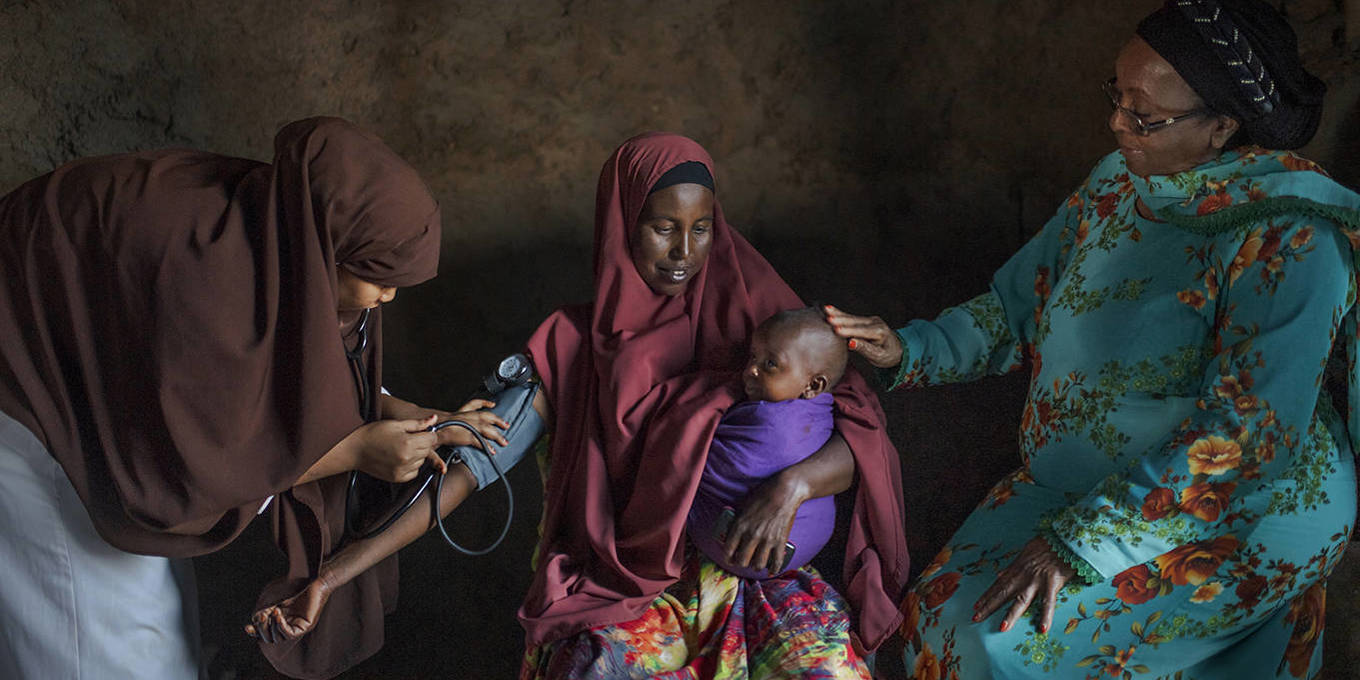
Pre-eclampsia, which affects 3–8% of women who give birth worldwide, also threatens the lives of mothers because, when left untreated, it can progress to deadly seizures. Fortunately, the best solution is one of the simplest: regular blood-pressure monitoring. Between 2014 and 2017, the Community-Level Interventions for Pre-eclampsia program trained community-health workers to visit pregnant women at home, monitor blood pressure, and identify warning signs using mobile tools and pictorial guides. The randomized controlled trial, designed by the University of British Columbia, improved early detection and management of pre-eclampsia in Mozambique, Pakistan, and India, with workers treating low-risk cases with antihypertensives and magnesium sulfate, and facilitating the urgent referral of high-risk patients to health facilities.
Complications from unsafe abortions are another prominent cause of maternal deaths, accounting for roughly 8% globally. Unsafe abortions are often the result of untrained providers or subpar medical standards, and can cause death through severe bleeding, infection, and injuries to reproductive and other internal organs.
The answer is straightforward: expand access to safe abortion services. Ethiopia liberalized its abortion law in 2005, making these services and crucial follow-up care available in public health facilities. Health-care workers were trained to provide women with treatment for severe bleeding and infections, and to remove pregnancy tissue left behind after incomplete abortions, with more complicated cases referred to hospitals. Within a decade, the share of maternal deaths linked to unsafe abortion fell from 32% to less than 10%.
Finally, obstructed labor, which occurs when a baby cannot pass through the birth canal even with strong contractions, can lead to severe bleeding, infection, uterine rupture, stillbirth, and death when not treated promptly. The solution to this problem, which accounts for about 2% of maternal deaths worldwide, is timely access to skilled birth attendants and emergency obstetric care, including cesarean sections when necessary.
Bangladesh achieved a rapid reduction in maternal mortality—including deaths from obstructed labor—through a multi-sectoral approach. It increased access to specialized emergency care for women with serious childbirth complications, allowed the growth of private medical facilities to meet demand for C-sections, and promoted early referral through community-based skilled birth attendants. Lower rates of adolescent pregnancy and improved maternal nutrition also contributed to the decline.
While Gates’ funding commitment is both timely and welcome, the future of maternal health, particularly in countries that have long depended on foreign aid, cannot rest on philanthropy alone. It must be built on sustained investments in simple, proven, and scalable interventions that make better use of scarce resources to ensure that no woman dies while giving life.
