

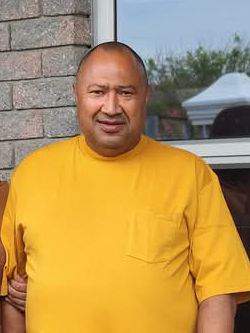
The life and death of notorious gang boss Sanie American is, in his own words, a tale that illustrates the evolution of organised crime in South Africa, its proximity to power and the recent explosion of gang violence, writes Mark Shaw.
Sanie American, a longtime leader of the Americans gang whose real name was Igsaan Davids, died on Saturday. Davids was a powerbroker who famously negotiated with former president Jacob Zuma about delivering the “gang vote”. He was 55 years old – a venerable age for a gang boss on the mean streets of the Cape Flats.
Known far and wide simply as “Sanie”, Davids was gunned down two weeks ago, strangely unprotected in rival gang territory, but lingered on in hospital until succumbing to his wounds.
Davids was a big name in the Cape Flats underworld. He knew everyone who mattered, and everyone knew him. Under his leadership, the Americans became the biggest gang in the country, with an estimated 20 000 members. Their business was wide-ranging, covering drugs, abalone, gun running, extortion, debt collecting, chop shops and contract killing.
READ | Notorious Cape gang boss ‘Sanie American’ dies after being shot 3 weeks ago
Being such a prominent figure, it’s something of a minor miracle that Sanie lived as long as he did. He was a bridge between the old system of gangsterism that existed pre-1994 and the system as it exists now. And for a researcher like me, he was an invaluable source of information about how organised crime has changed in Cape Town over the past three decades.
Astonishingly, Davids agreed to talk with me – and on the record too.
Initially, it was going to be a one-off discussion, but we built some trust and the conversations continued. All of this took place in the two years before his death.
Softly spoken
In his Kensington, Cape Town house, I would sit and listen in his sparse sitting room. He was a big man and softly spoken, usually dressed in a tracksuit. Like many a CEO, he exuded a quiet authority that held the room – except that Sanie’s business was crime and killing.
Why did Sanie talk to me? Honestly, I am not sure. I am writing a book about the history of organised crime in South Africa, so my pitch to him was that he had some stories to tell. I also had a trusted intermediary, without whom this would not have been possible.
But part of it may have been that Sanie was thinking about his own end and was in the mood to reflect on his eventful life. He was not in good health, and there had been at least two attempts on his life: several times, he said that being a gang boss had become very dangerous. For young bloods seeking to make a name, Sanie would be a ‘trophy killing’.
Sanie grew up soaked in Cape Flats gang culture. He learnt the fundamentals of crime from his father, Frankie “Duiwel” Davids, and watched his elder brother Jerome “Kippie” Davids run the Americans for a period. But Sanie truly came of age under the mentorship of Jackie Lonte, leader of the Americans and one of the first “super gang bosses”, who spotted an opening in the expanding markets for dagga, mandrax and then cocaine in the 1980s and 1990s, and famously drove a yellow Porsche.
In the crazy violence that preceded 1994, Sanie told me, Americans shooters like him would go out and kill people in exchange for cocaine, weapons and cash. But these weren’t always gangland hits.
Lonte, Sanie said, had built a link to the Civil Cooperation Bureau (CCB) of military intelligence, who would sometimes furnish him with details of a target. On one occasion, Sanie drove with Lonte to the Wynberg military base in a Ford XR6 – the hitmen’s vehicle of choice – to collect a boot full of automatic rifles. For the gangsters, it was almost a free pass for havoc, and they took full advantage.
“Jackie Lonte was killing people for the state, but he was also killing any opponents to his drug trade,” said Sanie.
As democracy dawned, the gangs faced new challenges. The People Against Gangsterism and Drugs (Pagad) vigilante group killed major bosses like Rashaad Staggie, who died as a human torch in front of the cameras, and also Jackie Lonte himself, gunned down outside his house in Athlone in November 1998.
‘Non-nonsense guy’
The death of Lonte left an enormous leadership gap. The obvious choice to take over the Americans was Sanie himself. “The Americans all knew that I was a non-nonsense kind of guy and they looked to me for leadership,” said Sanie. He was officially elected leader of the gang in 2000 and took over Lonte’s connections with foreign suppliers and his distribution network.
But Sanie had much bigger ambitions. In partnership with his cousin Loyd Hill (widely known as Loyd American), Sanie set about trying to broker a deal with those at the very top of South African politics: Jacob Zuma and the ANC.
Zuma, Sanie recounted, wanted the coloured vote in the Western Cape. “We told him that if he wanted the gangsters to vote for him, then he would only get one percent of the ‘gangster vote’, because ninety-nine percent of gangsters don’t vote.”
Sanie and Loyd met with Zuma. The gang representatives told the then-President they didn’t want money in return for votes; they wanted job opportunities and skills development for the people of the Cape Flats.
“Coloured people’s interests are being overlooked,” Sanie said they told Zuma, although we should take such altruistic claims with a hefty grain of salt. Gangsters are past masters at creating self-flattering personas, and Sanie was no exception.
Sanie and Loyd worked away behind the scenes. Eventually, all the gangs were on board, with the exception of Jerome “Donkie” Booysen’s Sexy Boys. The gang bosses also prepared well, having five meetings to get their plan straight.
‘Ask Zuma anything’
Eventually, in May 2011, they rolled up in taxis at the official presidential residence in Cape Town and, without being searched, were ushered to a large boardroom with a round table. Close on 20 gangs were represented. When everyone was seated, Loyd opened the meeting and told them they could ask Zuma anything.
Quinton Marinus (known as Mr Big and representing the 28s leader Ralph Stanfield) asked the first question, but got nervous and began to stutter.
READ | ANC undeterred by report of Zuma meeting with gang leaders
Loyd jumped in. “Look Ballie,” he said, using the term of endearment he used for Zuma, “you know what this man is trying to say? He is saying that the Boere first came and took us for poes, then the black man [he in fact used a highly derogatory term] came and he also take us for poes”. How did Zuma react? He just laughed and said, “One thing you know when you hear the word poes, you are in Cape Town”.
A business plan was agreed to at that meeting and Sanie began implementing it. He met with Zuma often over the next months:
Zuma’s personal bodyguard detail would come to the gate and tell security to let us in.
As part of the agreement, the gangs brought hundreds of people to be registered as ANC members, paying the R60 fee. The whole process then went belly-up (Sanie blamed ANC internal wrangling), and the registration papers disappeared, along with the money. No membership cards were issued. “The politicians could not do what we did! And so, we walked away!” Sanie told me, slapping his hands on his knees.
We were now even more disillusioned by politics. After a while, I was sick of going to meetings because it was just politics, and I had better things to do. When the [presidential] waiter came around, I would just order a double Johnny Walker Black to just get through the meeting.
Sanie told me ruefully that, over time, the Americans became harder and harder to manage. The problem was twofold. First, guns had spread everywhere, partly as a result of the huge consignments that were bought from the corrupt police officer Christiaan Prinsloo. They also flowed to the smaller rivals of the Americans. But perhaps more importantly, drug suppliers (including the Nigerians) had grown inordinately in number, enabling every mid-level gangster to set up his own operation.
Like many an old gangster, Sarnie mourned the old days when hierarchies, hard-earned prison numbers and contacts to drug suppliers were everything. Now, there were new players disrupting the business model. Now, lower-ranking members, gunned and drugged up, no longer had the patience for the old bosses.
In our last engagement in mid-2025, Sanie remarked ruefully:
I have a four-year-old son. I want to watch him grow up. I had to withdraw because most of the gang activity happens at night. I’m getting older; I don’t want to go into nightclubs and then force my prices or my dominion over others. That is for youngsters to do; the price is too high now. These youngsters are greedy for power. No, it’s better for me to step down, because if I don’t, I’m going to be buried six feet underground.
But Sanie knew that few are the gangsters who successfully “retire” – and his own killing is proof of the fact. With his death, there is a sense of a chapter closing. The time of the big men is largely over; today is the era of the “little bosses”. Life in gangland is even shorter now as people are shot off the greasy promotional pole.
There can be little in the way of sympathy for Davids after the life he lived. Under his watch, murder, drugs, and violence became commonplace in the areas controlled by his Americans gang, and ordinary people have suffered immensely. But his life contains salient lessons we should bear in mind when thinking about organised crime in South Africa, whether that be its ability to seize business opportunities or its connections with the state. Most of all, the constant refrain that for all its bluster, there is no glory in a gangster’s life, only blood and misery – most of all for ordinary people whose innocent voices are never heard.
– Mark Shaw is Executive Director of the Global Initiative Against Transnational Organized Crime.
Disclaimer: News24 encourages freedom of speech and the expression of diverse views. The views of columnists published on News24 are therefore their own and do not necessarily represent the views of News24.
