

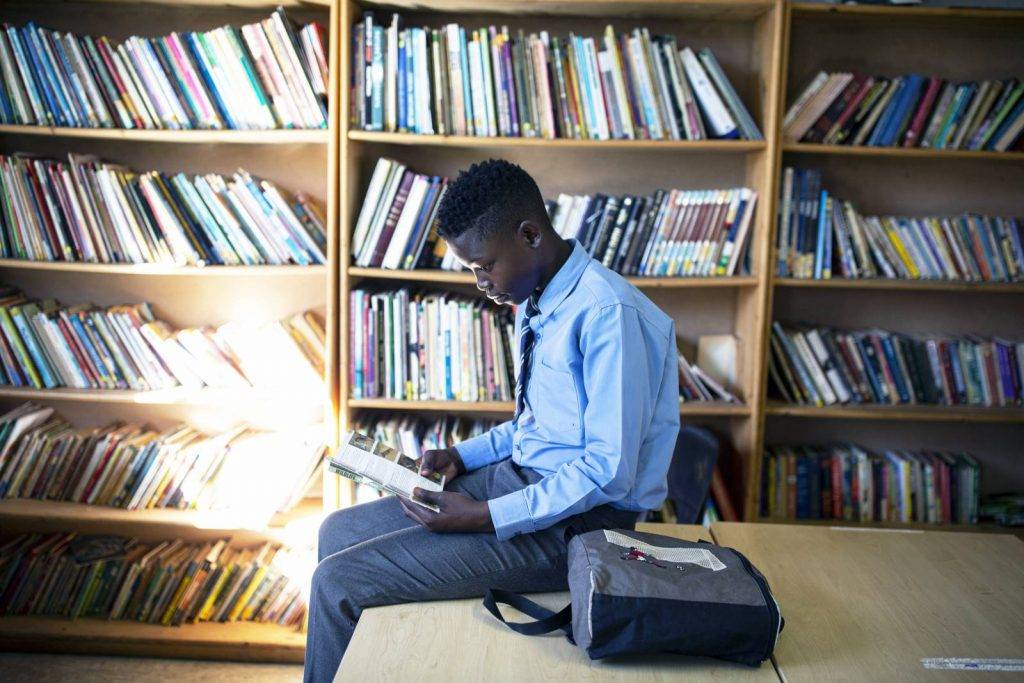
We owe it to our youth to provide them with the keys to opportunity. Let us walk this path together, turning our shared knowledge into action, and building a South Africa where every child can read for meaning.
Following the release of the 2030 Reading Panel’s 2026 report, we find ourselves at a critical moment in our nation’s educational journey. We have spent many years seeking to understand how best to support our children, and today, we have a clearer picture than ever before. This moment calls not for despair, but for deep, collective resolve to nurture the immense potential that sits in every classroom across South Africa.
Thanks to the Department of Basic Education’s comprehensive Funda Uphumelele National Survey (FUNS), we now have a detailed understanding of foundational learning across all languages and provinces. The data serves as a vital compass. Currently, around 30% of our young learners in Grades 1 to 3 are reading at grade level in their home language. We also know that 81% of our Grade 4 learners cannot read for meaning in any language. Rather than viewing these numbers as an indictment, we must see them as a clear map showing us exactly where our children need our help and resources the most.
It’s important to remember that when a child cannot read for meaning by age ten, we are not simply confronting a school problem. We are shaping the boundaries of citizenship and opportunity. We are deciding, often without admitting it, who will participate fully in our democracy and economy, and who will remain on the margins of both.
Reading is not only an academic milestone, it is a form of national infrastructure. It determines whether a child can continue learning across subjects, whether they can navigate a world of forms, instructions, and information, and whether they can grow into an adult who can engage public debates, understand rights and responsibilities, and pursue opportunity with confidence. Early literacy is the gateway skill. It unlocks all the others.
The encouraging truth is that South Africa is not starting from zero. Over many years, government, provinces, educators, researchers, and partners have helped build a stronger understanding of “what works.” The task before us now is to align behind a shared, practical goal: ensuring that every child, in every community, experiences daily, high-quality reading instruction, supported by the simple inputs that make practice possible: structured lessons, print-rich classrooms, appropriate books, and sustained support for teachers.
This shared goal also clarifies shared responsibility. Government must provide clear strategic direction through a coherent, costed plan that aligns every level of the system behind the same outcomes, while continuing to set standards, invest in Grade R and the foundation phase, strengthen teacher development, and use national data to target support where it is needed most. Business and philanthropy can help close the resource gap by supporting the provision of graded readers, classroom libraries, and proven intervention models that make improvements stick. Civil society can support government to implement intervention models at scale, help ensure the development and provision of high-quality reading resources, mobilise after-school reading clubs and support community libraries. And parents and caregivers, often under immense pressure, can be recognised as essential partners, supported with practical guidance in home languages to build daily reading habits. If we want to defend and deepen South Africa’s nation-building project, we must put foundational learning at the centre. Every strategy we endorse, and every action we take, must start with that task.
Fortunately, there is hope to build upon. Six of our provinces – the Eastern Cape, Free State, Gauteng, Mpumalanga, Northern Cape and the Western Cape – are beginning to roll out large-scale systemic reading interventions that will reach hundreds of thousands of children. These evidence-based models combine three non-negotiable elements: structured daily lessons, properly resourced classrooms, and intensive teacher support. The Department of Basic Education’s own Early Grade Reading Study, which tracked these approaches for more than a decade, proves that they work.
In the 2026 State of the Nation Address, President Cyril Ramaphosa declared that “a strong economy relies on a well-educated, capable and skilled population.” His commitment to intensifying efforts on early literacy and numeracy, alongside the vital step of making Grade R compulsory, sets a positive direction for our nation. To bring this vision to life, we must ensure that our national investments flow toward these foundational years. Treating early literacy as the bedrock of our economic and social future is among the most impactful investments we can make.
However, the state cannot do this alone. The transformation we seek requires every South African. We need our corporate entities, philanthropic organisations, and civil society to walk alongside government, scaling up the evidence-based models that are already working and helping them reach the schools and communities that need them most.
We must also recognise, support, and empower parents, caregivers, and local communities. A child’s journey with words begins long before they enter a classroom; it begins at home, in the stories shared on a grandmother’s lap, in the songs of our heritage, and in the everyday encouragement of a community that values learning. When parents and schools work hand-in-hand, the impact on a child’s reading journey is boundless.
Education represents one of our largest public investments, but it is the human capital, the children entering Grade 1 this year that will ultimately determine our sustained growth as a country. We have the tools. We have promising provincial models. And we share a united, hopeful vision.
We owe it to our youth to provide them with the keys to opportunity. Let us walk this path together, turning our shared knowledge into action, and building a South Africa where every child can read for meaning.
Dr Phumzile Mlambo-Ngcuka is the former Deputy President of South Africa (2005–2008) and former United Nations Under-Secretary-General and Executive Director of UN Women. She chairs the 2030 Reading Panel, an independent group of South African leaders working to address the country’s reading crisis. The Panel’s 2026 report was released on 24 February 2026.
