

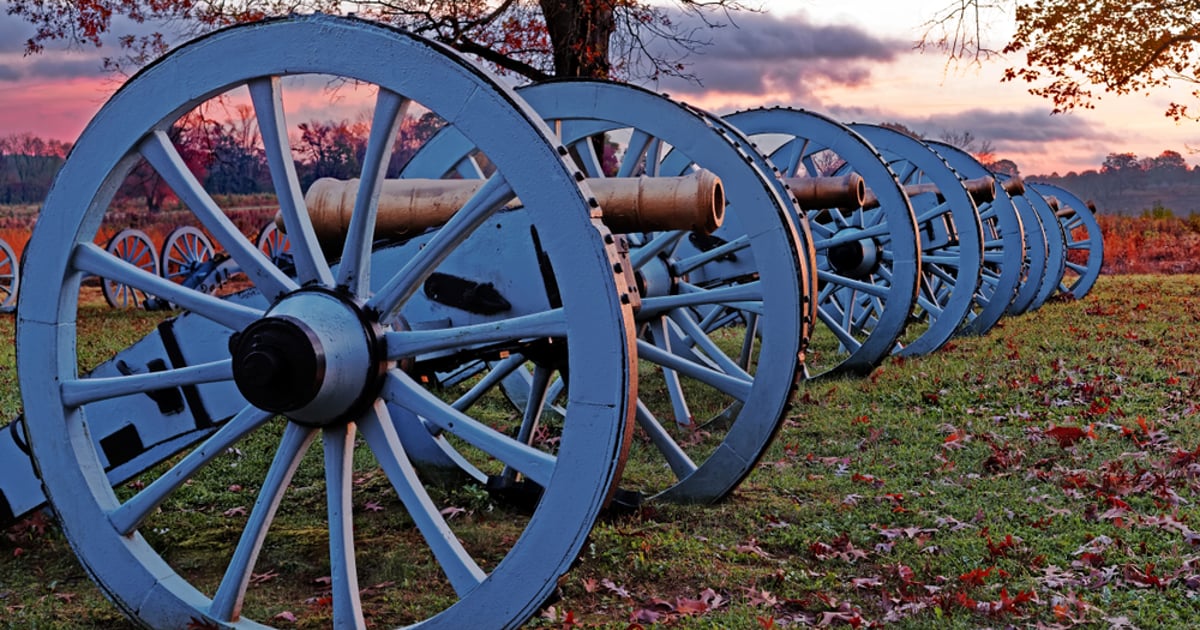
The following is a transcript of a recent interview featured on the Frommer’s Travel Show Podcast. Our guest was PBS TV star Darley Newman. The interview has been edited for length and clarity.
Pauline Frommer: July 4th marks the 250th anniversary of the Declaration of Independence and also of the founding of the United States. And it feels like a lot of people have been working almost that same amount of time to get together the celebrations that will be happening across the United States to mark this important anniversary.
My next guest wanted to go a little deeper. She wanted to talk about the history and the places where that history comes to life across the United States so that you’re not just blowing up fireworks, but you have a better understanding of the historic events that led to the founding of the country that we all love.
Her name is Darley Newman. You may know her from the TV show Travels With Darley. She’s also written a book called Revolutionary Road Trip: Hidden Stories from America’s Founding Journey.
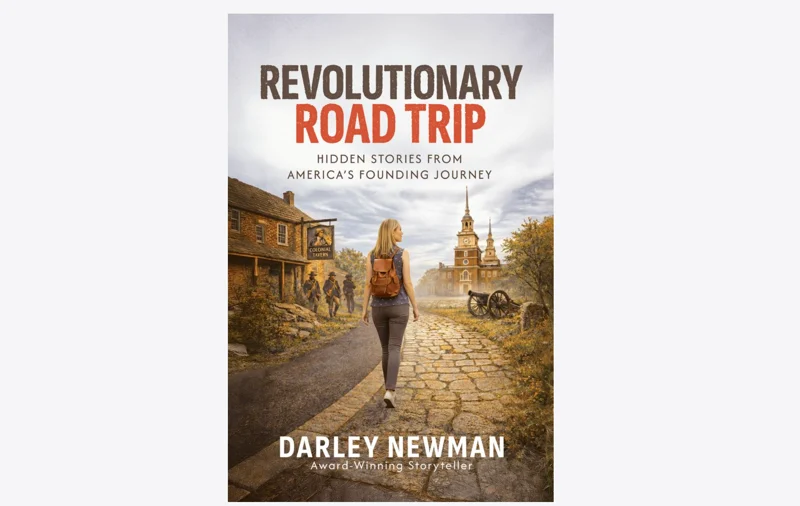
Is it fair to say that the book is a companion to your TV show?
Darley Newman: Yeah, it’s a companion, but it dives deeper. I actually have filmed 12 half hour episodes called Revolutionary Road Trip, taking viewers to sites related to the American Revolution. They’re on PBS stations, they’re on Tubi and our YouTube.
But in collecting these stories and traveling over the last few years to these locations, I realized I had so many stories and places that weren’t in the normal history books, and weren’t your usual suspects for American Revolution history.
It’s a topic that many people think: oh, it’s not something I’m interested in.
But I feel like once you hear some of these stories: they’re so colorful. There’s the sad, the happy, the fascinating, the strange. It’s really all there in the American Revolution.
Frommer: I think it’s fair to say that in order to understand the United States today, you need to understand this history, right?
Newman: I think so. And it’s interesting because a lot of people have talked about these commemorations of the 250th and said: it doesn’t apply to me. I don’t see myself in this history.
But what I found in traveling to these locations is [the history] is quite diverse. Women were involved in the movement, children lived through the movement. You look at the American Revolution and you think about what happened and you can see yourself in it.
Frommer: So let’s talk about some of those stories. You start your book in a place that I think will surprise a lot of people. Not in Philadelphia, not in Boston, but in Princeton, New Jersey.
Newman: They call New Jersey the crossroads of the American Revolution. And not just in Princeton, but Monmouth Battlefield, Trenton, Union County, Elizabeth.
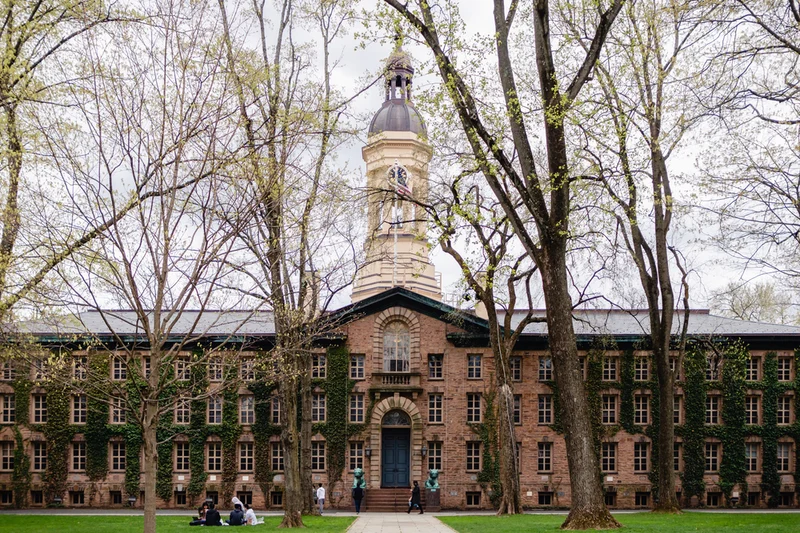
But Princeton I think is really fascinating because the campus itself, and Nassau Hall, was around at the time of the revolution. It was then the College of New Jersey, and there was a battle that was fought right on the campus. If you ever travel out to Princeton, go and look at the side of Nassau Hall and you can try to find a spot where, possibly, Alexander Hamilton fired a cannon that went through the actual wall of Nassau Hall. There is a story that it went through a painting of King George II and took out his head—decapitated the painting!
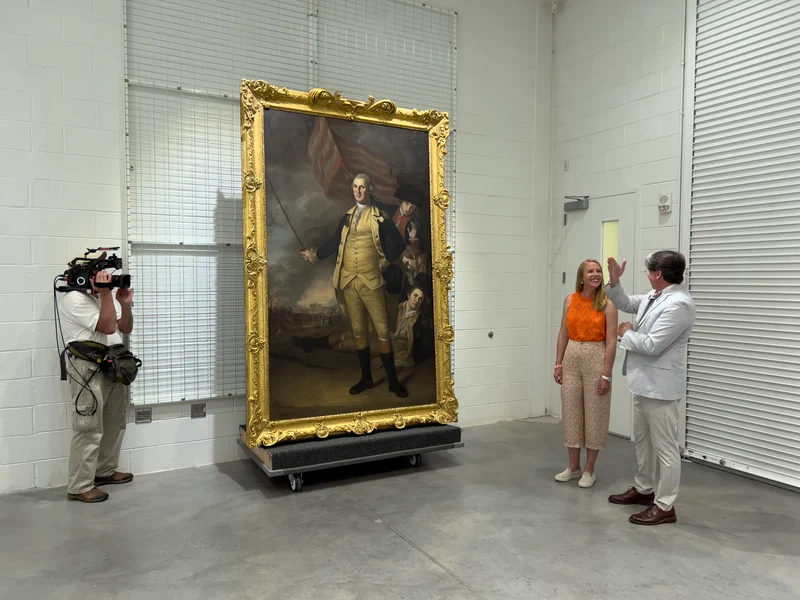
Frommer: And I thought it was fascinating that later on they used the same frame and put in a very important portrait of George Washington.
Newman: Yes. We have also this “George Washington at the Battle of Princeton” painting, which is remarkable. You can go to the Princeton Art Museum and you see that painting. It’s a remarkable work. Princeton University has such an amazing art collection! You think about, you know, going to the Metropolitan Museum [in New York City]. Well, go to the Princeton Art Museum because the art there is also truly remarkable.
Frommer: I was just researching the Connecticut chapter of our New England book, and I went to the Yale Art Gallery and it’s extraordinary. We forget that [these universities] are the oldest institutions in the United States and were collecting art well before the Metropolitan Museum, or any of the other great art museums in the United States.
Now, when you do a tour of Princeton as just a general tourist, will they tell you this revolutionary history or do you have to dig for it?
Newman: There’s a woman named Mimi who [runs] Princeton Tour Company and she will tell you history of the American Revolution, and talk to you about the indigenous people who were there before this even happened. She’ll also share the ins and outs of Einstein’s time at Princeton. [She presents] all the different time periods on her walking tour.
Frommer: In the Princeton area [was] a Quaker family and their farmstead became the center of a great battle. You know people who think, oh, battles, it’s all strategy, it’s all moving the troops here and there. The story of this family belies that. It shows that real human lives were affected.
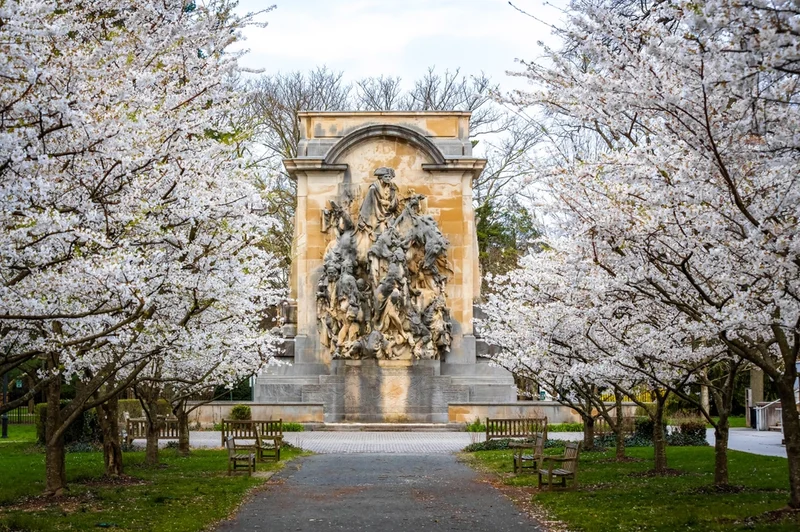
Newman: So this is the Clark family. If you go to Princeton Battlefield State Park, which is not far from the university—I actually rode an E-bike there—you can visit the home of the Clark family, which still exists today. Reenactors inside the home will share about the Clark family, who lived there with an enslaved woman named Susanna. We actually have documentation of their life and this story. The revolution landed literally on their doorstep. Like many homes [on battlefields], the [home] became a hospital. Wounded soldiers were brought into the home, and Susanna and Thomas Clark had to help.
Frommer: What was so compelling to me was they weren’t just helping the Continental Army, they were also helping the Brits. [The wounded soldiers] all were lying side by side getting care from this Quaker family. Right?
Newman: They were. And, you know, it’s this story that I heard at a lot of battlefield sites that are now state and national parks.
Again: this is the everyday people of the revolution. And maybe their stories weren’t the foremost stories of our American history classes when we were growing up. But I think it’s interesting to see what their lives are like [amidst the revolution].
Frommer: The Clark family were Quakers, and so they didn’t choose sides [which] made them targets. Not only was their farm overrun, probably everything they planted was destroyed by this battle. Probably a lot of their livestock were killed. And [they themselves] were open to attack. A lot of Quakers lost their lives because they wouldn’t choose a side.
You make the point that they probably got a promissory note for what was taken [the crops and livestock], but that promissory note was only going to be good if that side won the war. They knew that.
All right, so we go from the Battle of Princeton to perhaps one of the most famous battles of the war, which was Brandywine in Pennsylvania. Why was that such a significant battle? And what do you see when you go there?
Newman: This was the largest battle of the American Revolution. The Continental Army loses, and the British are able to take Philadelphia. So this is a pivotal moment in the American Revolution. And it was also a very gory, bloody battle.
Today there is a large portion [of the battlefield] that is privately owned; it’s called Thornbury Farm. It has a farmstand and the owner, Randell Spackman, grew up on the farm. He invites travelers to visit for different [events]. They do reenactments and educational programs.
But even if you just stop at the farm stand and end up chatting with him, or someone else who’s working there, they’ll tell you a lot about what happened on this site. There is interpretive signage out on the property as well.
Randell was dressed as a British soldier [when we went], which I thought was interesting.

Frommer: I loved when you went into the details with the gentleman who owns this farm of what the uniform would have been and the fact that they had to wear this throughout the year.
Newman: When I got there, Randell was still getting ready for us. We were out on his back portico and he was putting everything on. He was putting on the musket, with a bayonet, which was used in the battle. Just being it up close, you get a kind of chilling sense for what it would be like to both use it or to have it used on you. He had this neck collar which was meant to protect his neck [against bayonets].
[The soldiers] were carrying everything they needed to survive. [That included] food and even a bowl to eat their breakfast, lunch, and dinner.
And they wore these wool uniforms throughout the summer, through the winter. You wanted it in the winter, but you wouldn’t necessarily want it in the summer. It was not easy to be a soldier during this time period.
Frommer: When I was in my early 20s, I toured the country with Les Miserables, the Broadway national tour. And there was one ball scene where we had to wear this heavy silk that, because of the delicacy of the fabric, could only be washed once a year. So it was this beautiful scene—we were dancing and spinning—but the smell was horrendous. And I have to think that it was probably the same on those battlefields. Just smelling people in these uniforms that they had worn in summer, in winter, makes you think very differently about what they went through at that time.
Newman: Yeah, you’re right. And then in thinking about the different terrains they were traveling through. That really hit home, especially in South Carolina, which is where I’m from, where we’re looking at the swamps and the areas that people traveled through, and you’re getting wet and you’re getting muddy, and then you’re camping and you’re in the heat—the humidity of South Carolina in summer is no picnic.
Frommer: Well, let’s talk about South Carolina. That was one of my most favorite parts of the book. So on a basic level, oysters were incredibly important during the Revolutionary War….for construction?
Newman: Yeah, I thought it was really interesting as well. I found oyster shells in many places that I didn’t expect to in these travels.
Oysters were eaten as part of daily life during the Revolutionary War and during colonial times. But you don’t think about how strong oyster shells are. They were used in construction in South Carolina because they were combined to make something called tabby [which is] almost like a concrete.
If you’re ever in downtown Charleston, in Marion Square Park, there are the remnants of what was a fortress built from oyster shells that was used during the Revolutionary War. It actually was vast, but today there’s only [one structure] about the size of a refrigerator left there. It looks like an oblong thumb. There’s an iron gate surrounding it and historical signage. But if you walk through the park, you can trace what was the actual fortress. They’ve put markers on the ground so you can walk the walls of the fortress.
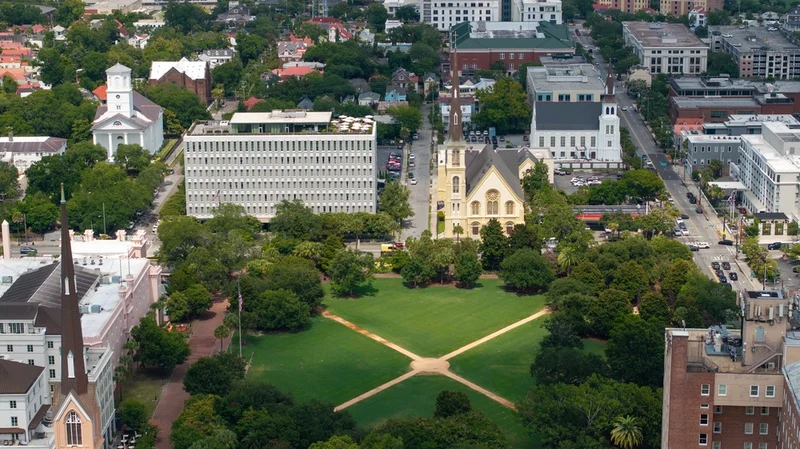
Frommer: Let’s talk about Marion Square. Marion is a name that appears at 70 different places in the United States because Francis Marion was such an important Revolutionary War figure. Can you tell a little of his story? I thought this was really fascinating.
Newman: Francis Marion’s moniker was the “Swamp Fox.” [Many Americans know him] from the movie The Patriot, which Mel Gibson was in. If you talk to historians, they love to hate this movie because there’s a lot of inaccuracies [in it]. But the Swamp Fox, Francis Marion, fought in the backcountry of South Carolina.
You can trace his roots in Charleston, too, but he ended up going into the inland part of Charleston to recover from injuring himself at a plantation. Thus he wasn’t there during the siege of Charleston and because he was inland, he was able to rally troops in the interior part of the state to fight against the British. He did so using guerrilla war techniques. They were hiding in the swamps and they knew the terrain better than the British soldiers did, and so were able to use these tactics to fight in different ways, and that gave [him] an advantage. He’s celebrated and known throughout South Carolina. His grave site is a place that you can visit.
Frommer: Before I let you go, I do want to discuss Mepkin Abbey with you. Tell us a little bit about the history of this abbey, and how you can visit it today. And I learned a new word from you. That word was Taphophobia, if you could talk about how that word also plays into the story.
Newman: I’m glad you picked this one up, Pauline, because it’s so interesting and Mepkin Abbey is an absolutely gorgeous site—beautiful land with trees dripping in Spanish moss.
And travelers can go and visit it. It’s a working monastery, but you can go and stay for a month if you want but you’re going to have to work if you do, because you’re going to live the life of a monk for the time period that you’re there.
Like many beautiful locations in the South, there were enslaved people living and working on this plantation [turned abbey]. It was owned by Henry Laurens. He was a wealthy merchant and a slave trader. His son, John Laurens, was friends with Alexander Hamilton. If you’ve seen Hamilton, you might know that. If you’re visiting the property, you actually can go see the family’s grave sites.
While I was there, David Brewer, who is a local in South Carolina, and passionate about history, shared with me a story about Henry Laurens’ daughter. She got smallpox and was very ill. They thought she had passed. Back in those days, you would be laid out on your bed [after you died] so people could view you before you were buried. So she was out and the family was coming to view her, and someone noticed that…perhaps…she was actually breathing. And after that moment, he was like, “Oh my gosh, she could have been buried alive.” Henry Laurens was the first political figure, or one of the first political figures [in the U.S.A.], to be cremated because he said, “I do not want to be buried alive. You will definitely be cremating me.”
So taphophobia: in the 18th century a lot of people had a fear of being buried alive, and that’s what the word means.
Frommer: And she lived many years after that. She had children and had a full life. So thank goodness somebody noticed that she was moving.
Newman: It’s said that George Washington said that he wanted to be buried two days after he passed, when he did pass, because of this fear of being buried alive.
Frommer: That’s fascinating. So many things in the book were a revelation to me. Thanks again for appearing on the Frommer’s Travel Show!
