

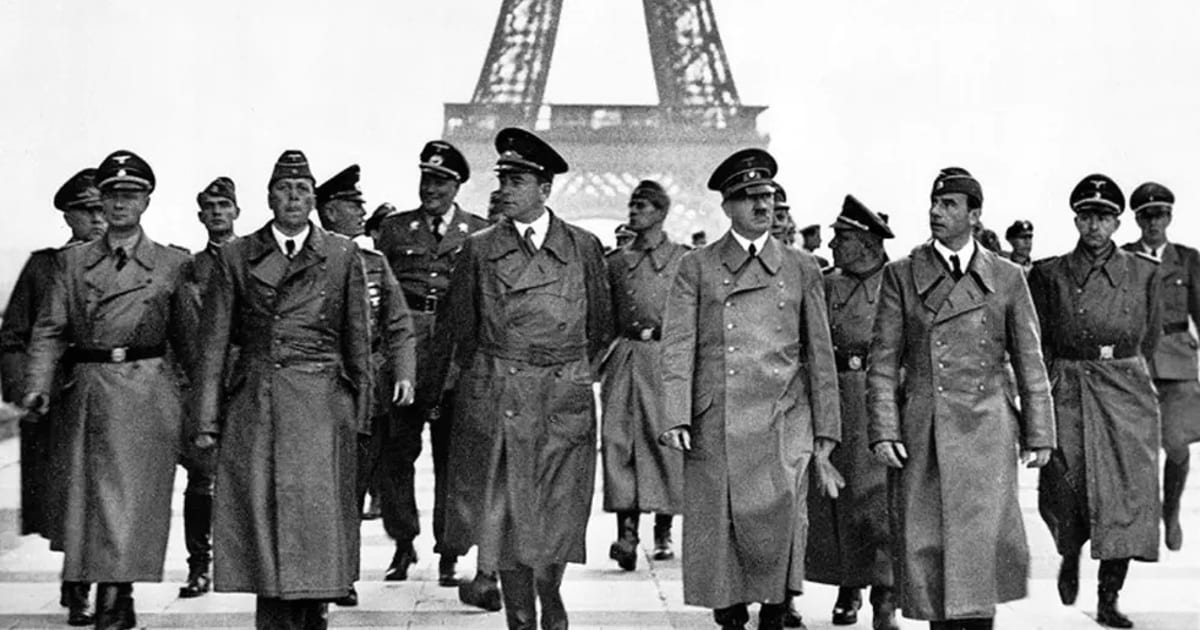
Allied Forces began the liberation of France from Nazi occupation on D-Day, June 6, 1944. But it would take until August 25—two and a half months later—for Paris to be freed from its 4 years of Nazi rule.
To this day, the memory of that dark period of suppression, deportations, and plundering, along with other scars of battle, can be observed at various sites throughout the city. Here’s where to go to find the ghosts of World War II in Paris.
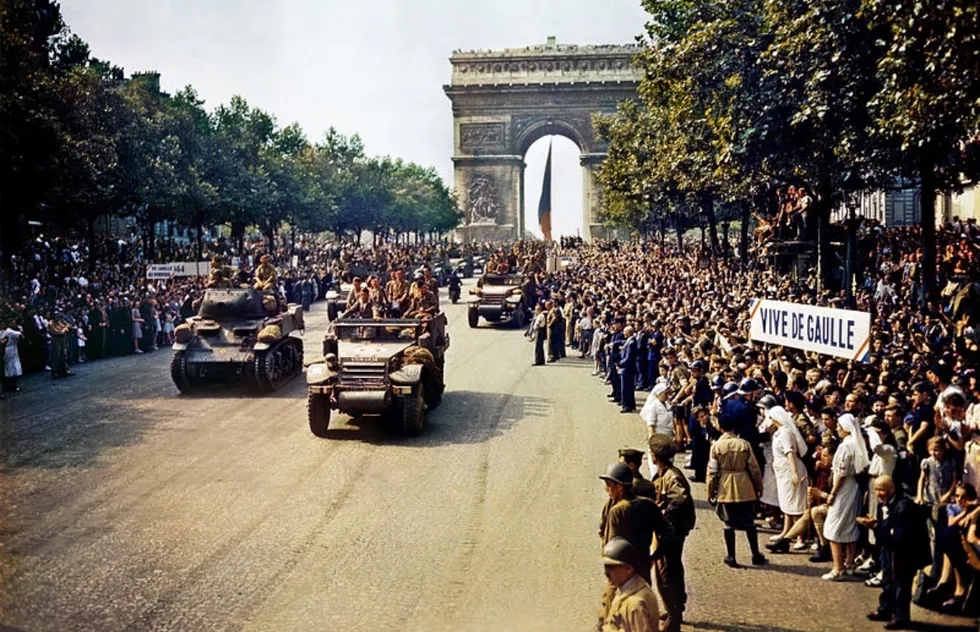 (Credit: © Jack Downey, U.S. Office of War Information / CC)
Avenue des Champs-Elysées
After the “Phony War”—the calm period between the invasion of Poland and May 1940—the Nazis swooped into France, deftly invading and defeating the country within 7 weeks. When the Germans arrived in the capital on June 14, the victors wasted no time in laying claim to the city’s world-famous avenue.
A military parade and marching bands descended on the Champs-Élysées and a swastika flag was hung from the Arc de Triomphe. Two weeks later, Hitler proudly drove down the avenue on his grand tour of Paris—his only wartime visit there (a 1940 photo of Hitler in Paris can be found at the top of this page).
One of the city’s main entertainment centers, the avenue’s cafés were popular with the occupying forces, and Le Normandie movie theater—which closed for good in 2024—was reserved exclusively for German soldiers. The French eventually seized back the avenue with their own victory parade (pictured above), starring General Charles de Gaulle as well as French and American forces, on the day after the city’s liberation in August 1944.
Today, a statue of the triumphantly marching de Gaulle stands guard over the avenue, in front of the Grand Palais.
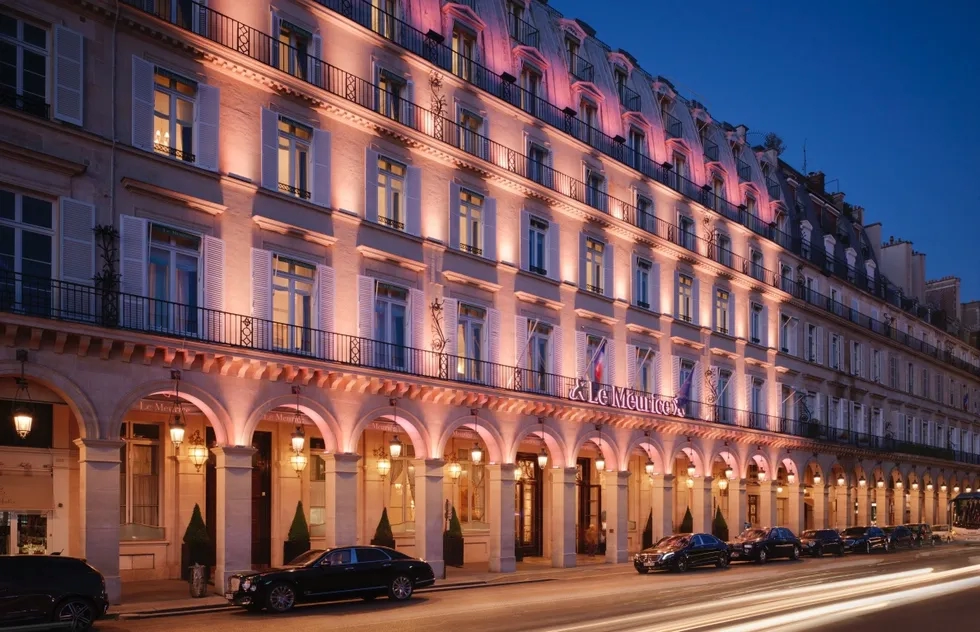 (Credit: Niall Clutton)
Le Meurice hotel
Many of the luxury hotels in Paris were requisitioned by the Nazis during the war. The elegant Le Meurice was repurposed as the headquarters of the German occupation of greater Paris.
On August 7, 1944, as the war’s endgame was beginning, a new military governor of Paris, General Dietrich von Choltitz, moved in to the hotel. Specifically chosen for his track record of rigid obedience, he was on strict instruction from Hitler to destroy the city rather than let it fall into the hands of the Allies.
However, a few weeks later, the famous question Hitler asked von Choltitz, “Is Paris burning?”, would not receive an affirmative answer. The story (which is disputed) goes that during meetings at Le Meurice, the Swedish consul-general in Paris, Raoul Nordling, helped convince von Choltitz to defy the Führer’s orders and spare Paris.
No matter what transpired at that meeting, on August 25 the hotel was stormed by the French Free Forces, to whom von Choltitz surrendered. A bullet hole next to the “M” above the main door remains as a testament to that event.
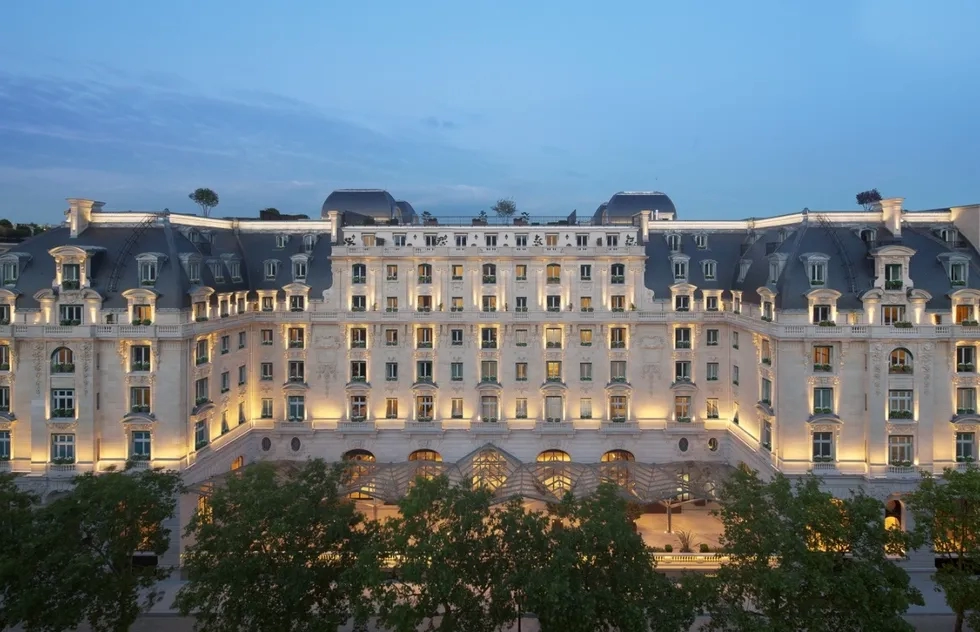 (Credit: The Peninsula Paris)
The Peninsula (formerly the Hotel Majestic)
Another strategic Nazi position in Paris, the Belle Époque–era Hotel Majestic had been sold to the French government in 1936 and converted into offices for the Ministry of Defense. So it’s not surprising that the German military high command decided to make the building its headquarters.
It was here where deportation orders against Parisian Jews were processed. However, not everyone in the upper echelons of the German military agreed with the radical policies of the Führer.
Among the dissidents was Carl-Heinrich von Stülpnagel, the military commander of German-occupied France, who helped design, from his second-floor office in this building, the failed July 20, 1944, assassination plot against Hitler.
After the war, the building became the first headquarters of UNESCO, and was also where the Paris Peace Accords were signed in 1973, marking the official end of the Vietnam War. In 2014, the structure returned to its original purpose as a hotel as part of the Peninsula brand.
 (Credit: Djampa/CC)
Vél’ d’Hiv and the Marais
With rations, reduced access to transportation, and curfews, life was not easy for Parisians during the occupation—and even less so for the city’s Jewish residents, who were forced to wear the yellow Star of David and were banned from certain professions and public places. While some individual deportations to concentration camps began in 1940, it was from 1941 onward that group roundups began.
Over the course of the occupation, 76,000 of France’s 330,000 Jews were deported—and only approximately 2,500 survivors returned. The darkest episode of Nazi deportations in France took place on July 16 and 17 in 1942, when 13,152 Jews were rounded up and deported to Auschwitz.
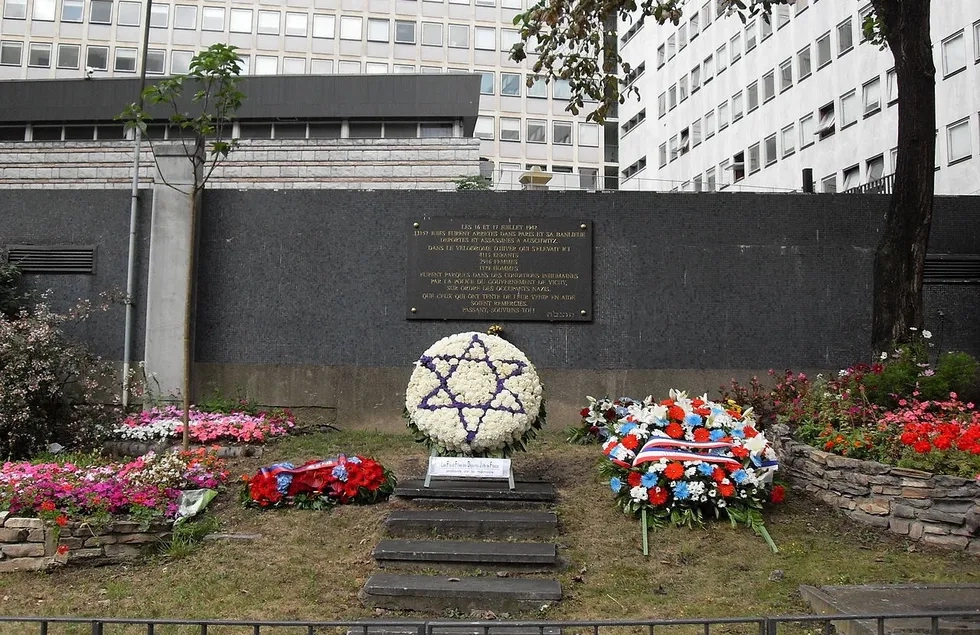
Of these, 8,160 people, including 4,115 children, were first taken to the Vél’ d’Hiv, the Vélodrome d’Hiver, an indoor cycling track and stadium located near the Eiffel Tower. They were held in the venue for 5 days with little food and water and no sanitary facilities.
The complex was eventually demolished in 1959. Today a square and memorial garden pay tribute to victims of the atrocity.
Further commemorative plaques for the Vél’ d’Hiv roundup and other deportations can be found throughout Paris, particularly on buildings in the Marais district, the historic center of the Jewish community in Paris. One of the plaques marks the school at 8 rue des Hospitalières Saint-Gervais, which had 260 students deported during the war, including 165 during the Vél d’Hiv roundup.
 (Credit: Archives du ministère des Affaires étrangères / CC)
Jeu de Paume
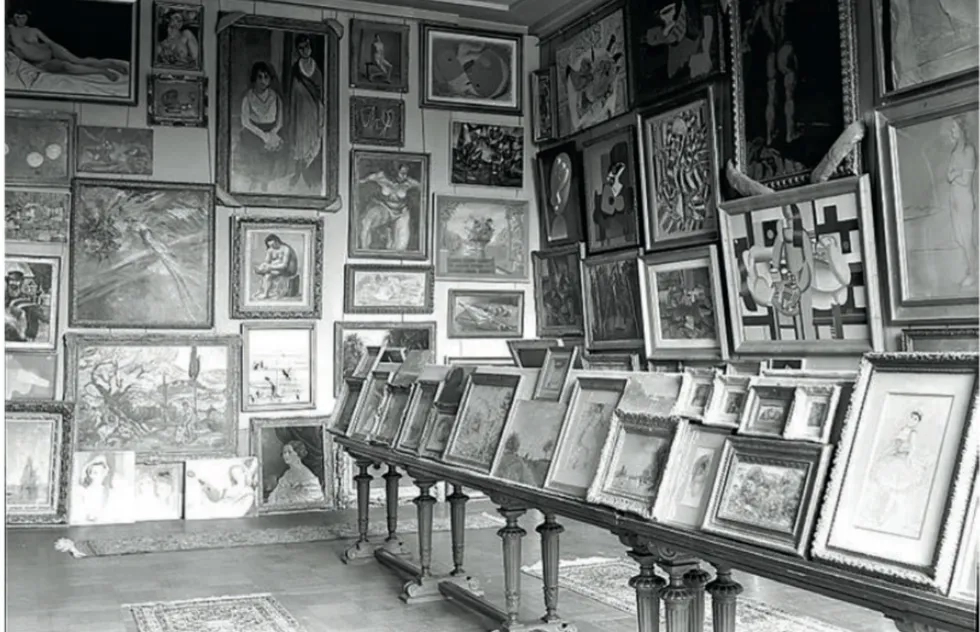
At the outbreak of the war in 1939, Jacques Jaujard, the director of the French Musées Nationaux, had the foresight to evacuate the greatest treasures of the Louvre (one hiding place, a castle in the Loire Valley, is now a hotel). Still, some 100,000 privately owned works of art remained vulnerable.
Some Jewish collectors managed to get their art out in time, but due to a new law, anyone who left France just before the war was stripped of their French nationality, and their possessions could be seized. Confiscated art ended up in the Jeu de Paume, a former tennis court on the Place de la Concorde that was used for temporary exhibits of the Louvre.
The site became something of an art supermarket where top-ranking Nazi officials could help themselves to precious masterpieces. Hermann Göring, the head of the Luftwaffe, was particularly zealous. On his several visits to the gallery he had more than 1,300 artworks shipped back to his residence in Germany.
Luckily, the trafficking of this stolen art was secretly recorded by a Jeu de Paume curator, Rose Valland, whose assiduous work, along with those of the famous Monuments Men, helped bring 60,000 works back to France. Be that as it may, fewer than half of the missing works returned to their rightful owners.
Nowadays the Jeu de Paume is a center for modern and contemporary photography and cutting-edge media works.
 (Credit: Thbz/CC)
Prefecture de Police
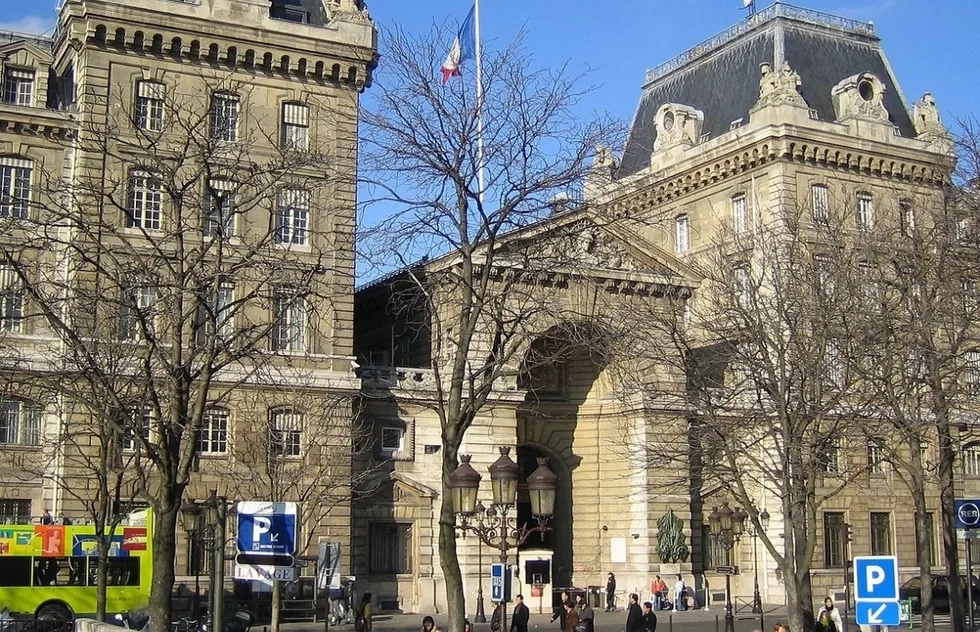
During the occupation, the Prefecture de Police on the Île de la Cité had a special squad who collaborated with the Germans by tracking Jews, communists, and members of the Resistance. With the news of Allied victories in Normandy following the D-Day invasion, though, Parisians made the building a target of a newly emboldened rebellion.
On August 15, 1944, an uprising began with a general strike by Métro employees, the police, and the Gendarmerie military police. Other workers joined in the following days.
On August 19, the revolt accelerated with the armed insurrection of the French Forces of the Interior (FFI). Despite being poorly equipped, they managed to gain control of the Prefecture de Police that same day, assisted by members of the French police themselves.
The major victory of capturing the Prefecture persuaded General Eisenhower to allow General Leclerc to lead the French 2nd Armored Division and U.S. 4th Infantry Divisions toward Paris. After the surrender of General von Choltitz on August 25 at Le Meurice, he was taken to the Prefecture to sign the official surrender of Paris.
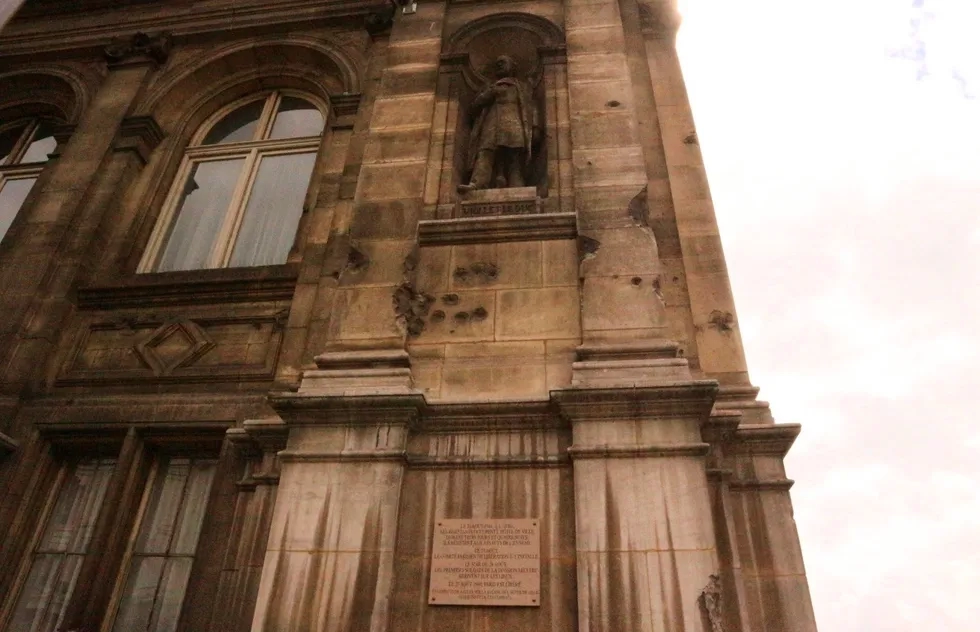
The battle for the Prefecture and its victims are commemorated on a plaque beside the entrance on rue de la Cité, where damage from gunshots and cannon can also be seen.
 (Credit: Lily Heise)
Hôtel de Ville
Paris City Hall (l’Hôtel de Ville) was next to be liberated, seized by a small group of Resistance fighters on the morning of August 20. They managed to hold out until the 2nd Division tanks reached the building on the evening of the 24th.
Bullet holes and a plaque on the northwestern corner of the building, next to rue de Rivoli, remain as proof of their efforts. On his arrival in Paris on August 26, General de Gaulle made one of his most famous speeches from the balcony of l’Hôtel de Ville. ”We are here in Paris, which stood erect and rose in order to free herself,” de Gaulle said. “Paris oppressed, downtrodden, and martyred but still Paris—free now, freed by the hands of Frenchmen, the capital of Fighting France, France the great eternal!”
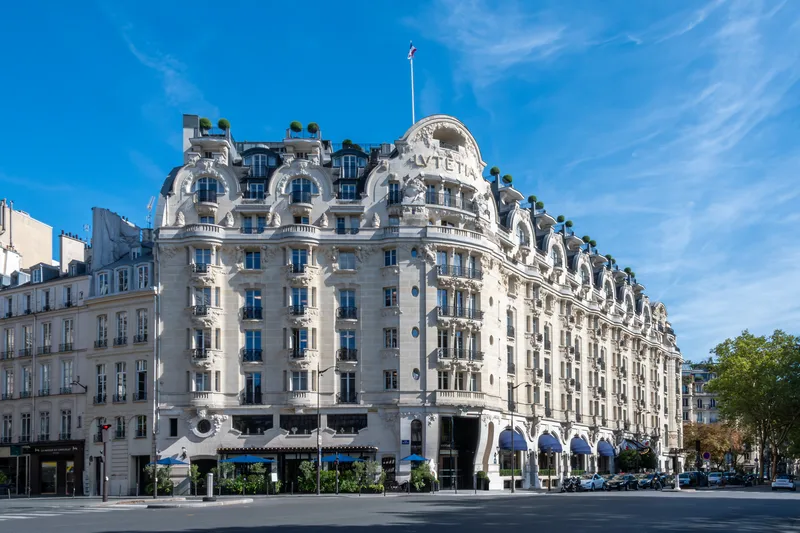
Mandarin Oriental Lutetia hotel
Another requisitioned building, the Left Bank’s most prestigious hotel became the headquarters of German military intelligence. Before that, the Lutetia had been a popular meeting point for the intellectual and artistic elite, accommodating a number of artists and musicians who had fled Nazi-occupied zones in the 1930s.
Upon the Liberation of Paris, General de Gaulle made the Lutetia the main repatriation center for displaced people, returnees from concentration camps, and prisoners of war. De Gaulle was personally fond of the hotel, having stayed there many times, including just before he escaped to London.
The Lutetia eventually reverted to being a grand luxury hotel, with ownership changing hands several times over the years. In 2025 the place was rebranded the Mandarin Oriental Lutetia.
 (Credit: Guilhem Vellut/Flickr)
Memorials and museums
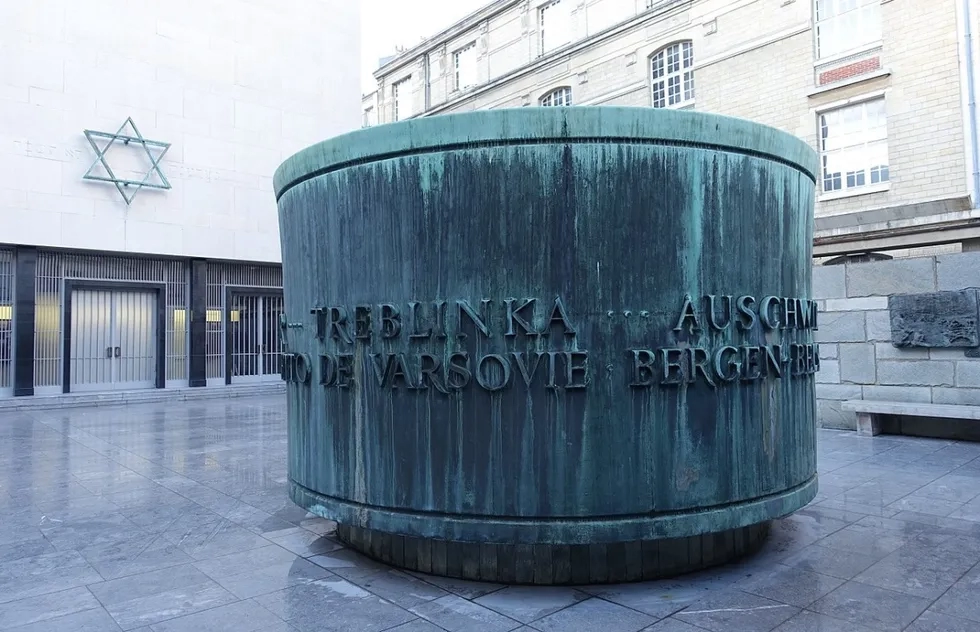
In addition to the plaques, monuments, and bullet holes found around the city, several significant memorials and museums have been established to pay homage and keep the memory of what happened during WWII alive. Located in the Marais, the Mémorial de la Shoah (pictured above) comprises a Holocaust museum, the Memorial of the Unknown Jewish Martyr, and walls listing deported people and those who risked their own lives to save Jews.
The facility also houses the Center of Contemporary Jewish Documentation, an organization secretly founded by Isaac Schneersohn and Léon Poliakov in 1943 with the aim of collecting evidence of anti-Jewish persecution in Europe as it happened.
Behind Notre-Dame on the eastern point of Ile-de-la-Cité, the Memorial to the Martyrs of the Deportation is a sober monument dedicated in 1962 by Charles de Gaulle to commemorate the 200,000 people deported from France to Nazi concentration camps during the war.
For those looking for more information on Paris during WWII and the Liberation, the Army Museum at Les Invalides has a wing dedicated to the Order of the Resistance, and the Musée de la Libération de Paris can be found at the Place Denfert-Rochereau in the 14th arrondissement.
Additionally, you can visit the city’s WWII sites and delve into the topic with a local historian on a guided history tour offered by Context Travel.

Frommer’s Paris 2026
Frommer’s books aren’t written by committee, by AI, or by travel writers who simply pop in briefly to a destination and then consider the job done. We employ the best local experts to author our guides, like longtime Paris resident Anna E. Brooke. In this innovative, easy-to-carry, itinerary-based g…
Get the book
Frommer’s Paris 2026
Frommer’s books aren’t written by committee, by AI, or by travel writers who simply pop in briefly to a destination and then consider the job done. We employ the best local experts to author our guides, like longtime Paris resident Anna E. Brooke. In this innovative, easy-to-carry, itinerary-based g…
An earlier version of this story, published June 4, 2019, has been updated for 2025.
