

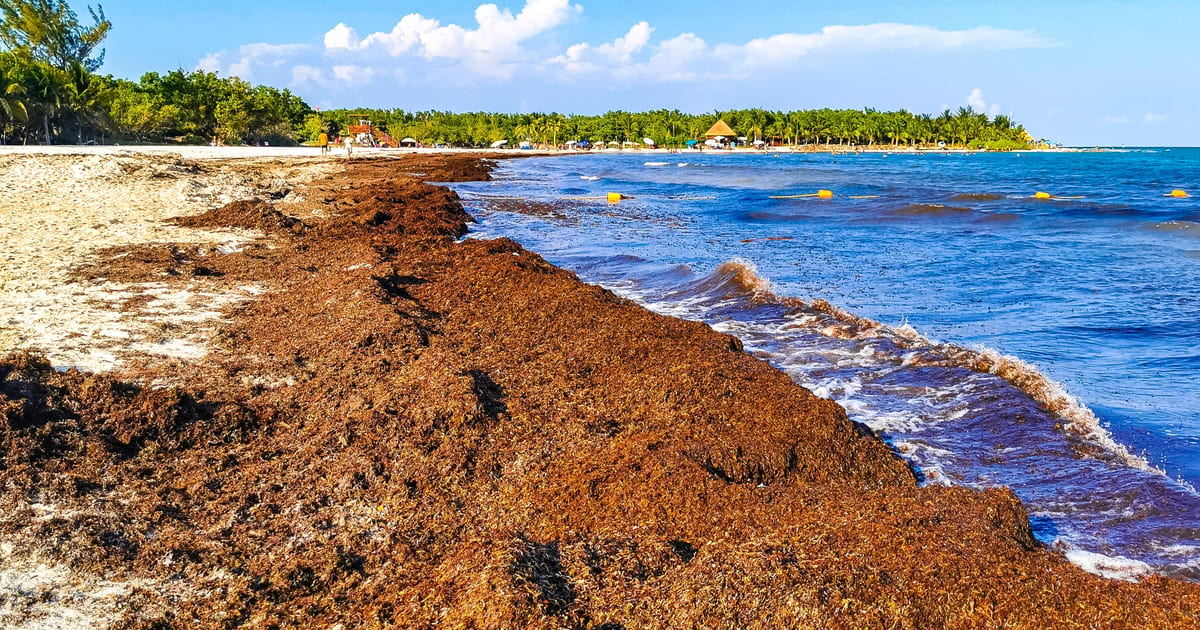
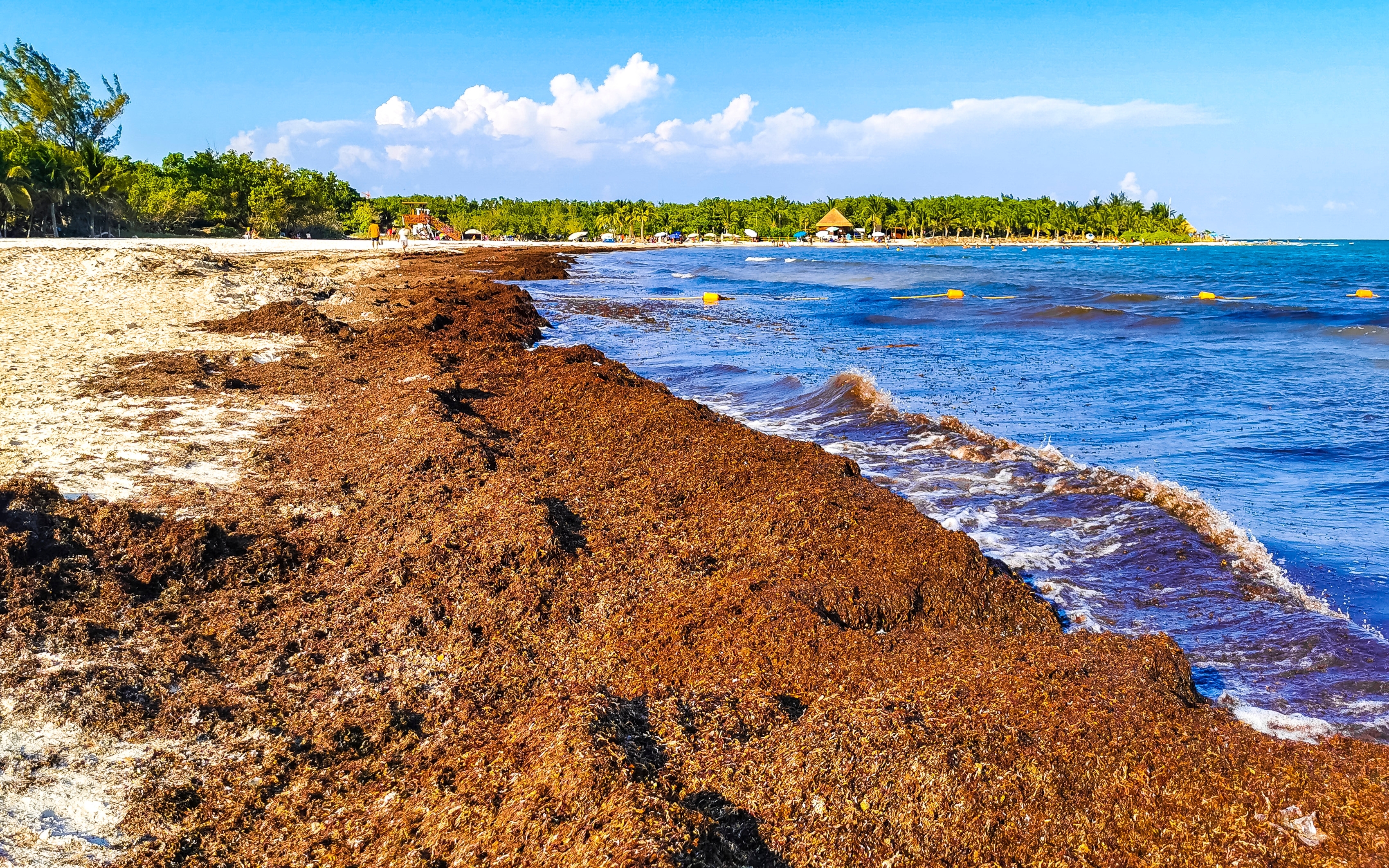
It looks like 2026 could be a record-setting year for stinky seaweed on beaches.
Enormous blobs of sargassum, the large brown algae that floats on the surface of the ocean and can wash ashore in smelly and unsightly accumulations, has grown to more than 9.5 million tons across the Gulf, Caribbean, and western Atlantic regions, according to the latest monthly bulletin from the University of South Florida Optical Oceanography Laboratory’s Sargassum Watch System.
Those are “record-high levels” for the seaweed, researchers warn—and a strong indication that the stuff could threaten the beauty of beach days in the near future, everywhere from Florida to the Caribbean coast of Mexico.
As a matter of fact, the Weather Channel reports that early accumulations of sargassum have already piled up on beaches in Barbados, Dominica, and the French Antilles.
Ditto for certain spring break hot spots in Mexico, such as Tulum and Cancún.
In an effort to save one of the area’s busiest tourism seasons from smelling like rotten eggs (the odor that develops when the seaweed decomposes on shore), the Mexican navy has been called in, per the Weather Channel. “They are deploying containment barriers and have launched amphibious collection boats that are working around the clock to retrieve and discard the sargassum.”
Is sargassum destined to ruin your beach trip this spring?
Because large expanses of beached seaweed have become a growing problem in recent years (due in part to warming oceans that help the floating algae masses to flourish), resorts, local governments, and even cruise lines now put a lot of resources into beach cleanup.
Royal Caribbean, for example, has launched a new partnership with the Mexican navy and other local leaders to work on immediate as well as long-term sargassum management in the vicinity of the Costa Maya cruise port.
The project includes the addition of anchor points, nets, and other equipment designed to prevent incoming algage blooms from reaching the shore, as well as a plan to automate the collection process with low-noise, low-impact technology that collects the seaweed from the water in a way that avoids beach erosion and allows for composting and other earth-friendly measures.
Naturally, cruise lines and resort areas have an interest in keeping tourists happy, and will go to innovative lengths to get rid of beach-marring seaweed as quickly as possible. So the more tourism-focused the area is, the more officials will busy themselves with carting the gunk away.
When booking a hotel, you can keep an eye out for a property with a “proactive seaweed strategy,” as Caribbean News Digital puts it. But at this point, most popular resorts take an all-hands-on-deck approach to making their beaches not smell disgusting.
Keep in mind as well that wind and currents play central roles in where sargassum piles up. There may be beaches a relatively short distance away where the sand remains seaweed-free. Generally, locations facing the wind will have the most sargassum, according to the Weather Channel.
Following forecasts and daily updates from online resources such as Sargassum Monitoring will let you know where the messy areas are and if there are nearby alternatives where you can set up your umbrella instead.
