

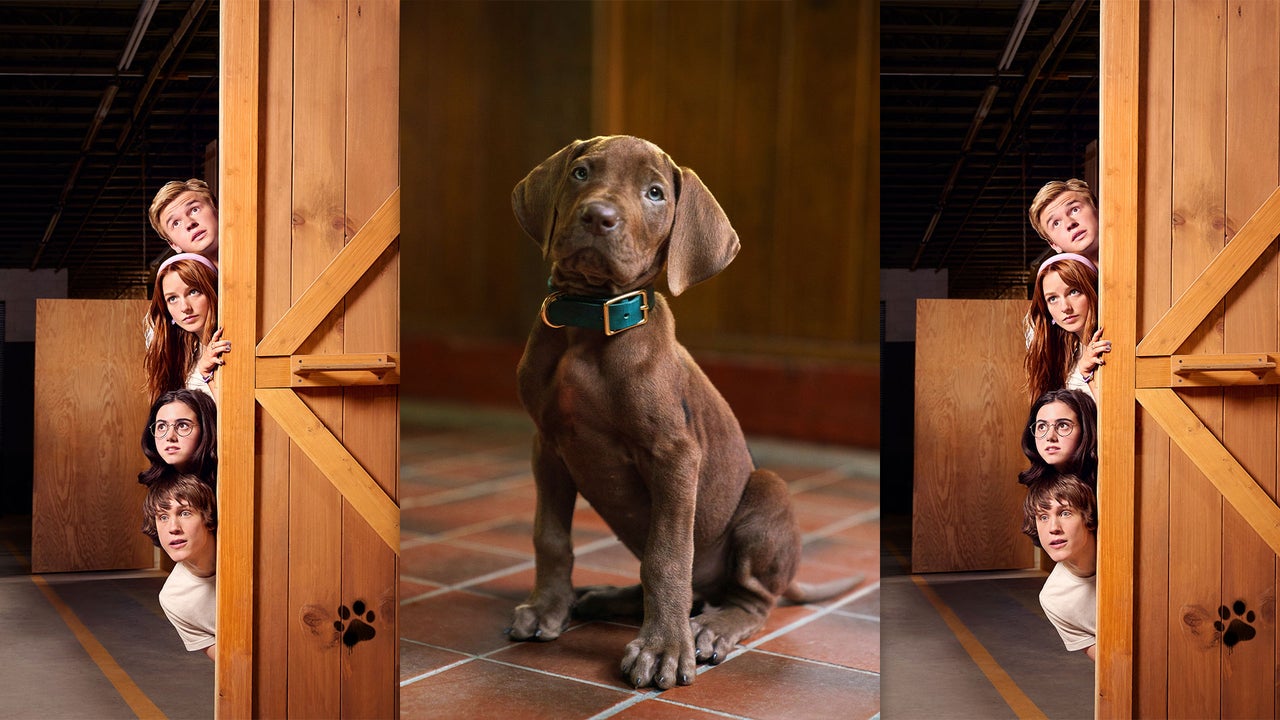
What’s new for Scooby-Doo? Being played by a real dog.
In Netflix’s upcoming live-action series Scooby-Doo: Origins, the iconic mystery-solving dog will—for the first time in the franchise’s 57-year history—be portrayed by an actual dog rather than being animated.
Scooby-Doo and the rest of the Mystery Incorporated crew—Daphne, Fred, Velma, and Shaggy—are most often portrayed in animation, including 14 cartoon TV series and 43 animated movies (made-for-TV, theatrical, and direct-to-video releases). But even in previous live-action adaptations of Scooby-Doo, including 2002’s Scooby-Doo and its 2004 sequel Scooby-Doo 2: Monsters Unleashed, the titular dog has remained an animated character surrounded by human actors.
That’s changing with Scooby-Doo: Origins, which will premiere in 2027. On Monday, June 8, Netflix released a teaser that gives fans a first look at the unnamed dog who’ll be taking on the Scooby-Doo mantle.
The chocolate brown Great Dane puppy joins previously announced human cast members: Mckenna Grace as Daphne, Abby Ryder Fortson as Velma, Maxwell Jenkins as Fred, and Tanner Hagen as Shaggy. The show will follow them as they meet and form their legendary detective team.
A ruff response on social media
Though the new Scooby-Doo actor is undeniably adorable, social media gave the pup a mixed reaction.
Some lamented the concept of casting a real dog at all, with one fan saying they’ll miss antics that only animation could allow, like Scooby-Doo’s habit of disguising himself as a human. “Using a real dog robs the character of so much fun, whimsy, and camp,” they wrote. “I’m sorry, but part of Scooby’s charm is that he’s not really bound by reality.”
Others felt that casting a real dog as Scooby-Doo made it difficult for him to stand out from any everyday canine. “The truly incredible minds behind this project have dared to ask what if Scooby-Doo just looked like a normal ass dog,” quipped one user.
Many users also took issue with a major difference between the cartoon Scooby-Doo and his live-action counterpart: Where Scooby-Doo’s ears are usually animated as pointy, the real-life puppy’s ears are floppy, leading some fans to wonder if the dog is even a Great Dane.
But as other users pointed out, Great Danes’ ears are naturally floppy, and the stereotypical pointy-eared look is the result of cropping, the controversial practice of cutting dog’s ears for cosmetic reasons.
Having a canonically floppy-eared Scooby-Doo could be a welcome turning point for the franchise, as one user theorized: “The fact that they’re introducing Scooby as a puppy with natural ears means that hopefully, as he grows up through [the show], people will get more used to seeing him that way and future adaptations will no longer have an inhumane Scooby-Doo.”
The ethics of casting real animals
Regardless of fans’ feelings on Scooby-Doo getting the live-action treatment, the casting of dogs (and of animals in general) has long been a hot topic among animal rights groups.
PETA, for one, opposes the use of animals for entertainment, citing the risk of behind-the-scenes cruelty, and instead encourages movies and TV shows to utilize motion capture and CGI to portray animals on-screen or to cast their own pets when possible. Lauren Thomasson, director of communications and of animals in film and television at PETA, affirmed that stance in a statement to Fast Company.
“We’re hopeful the production took PETA’s advice to use a cast or crew member’s real-life companion, because PETA investigations have unmasked the real villains behind the scenes—the Hollywood animal trainers who’ve kept dogs in barren cages, withheld food from them during training, and denied animals veterinary care when injured or sick,” Thomasson says.
“Netflix has a chance to do right by dogs and everyone who loves Scooby-Doo by sharing messaging that promotes responsible guardianship—celebrating the pup’s natural ears instead of cruel cropping and reminding viewers that loveable mutts and purebred dogs, including Great Danes, are easily found waiting for homes in shelters across the country,” she adds.
The foremost voice on animal actors is the American Humane Society, known for its No Animals Were Harmed program. Through the program, film and television productions working with animals can become certified as cruelty-free, a distinction that recent Netflix productions such as Remarkably Bright Creatures and season 2 of Beef have received.
Another of America’s largest animal rights groups is the ASPCA, which officially “is not categorically opposed” to animals appearing in entertainment, so long as they are “in every way handled humanely, with facilities and care appropriate to each species.”
Although a representative for the ASPCA did not provide Fast Company a comment on the casting of a real dog in Scooby-Doo: Origins, they did refer to the group’s official statement on elective cosmetic surgeries for pets, including ear-cropping. “The ASPCA does not believe that companion animals should be subjected to cosmetic or other surgical procedures that are unrelated to their health or well-being,” reads the statement, which adds that the surgeries should be removed from breed standards at dog shows.
Netflix and the American Humane Society have not responded to Fast Company’s requests for comment.
