

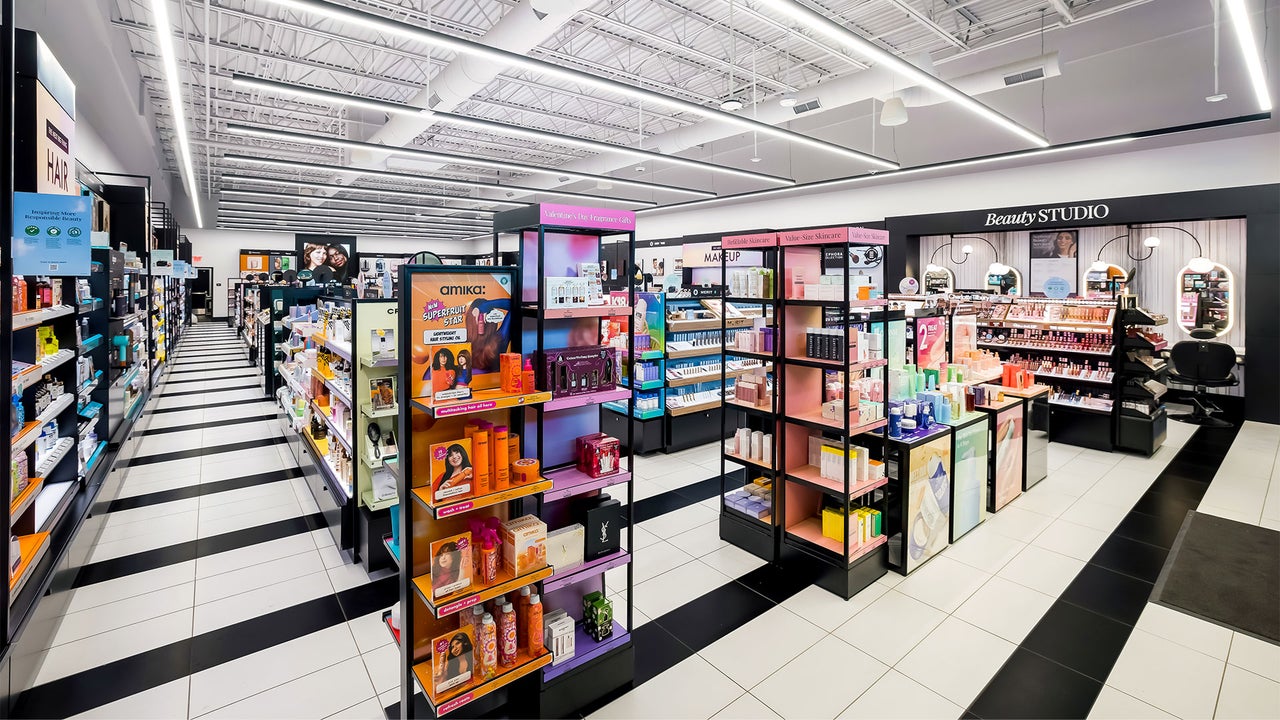
Sephora just broke new ground in the beauty industry, becoming the first beauty retailer to launch sensory-friendly shopping hours at a global scale.
During the newly announced “Quiet Hours,” Sephora locations will lower the volume of the music that’s playing in-store, adjust screens, and minimize strong scents. Avoiding these sensory triggers aims to make shopping more accessible for neurodivergent customers, including shoppers with autism and attention-deficit/hyperactivity disorder (ADHD). Sephora has not yet announced a specific schedule for these hours.
With the initiative, Sephora is continuing a trend started by Walmart and picked up by brands across the retail, restaurant, and entertainment industries, making space for neurodivergent customers to have a shopping experience catered to their needs.
Making a difference for neurodivergent shoppers
Sephora tested its Quiet Hours with a pilot program at 32 stores across eight markets, with resoundingly positive feedback from shoppers and employees alike. The majority of neurodivergent customers said that having Quiet Hours “significantly improves” their shopping experience at Sephora.
Deborah Yeh, Sephora’s global chief marketing officer, shared in a press release that the initiative furthers the brand’s purpose “to champion a world of inspiration and inclusion where everyone can celebrate their beauty.”
She continued: “Quiet Hours at Sephora is one meaningful step in our ongoing commitment to building more welcoming environments for our employees, consumers, and communities—and we know there is still much more to learn and do. We’re proud of this step forward—and equally committed to continuing to listen, learn, and grow alongside the communities we serve.”
Though Quiet Hours are designed with neurodivergent customers in mind, other patrons also appreciate the move. According to Sephora, 90% of clients think the designated hours make its stores “more inclusive and welcoming for all.”
Quiet Hours are reportedly a hit with Sephora employees, too. One beauty adviser said that the calmer environment “gives me a break from distracting noises and gives me a chance to step back and process every situation.”
“These small adjustments not only support neurodivergent clients but also enhance comfort for all shoppers,” another Sephora employee said.
Sephora developed Quiet Hours in collaboration with Open Inclusion, a research agency focused on disability and age inclusion, and Purposeful Futures, a consulting firm.
“What began as a response to the needs of neurodivergent beauty fans across the world became a much bigger opportunity: to reimagine what the experience can be for many who find retail physical environments challenging,” Chloe Matharu, a representative for Purposeful Futures, said in Sephora’s press release. “By becoming the first global beauty retailer to introduce Quiet Hours, Sephora is setting a new standard for the industry, and proving that some of the most powerful innovations are those designed for inclusion.”
A trend among retailers
In 2023, Walmart became the first major retailer to institute its own version of quiet hours. What started as a weekly sensory-friendly shopping period on Saturdays was quickly established as part of the store’s daily schedule after overwhelming positive feedback. From 8 a.m. to 10 a.m. every day at all U.S. locations, Walmart lowers the lights, changes its TV walls to static images, and turns off the radio.
“These changes may have seemed small to some, but for others they transformed the shopping experience,” a Walmart representative shared in a press release at the time. “Our mission is to help families save money so they can live better, and we’ll continue to take steps to fulfill that promise for everyone who comes through our doors.”
Since then, other businesses have followed Walmart’s example. Select Target locations offer similarly structured quiet hours, though they’re not a regular part of the chain’s daily or weekly schedule.
Beyond the retail industry, Chuck E. Cheese opens two hours early on the first Sunday of each month for Sensory Sensitive Sundays, where dimmed lights and reduced sound help create a calmer environment for neurodivergent children and their families.
Movie theater chain AMC also offers Sensory Friendly Screenings with lower volume and lights on in the theater so that patrons are free to “get up, dance, walk, shout or sing.”
