
Close Menu
    What's Hot

    WinRAR Flaw Exploited by Russia-Aligned Groups to Deploy Stealers in Ukraine

    Why you need to stop using passwords and switch to this secure alternative now

    Election Live Updates: Tumultuous Senate Primary in Maine Is Biggest Race as 4 States Vote

    Facebook X (Twitter) Instagram
    Trending
    • WinRAR Flaw Exploited by Russia-Aligned Groups to Deploy Stealers in Ukraine
    • Why you need to stop using passwords and switch to this secure alternative now
    • Election Live Updates: Tumultuous Senate Primary in Maine Is Biggest Race as 4 States Vote
    • Israel Strikes Lebanese City of Tyre as New Cease-Fire Falters
    • OpenAI Tests Investor Appetite for Yet Another Giant I.P.O.
    • This Is the ‘Very Worst Career Advice’
    • U.S. Exports Rose in April, as War with Iran Buoyed Oil Demand
    • How Poland’s Orlen kept supplies flowing during the Middle East war
    interluknewsinterluknews
    • Home
    • Business
      • Corporate News
      • Industry Insights
      • Startups & Entrepreneurship
      • Technology & Innovation
    • Economy
      • Economic Policy
      • Financial Analysis
      • Inflation & Interest Rates
      • Trade & Markets
    • Global
      • Conflicts & Security
      • Diplomacy
      • Global Trends
      • International Affairs
    • Lifestyle
      • Fashion
      • Food & Dining
      • Personal Development
      • Travel
    • Opinion
      • Columns
      • Editorials
      • Expert Opinions
      • Reader Voices
    • More
      • Politics
        • Elections
        • Government & Policy
        • International Relations
        • Political Analysis
      • Sports
        • Cricket
        • Football / Soccer
        • International Sports
        • Local Sports
      • Technology
        • Artificial Intelligence
        • Cybersecurity
        • Gadgets & Reviews
        • Tech News
      • South Africa News
    Facebook X (Twitter) Instagram
    interluknewsinterluknews
    Expert Opinions

    The Future of Development Finance Is Not Primarily About Money by Tanu M. Goyal & Shekhar Aiyar

    adminBy adminJune 9, 2026No Comments6 Mins Read
    Share Facebook Twitter Pinterest Copy Link Telegram LinkedIn Tumblr Email
    The Future of Development Finance Is Not Primarily About Money by Tanu M. Goyal & Shekhar Aiyar
    Share
    Facebook Twitter LinkedIn Pinterest Email

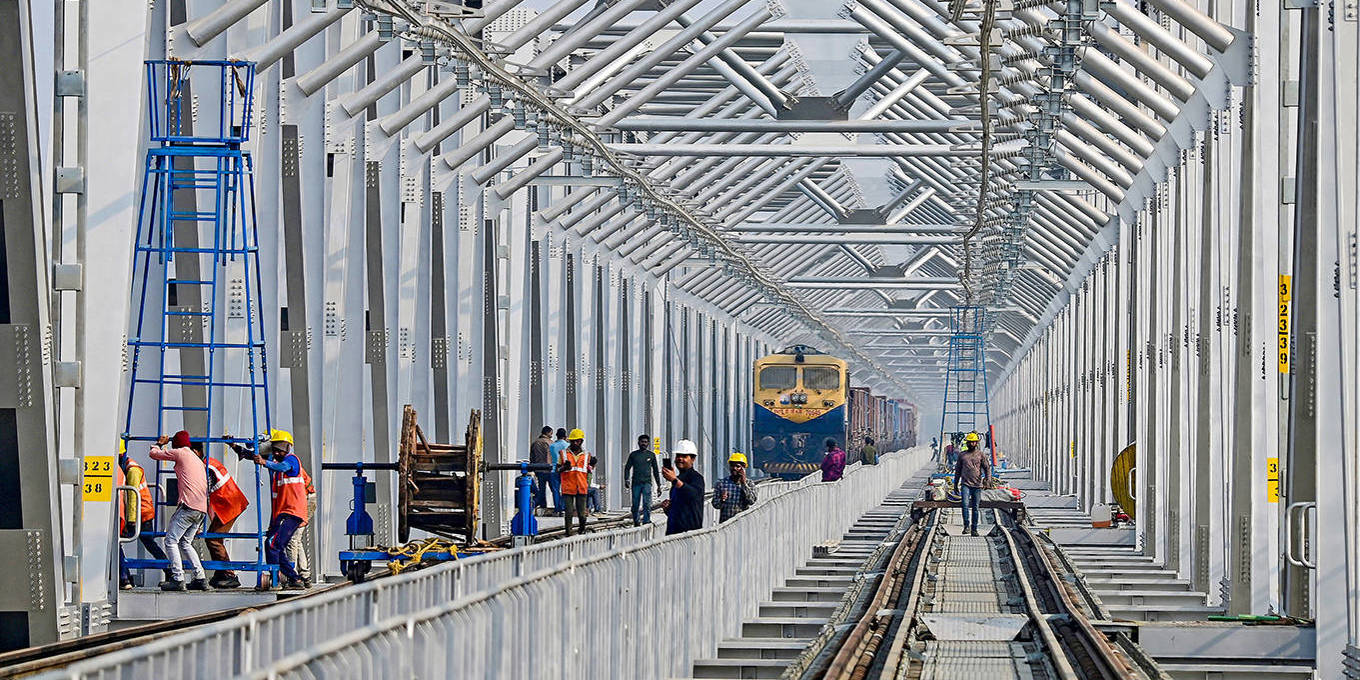
    Multilateral development banks have not kept pace with changes to the global financial environment. For middle-income countries like India, accessing knowledge and technology is now a bigger challenge than raising capital, which suggests that these institutions must rethink their operating model.

    NEW DELHI—Multilateral development banks (MDBs), chief among them the World Bank, were established to provide capital to developing countries that couldn’t raise it at home or on affordable terms abroad. For decades they filled that gap. But as more countries move from low- to middle-income status (according to the World Bank’s classification), and the global financial environment becomes more challenging, the role of MDBs must evolve, too.

    1. Utility workers from CenterPoint Energy perform maintenance on electrical transmission lines at a substation, working on elevated equipment amid a complex network of power infrastructure.

      Jason Fochtman/Houston Chronicle via Getty Images

      The Tech-MAGA Breakup Is Coming

      Stephen Holmes
      thinks the deepest fissure opening up in Donald Trump’s political base runs through the US electrical grid.

    2. Illustration of hands manipulating direction of an arrow.

      ismagilov/Getty Images

      The Mismeasurement of Europe’s Productivity

      Philippe Aghion, et al.

      The recent claim by a leading economist that the productivity gap between Europe and the US is a statistical mirage is demonstrably wrong. It is also dangerous to the extent that it lends support to those who claim that no major change in European growth and innovation policy is required.

      rebut the Nobel laureate economist Paul Krugman’s recent claim that the gap with the US is a statistical mirage.

    3. VW electric vans in Germany.

      Ronny Hartmann/AFP via Getty Images

      Why Isn’t Europe Poorer Than the US?

      Dalia Marin

      Nobel laureate Paul Krugman has a point when he says that European living standards have largely kept pace with those in the US, despite flagging growth and innovation. But this will not remain true indefinitely: restoring Europe’s ability to compete at the technological frontier remains essential to its future well-being.

      warns that, unless the continent restores its ability to innovate, its living standards will eventually decline.

    Consider India, where there is no longer an appreciable gap for MDBs to fill. In 1991, according to our calculations, external finance covered about 15% of the central government’s fiscal deficit; by 2025–26, that figure had fallen to 1.5%. In the intervening years, the country’s capital markets have deepened significantly, to the point that domestic market borrowing now covers more than 70% of the deficit.

    In this, India is simply a prominent example of a more general rule: as middle-income countries develop more sophisticated financial systems, the case for MDB finance grows progressively weaker. The World Bank does not lend to middle-income countries with the long maturities and heavily subsidized rates provided to low-income countries, but on close to commercial terms. At a time when rising global interest rates and depreciating local currencies have made dollar-denominated external debt more expensive to service, price is no longer the chief attraction of MDB finance.

    If they are to retain or even strengthen their relevance to middle-income countries, MDBs need to rethink their proper role. India’s experience suggests they should be primarily in the business of providing knowledge, not capital.

    As the world’s fastest-growing major economy, India has changed its development priorities substantially over the past generation, with the goal of becoming a developed country by 2047. Spending on social sectors such as health, education and sanitation comprises less than one-tenth of today’s development expenditure, according to our calculations. The government is instead pouring investment into infrastructure, transport, industrialization, and urbanization. The biggest constraint on completing such complex and technically demanding projects is often know-how, not money.

    Bengaluru’s metro rail project, financed by the Asian Development Bank, provides an instructive example. The goal is not merely to expand the city’s metro rail infrastructure, which India can increasingly finance by itself, but to reshape how the city thinks about planning. That has meant integrating the metro expansion with other forms of public transport—from buses to commuter rail and non-motorized transport—from the outset. It has also involved zoning for mixed land use around the new stations to improve walkability and promote commercial opportunities. The loan is a vehicle for a more valuable resource: knowledge that can create a playbook for other Indian cities.

    A recent report surveying MDB client countries confirms the widespread demand for knowledge and technical assistance—often dubbed “Finance+” by government officials. The expectation is that every dollar borrowed from an MDB will yield more than one dollar in value through access to knowledge and technology, institutional capacity-building, and diffusion of best practices. A corollary is the so-called “Budget+” principle: MDB finance should catalyze and complement domestic public and private capital, not substitute for it.

    Neither concept is new. But they have taken on new urgency as competition among development financiers intensifies. Like many other middle-income countries, India can now choose between MDBs, a large pool of bilateral lenders, foreign capital markets, and, most importantly, domestic creditors. In that crowded marketplace, MDBs’ comparative advantage lies not in their lending rates, but in their convening power, cross-country and sectoral knowledge base, and ability to structure projects that attract private capital at scale.

    That last point matters enormously. The originate-to-distribute and toll-operate-transfer models that some development-finance institutions have adopted offer a glimpse of what Budget+ might look like in practice: projects designed to be “bankable,” with user fees, offtake guarantees, and risk absorption by the state making them an attractive asset class for private investors. The World Bank’s new India partnership framework moves in this direction, with resources from its lending arm, the International Bank for Reconstruction and Development, being used to leverage private capital, rather than simply replacing it.

    These ideas underpinned the recommendations made by the Independent Expert Group during India’s G20 presidency. The 2023 report called on MDBs to co-design long-term transformative programs with client governments and to embrace a new operating model that treats knowledge transfer and private-capital mobilization as core, rather than supplementary, components.

    The challenge, of course, is implementation. MDBs are still organized around lending, and their incentive structures reward disbursement. Knowledge transfer and capacity-building are harder to measure and price, and attributing them to any one institution can be challenging. Only by changing those incentives—privileging the quality of the developmental impact over the quantity of the loan—can MDBs become the development-finance institutions that today’s world needs.

    Aiyar development finance future Goyal Money Primarily Shekhar Tanu
    Follow on Google News Follow on Flipboard
    Share. Facebook Twitter Pinterest LinkedIn Tumblr Email Copy Link
    Previous ArticleNetanyahu’s Bow to Trump’s Iran Pressure Spurs New Criticism
    Next Article The Untold Story of the Google Buses That Took Over San Francisco
    admin
    • Website

    Related Posts

    Opinion | If Winning Is Everything, Is Anything Off Limits?

    June 9, 2026

    Elliot Anderson future: Man Utd confident of beating Man City to Nottm Forest and England midfielder this summer | Football News

    June 8, 2026

    Iran, Israel Agree to Hold Off on Attacks—for Now

    June 8, 2026
    Leave A Reply Cancel Reply

    Demo
    Latest Posts

    WinRAR Flaw Exploited by Russia-Aligned Groups to Deploy Stealers in Ukraine

    Why you need to stop using passwords and switch to this secure alternative now

    Election Live Updates: Tumultuous Senate Primary in Maine Is Biggest Race as 4 States Vote

    Israel Strikes Lebanese City of Tyre as New Cease-Fire Falters

    Latest Posts

    Subscribe to News

    Get the latest sports news from NewsSite about world, sports and politics.

    Advertisement
    Demo

    We are a digital news platform delivering timely, accurate, and insightful coverage of politics, global affairs, business, economy, sports, and more. Our mission is to keep readers informed with reliable news, clear analysis, and stories that truly matter.
    We're social. Connect with us:

    Facebook X (Twitter) Instagram Pinterest YouTube

    Subscribe to Updates

    Get the latest creative news from FooBar about art, design and business.

    Type above and press Enter to search. Press Esc to cancel.

    Powered by
    ...
    ►
    Necessary cookies enable essential site features like secure log-ins and consent preference adjustments. They do not store personal data.
    None
    ►
    Functional cookies support features like content sharing on social media, collecting feedback, and enabling third-party tools.
    None
    ►
    Analytical cookies track visitor interactions, providing insights on metrics like visitor count, bounce rate, and traffic sources.
    None
    ►
    Advertisement cookies deliver personalized ads based on your previous visits and analyze the effectiveness of ad campaigns.
    None
    ►
    Unclassified cookies are cookies that we are in the process of classifying, together with the providers of individual cookies.
    None
    Powered by