
Close Menu
    What's Hot

    Salad Chains Are Seeing Foot Traffic Drop Over Cyclosporiasis Fears

    Russian strikes threaten Ukraine’s Black Sea grain trade

    The agent security gap: 54% of enterprises have already had an AI agent incident, and most still let agents share credentials

    Facebook X (Twitter) Instagram
    Trending
    • Salad Chains Are Seeing Foot Traffic Drop Over Cyclosporiasis Fears
    • Russian strikes threaten Ukraine’s Black Sea grain trade
    • The agent security gap: 54% of enterprises have already had an AI agent incident, and most still let agents share credentials
    • Gay-Themed Mediterranean Cruise Turned Away From Turkey and Then Egypt
    • New ClickLock macOS Stealer Kills Apps Every 210ms Until Victims Type Their Password
    • What is a micro cap IPO, and why are they disappearing from the stock market?
    • Tourist Helicopter Struck Geese Before Crashing in Hudson River, Documents Show
    • Opinion | Lionel Messi Is Walking Into History
    interluknewsinterluknews
    • Home
    • Business
      • Corporate News
      • Industry Insights
      • Startups & Entrepreneurship
      • Technology & Innovation
    • Economy
      • Economic Policy
      • Financial Analysis
      • Inflation & Interest Rates
      • Trade & Markets
    • Global
      • Conflicts & Security
      • Diplomacy
      • Global Trends
      • International Affairs
    • Lifestyle
      • Fashion
      • Food & Dining
      • Personal Development
      • Travel
    • Opinion
      • Columns
      • Editorials
      • Expert Opinions
      • Reader Voices
    • More
      • Politics
        • Elections
        • Government & Policy
        • International Relations
        • Political Analysis
      • Sports
        • Cricket
        • Football / Soccer
        • International Sports
        • Local Sports
      • Technology
        • Artificial Intelligence
        • Cybersecurity
        • Gadgets & Reviews
        • Tech News
      • South Africa News
    Facebook X (Twitter) Instagram
    interluknewsinterluknews
    Editorials

    The New Age of Resource Competition Needs Transparency by Helen Clark & Ellen Johnson Sirleaf

    adminBy adminFebruary 27, 2026No Comments5 Mins Read
    Share Facebook Twitter Pinterest Copy Link Telegram LinkedIn Tumblr Email
    The New Age of Resource Competition Needs Transparency by Helen Clark & Ellen Johnson Sirleaf
    Share
    Facebook Twitter LinkedIn Pinterest Email

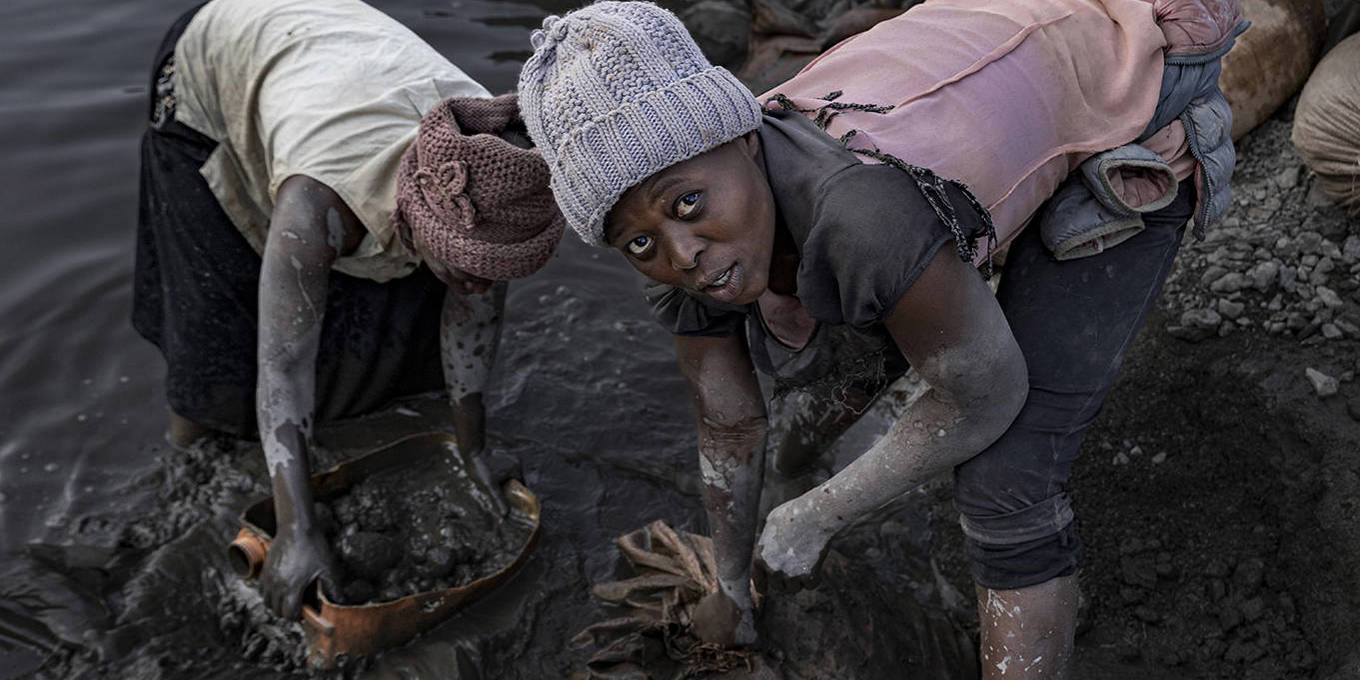
    As countries scramble to secure the minerals needed for clean energy, digital technologies, AI, and defense industries, the new era of resource competition implies both great promise and grave peril. Transparency is essential to ensure that producer countries are not left poorer, more divided, and more indebted than before.

    AUCKLAND/MONROVIA – With the global order under strain, the scramble for control of energy and minerals is increasingly framed as a matter of national security. From Venezuela and Greenland to the Democratic Republic of the Congo (DRC) and Ukraine, the competition for strategic resources is shaping global power dynamics, alliances, and conflicts.

    1. Generators operate outside shops in Dnipro, Ukraine, on January 8, 2026, as the city experiences a blackout following Russian shelling. Streets are dimly lit, and businesses rely on portable generators for electricity after power and heating outages disrupted public transport, ATMs, mobile communications, and internet service.

      Yan Dobronosov/Global Images Ukraine via Getty Images

      How Ukraine’s Economy Has Defied the Odds

      Tatyana Deryugina, et al.
      identify the military, institutional, and financial factors behind the country’s remarkable resilience.

    2. Burned book in an Iran mosque.

      Atta Kenare/AFP via Getty Images

      A New Iranian Revolution?

      Shlomo Ben-Ami
      surveys revolutionary history to show why the Islamic Republic’s options are severely limited, but not all bad.

    3. Skier Eileen Gu with fans at 2026 Olympics.

      Patrick Smith/Getty Images

      Killing the Goose that Lays the Gold Medal

      Nancy Qian
      shows that the benefits from immigration outweigh the costs, whether on the ice rink or in the laboratory.

    We have lived through such eras before. Across the Global South, the pursuit of oil, diamonds, timber, minerals, and other resources has distorted domestic governance and perpetuated asymmetric power relationships, too often leaving producer countries poorer, more divided, and more indebted than before. Today, as the world races to secure the minerals needed for clean energy, digital technologies, AI, and defense industries, we are entering another such era – one that implies both great promise and grave peril.

    But the speed and scale of change are different this time. No longer a distant goal, the transition away from fossil fuels is well underway and gaining speed. In 2025, global investment in clean energy was double that in oil, gas, and coal. Although oil and gas are still part of the energy mix and support public revenues in many economies, the energy transition is accelerating.

    That transition depends on critical minerals, and demand is surging. By 2040, on current projections and patterns of annual usage, lithium demand could increase fivefold, graphite and nickel demand may double, cobalt and rare-earth demand could climb by more than 50%, and copper demand could grow by nearly one-third. These projections are shaping current investment decisions, trade policies, and diplomatic strategies.

    Still, more attention needs to be devoted to improving energy efficiency and supporting innovation in energy generation, recycling, and conservation. The global mineral supply chain remains highly concentrated. The DRC produces about 70% of the world’s cobalt, and Indonesia produces nearly 60% of global nickel.

    Processing is even more concentrated. China has an average market share of 70% for 19 of the 20 minerals considered by the International Energy Agency to be strategic, and its role continues to grow. In recent years, China accounted for much of the growth in refined cobalt, graphite, and rare earths, among other minerals. This concentration has heightened geopolitical competition and concerns about supply-chain vulnerability, which in turn are reshaping how governments think about energy security and industrial policy.

    In response, countries are seeking to lock in access through bilateral deals and strategic partnerships – often negotiated hastily and in secret. When contracts are signed behind closed doors, citizens cannot see the terms under which their resources are pledged, and environmental and social costs often are treated as secondary concerns. We know from experience what can follow: corruption, conflict, environmental damage, and the accumulation of unaccountable wealth.

    Weak governance of natural resources has long undermined development. Too often, extraction has enriched a few individuals while leaving entire communities displaced, ecosystems degraded, and governments saddled with debt. The rhetoric may have changed with the shift from oil to lithium, and from pipelines to batteries, but the risks are depressingly familiar. The current race for critical minerals could easily reproduce the same injustices under a green banner.

    But that outcome is not inevitable. If managed well, mineral wealth can be transformative, generating public revenues, supporting economic diversification, and funding investments in infrastructure, education, and health. But this requires a decisive break from past practices, and that starts with ensuring transparency.

    Transparency is not an optional add-on or bureaucratic excess. It is the cornerstone of good governance. Citizens have a right to know how their resources are developed, who profits, what taxes are paid, and how revenues are managed. Public scrutiny of contracts, company ownership, and fiscal terms is one of the most effective safeguards against abuses and mismanagement.

    Participation matters, too. Women, youth, Indigenous peoples, and affected communities must have a meaningful voice in decisions that shape their land, livelihoods, and futures. Protections must be maintained for the journalists, activists, and civil-society organizations who can hold governments and companies to account, thereby ensuring that resource wealth translates into shared prosperity.

    There are proven models for doing this well. For more than two decades, the Extractive Industries Transparency Initiative has shown that openness and accountability are possible, even in politically complex environments. Today, 55 countries adhere to the global standards it has created for the extractive sector, working alongside companies and civil-society groups. This approach now needs to be scaled up and adapted specifically for critical minerals.

    These resources are not just inputs for the energy transition. They are strategic assets shaping geopolitics, investment flows, and the future of development. Global cooperation in this domain is urgently needed. Government leaders must demand and apply the highest standards of ethical governance and transparency to ensure that this new era of resource competition delivers fairness, accountability, and lasting public benefit.

    We have a choice. We can repeat the mistakes of the past, or we can ensure that economies where mining contributes to growth also support peace, prosperity, and justice.

    age Clark competition Ellen Helen Johnson Resource Sirleaf transparency
    Follow on Google News Follow on Flipboard
    Share. Facebook Twitter Pinterest LinkedIn Tumblr Email Copy Link
    Previous ArticleEFF opens case against O’Sullivan after Parliament walkout
    Next Article Why AI’s flaws are hurting girls most
    admin
    • Website

    Related Posts

    Opinion | America Without Capitalism?

    July 16, 2026

    Opinion | Make America Safe From Parasites Again

    July 16, 2026

    Development Economics for an Age of Upheaval by Carlos Lopes

    July 16, 2026
    Leave A Reply Cancel Reply

    Demo
    Latest Posts

    Salad Chains Are Seeing Foot Traffic Drop Over Cyclosporiasis Fears

    Russian strikes threaten Ukraine’s Black Sea grain trade

    The agent security gap: 54% of enterprises have already had an AI agent incident, and most still let agents share credentials

    Gay-Themed Mediterranean Cruise Turned Away From Turkey and Then Egypt

    Latest Posts

    Subscribe to News

    Get the latest sports news from NewsSite about world, sports and politics.

    Advertisement
    Demo

    We are a digital news platform delivering timely, accurate, and insightful coverage of politics, global affairs, business, economy, sports, and more. Our mission is to keep readers informed with reliable news, clear analysis, and stories that truly matter.
    We're social. Connect with us:

    Facebook X (Twitter) Instagram Pinterest YouTube

    Subscribe to Updates

    Get the latest creative news from FooBar about art, design and business.

    Type above and press Enter to search. Press Esc to cancel.

    Powered by
    ...
    ►
    Necessary cookies enable essential site features like secure log-ins and consent preference adjustments. They do not store personal data.
    None
    ►
    Functional cookies support features like content sharing on social media, collecting feedback, and enabling third-party tools.
    None
    ►
    Analytical cookies track visitor interactions, providing insights on metrics like visitor count, bounce rate, and traffic sources.
    None
    ►
    Advertisement cookies deliver personalized ads based on your previous visits and analyze the effectiveness of ad campaigns.
    None
    ►
    Unclassified cookies are cookies that we are in the process of classifying, together with the providers of individual cookies.
    None
    Powered by