

When I shared my predictions for AI in 2026 earlier this year, I snuck in a one-sentence nugget that turned out to be surprisingly prescient:
“In 2026, I expect a populist backlash against the fact that data centers’ voracious energy demands are raising electricity rates for everyday people.”
I was right to flag the problem. But even as an AI expert, I failed to predict its scope.
People hate AI data centers. They’ve been blamed for high electric bills, but also air pollution, odd humming noises, water scarcity, fiscal decline, and much else.
To be sure, plunking a 300,000-square-foot building filled with power-hungry servers in the middle of a community comes with costs and challenges.
But the national uproar over data centers reflects a much deeper anger. AI companies ignore it at their peril.
In my backyard
As a journalist, I only fully understood the popular outrage around AI centers when I wrote a story about one coming to my own backyard in the San Francisco Bay Area.
That data center—which has already been approved by the local municipality—will take over a former golf course. At around 347,000 square feet, it’s big, but nowhere near the massive scale of facilities in the Midwest, which can top 1 million square feet.
Shovels haven’t even hit the earth on the project, but locals are already up in arms. They’ve flooded local city council meetings with protestors and gathered more than 18,000 signatures opposing the new building. A social media post I wrote about my story has received 44,000 views and 100-plus comments.
Most of the concerns are familiar ones, echoing criticisms occurring all around the country. In a time when energy is already blindingly expensive, many Americans worry that data centers will raise their utility bills.
Many data centers have massive diesel generators, intended to keep the servers humming if the local power grid goes down. Lots of people worry that those generators will belch smog and cause health issues.
The more environmentally minded often point to data centers’ alleged massive water usage, often quoted in millions of gallons per day. And some people just feel that they’re noisy and ugly.
Many different people, in other words, have many different reasons for hating AI data centers. But as I’ve seen firsthand, that hatred is deep and abiding.
Why me?
At first glance, this level of popular ire makes little sense. When you actually examine the data about data centers, many claims about their abject awfulness fail to hold up.
As The Atlantic recently reported, fears about AI data centers driving up electric prices are often oversold. A comprehensive study of the economics of data centers recently found that they actually reduce electricity prices slightly.
Texas is a perfect example of that fact. The state is leading America’s data center boom, yet its electricity prices are among the lowest in the country. Prices, the data shows, are far more closely tied to grid investment and factors like wildfire risk than the presence of data centers.
Likewise, researchers say that the stats about data center water usage are often taken out of context. Scary figures often count inane things, like the evaporation of water from reservoirs upstream of the data center itself. Indeed, my own local data center claims it will use less water than the golf course it’s replacing.
Data centers’ ugliness is subjective, of course. But the American heartland has plenty of ugly logistics centers and shipping warehouses that don’t prompt tens of thousands of people to sign petitions.
And data center boosters can reasonably point to claims about the centers’ positive impacts. As The Atlantic shares, tax revenue from data centers can have massive benefits for small towns, and unlike older data centers, the AI ones often create high-paying local jobs by attracting AI firms.
Given this encouraging data, why have AI data centers become such a hated piece of the American economy and landscape?
A deeper issue
Based on my own experience as a tech journalist and photographer, I believe the public anger about data centers actually points to a much bigger, deeper issue.
Americans are terrified of AI. They (often rightly) worry that the tech will take their jobs, render their kids’ lives meaningless, steal their personal information, and ultimately destroy American culture.
A recent Pew study finds that most Americans think AI will be bad for society, with 63% feeling that the tech is moving too fast. Almost three-quarters of Americans think AI will make their data less secure. And most (71%) feel that governments will fail to regulate the tech.
So there’s a lot of fear and anger around the technology. But the tricky part is that AI is largely invisible.
Contrast AI with another much-maligned technology of our modern age: the smartphone. Smartphones are extremely visible. You’re probably holding one right now.
That tangible, visible nature makes them a far easier target for expressions of anger and fear. Schools can ban them, and parents can sign pledges not to buy them for their kids.
Individuals can lash out against their phone by hiding it in a special, signal-blocking bag or “bricking” it with a special dongle. Members of Gen Z can rebel against it by buying a dumbphone instead.
AI is different. Although the technology is everywhere, AI is rarely physically embodied.
As a photojournalist, I know this challenge all too well. If I want to visually depict self-driving cars or cryptocurrency, all I have to do is take a train to downtown San Francisco and photograph a Waymo or a Bitcoin ATM.
If I want to visually depict AI, though, I have almost no options. Journalists covering the tech often resort to vague illustrations of neural networks, tortured visual metaphors (a white robot sitting at a computer, anyone?), or photos of AI’s leaders.
This visibility problem extends to popular expressions of anger, fear, and protest about AI and its impacts.
Again, if you want to express your anger about smartphones, you have plenty of tangible, visual options, from dumbphones to Faraday bags to the good old-fashioned sledgehammer.
Protesting a nebulous, invisible technology is much harder. AI sits in an abstract cloud, silently altering society in radical, earth-shaking ways while maintaining no presence in the physical world.
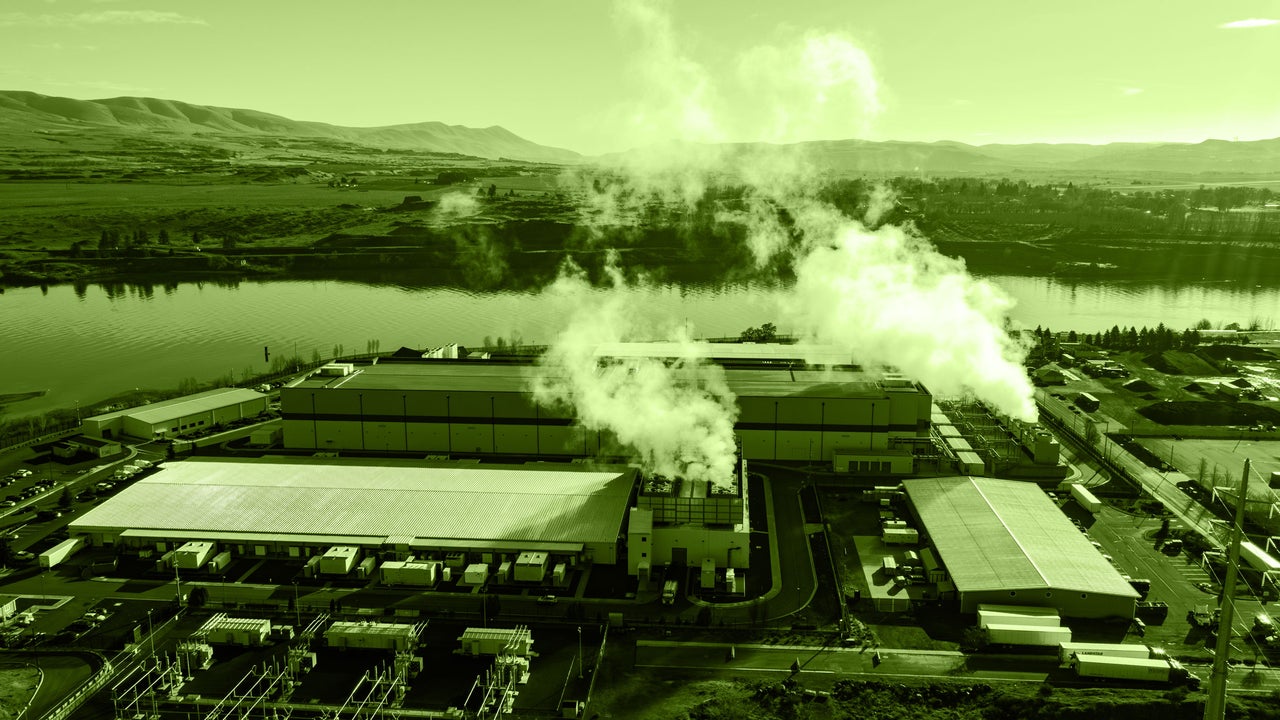
No presence, that is, aside from data centers.
These odd, isolated buildings are the rare places where the world of AI intersects with the real world. They make clumsy, imperfect metonyms for the technology itself. But they’re all people have.
And so, people hate them with a burning, fiery passion—not necessarily because the buildings are objectively so awful, but because they’re the only tangible representation of a technology that most Americans find terrifying and bewildering.
The data center backlash, in other words, isn’t only about the centers—it’s about AI itself.
AI companies would do well to remember that when they communicate with everyday communities. Patronizing messages about how data centers are actually good for the local tax base, or how they’ll drive investment in grid infrastructure, are likely to fall on deaf ears.
People who are furious about the tech want their opinions to be heard—not to read nerdy explainers about water usage or carbon emissions.
Better transparency from the companies developing frontier models, more opportunities for everyday people to shape AI policy, and more consistent government oversight will help to address public anger.
Naively arguing about the technical specifics of data centers, rather than addressing the issue at its roots, won’t.
The stakes are high. Violent threats against data centers and even individual AI workers are on the rise. Last year, a man was arrested in San Francisco for firebombing OpenAI CEO Sam Altman’s house.
People need more outlets to share their fears and concerns about the tech. Otherwise, any physical manifestation of the AI boom, from its buildings to its people, will remain in the public’s crosshairs—both figuratively and, to an alarmingly increasing extent, literally.
