
Close Menu
    What's Hot

    Iran War Live Updates: U.S. and Iran Edge Closer to Wider War After U.S. Service Members Killed

    How to Disable Music Videos in Spotify

    POET: A Roller-Coaster Ride Doesn’t Have To Be A Bad Thing (NASDAQ:POET)

    Facebook X (Twitter) Instagram
    Trending
    • Iran War Live Updates: U.S. and Iran Edge Closer to Wider War After U.S. Service Members Killed
    • How to Disable Music Videos in Spotify
    • POET: A Roller-Coaster Ride Doesn’t Have To Be A Bad Thing (NASDAQ:POET)
    • Russia Batters Kyiv in One of the Largest Missile Assaults of the War
    • How Verizon is preparing for record-setting network spikes during the first-ever World Cup halftime show
    • Opinion | Social Media Hacked Our Attention. A.I. Scares Me More.
    • Trump Gutted Civil Rights Agency, Stifling U.S. Scrutiny of Workplace Bias
    • Du Plessis makes winning return to UFC with dominant decision over Usman | Mixed Martial Arts News
    interluknewsinterluknews
    • Home
    • Business
      • Corporate News
      • Industry Insights
      • Startups & Entrepreneurship
      • Technology & Innovation
    • Economy
      • Economic Policy
      • Financial Analysis
      • Inflation & Interest Rates
      • Trade & Markets
    • Global
      • Conflicts & Security
      • Diplomacy
      • Global Trends
      • International Affairs
    • Lifestyle
      • Fashion
      • Food & Dining
      • Personal Development
      • Travel
    • Opinion
      • Columns
      • Editorials
      • Expert Opinions
      • Reader Voices
    • More
      • Politics
        • Elections
        • Government & Policy
        • International Relations
        • Political Analysis
      • Sports
        • Cricket
        • Football / Soccer
        • International Sports
        • Local Sports
      • Technology
        • Artificial Intelligence
        • Cybersecurity
        • Gadgets & Reviews
        • Tech News
      • South Africa News
    Facebook X (Twitter) Instagram
    interluknewsinterluknews
    Personal Development

    The Strait of Hormuz crisis is exposing a hidden food risk. New fertilizer tech could help

    adminBy adminJuly 19, 2026No Comments4 Mins Read
    Share Facebook Twitter Pinterest Copy Link Telegram LinkedIn Tumblr Email
    The Strait of Hormuz crisis is exposing a hidden food risk. New fertilizer tech could help
    Share
    Facebook Twitter LinkedIn Pinterest Email

    When ships can’t make it through the Strait of Hormuz, the fallout goes beyond the price of oil: Nearly a third of the world’s fertilizer also passes through the corridor, coming from factories in countries like Qatar. Fertilizer prices have surged due to the Iran war—and added one more reason that food prices are going up around the world.

    Better technology could help. Right now most fertilizer is made using the Haber process, a technique developed more than a century ago that starts with natural gas. It’s a major source of emissions, and also a supply chain risk. Countries that don’t have their own large natural gas supplies are the most exposed. The war in Iran, like the the war in Ukraine, has disrupted supplies of both natural gas and fertilizer.
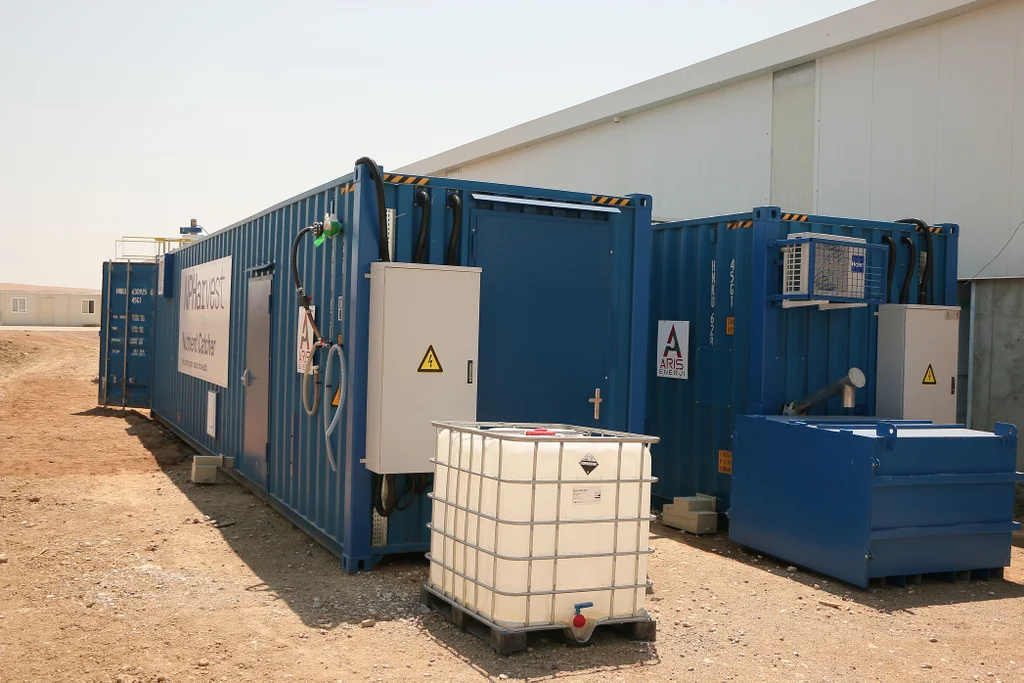
    The Strait of Hormuz crisis is exposing a hidden food risk. New fertilizer tech could help
    [Photo: courtesy NPHarvest]

    Harvesting nutrients from wastewater

    A growing number of startups are developing new ways to make fertilizer that can avoid natural gas and the risks that come with it. One approach: capturing fertilizer ingredients from wastewater. A company called Ostara captures nitrogen and phosphorus from multiple wastewater treatment plants in the U.S. and turns it into fertilizer.

    In Finland, a startup called NPHarvest uses membranes and chemistry to do the same thing with less energy, avoiding the heat and pressure used in similar processes. For wastewater treatment plants that need to meet strict European disposal laws, the approach is less expensive than other options for water treatment.

    “We help them save money,” says cofounder and business developer Burak Yirmibesoglu. The fertilizer, he says, is a side benefit. Because of the financial model, the startup will be able to sell its fertilizer—now in pilot testing with its first customers—at a lower cost than conventional fertilizer.

    [Photo: Jari Härkönen/courtesy NPHarvest]

    Recovered Potential, a startup that spun out of Stanford, uses electricity to help target and recover ammonia from wastewater.

    “We can selectively extract the ammonia as opposed to all the other materials in the wastewater,” says cofounder and CEO Kindle Williams. “In other words, we zap wastewater until we pull fertilizer out.”

    An advantage of the technology, Williams says, is that the reactors have a small footprint, so they can be low cost and quick to deploy. The end result is a liquid ammonia fertilizer that can be added during crop irrigation. After a decade in the lab, the company is preparing to begin a pilot with a large customer.

    There are limits to using wastewater; Williams estimates that wastewater nutrients could offset 20% to 30% of conventional fertilizer needs. And while the economics make sense in places like Europe, strict wastewater regulations need to be in place for it to be feasible.

    [Photo: Nitricity]

    Other approaches

    Some companies have developed biotech solutions to reduce conventional fertilizer use, including Pivot Bio, which utilizes gene-edited microbes that live in the soil by plant roots to help them better absorb nitrogen.

    Kula Bio, another startup, grows microbes in a bioreactor that can be sprayed on crops, helping the plants pull nitrogen directly from the air.

    Windfall Bio developed a process to use microbes to turn methane pollution into fertilizer, though the company reportedly shut down after losing a major grant from the U.S. Department of Energy.

    Nitricity, another startup, makes an organic fertilizer using renewable energy and farm waste, beginning with almond shells in California. It already competes on cost with other organic alternatives, but the company says it could eventually compete with conventional fertilizer as well.
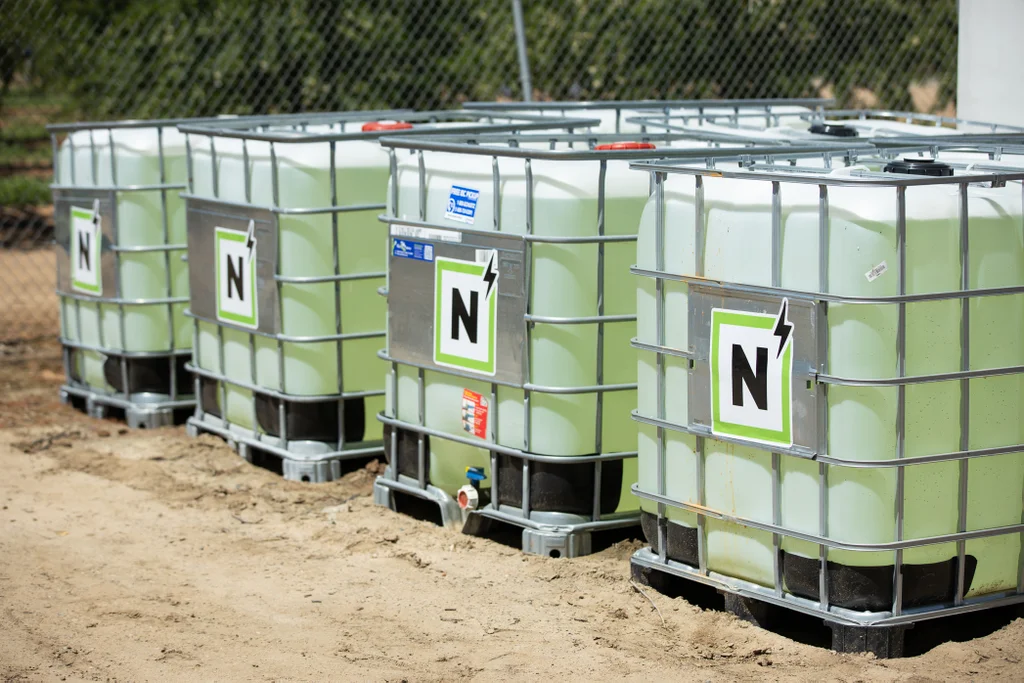
    [Photo: Nitricity]

    Nitricity is also developing a process that makes conventional fertilizer by heating up air to high temperatures to fix nitrogen, and then cooling it down with water.

    “You can use electricity to drive this,” says cofounder and CEO Nicolas Pinkowski. “That’s actually the same process as lightning in a thunderstorm, where lightning heats up air to very high temperatures and water will capture that nitrogen.”

    Though it’s still in the R&D stage, Pinkowski says it’s a promising product that the company just needs to scale up. Assuming it comes to market, it could be a game changer for the countries that are most reliant on fertilizer imports.

    “If you can deliver a product at a competitive price, but it’s made closer, and it’s less volatile of a price, that would be a really big deal,” he says.

    Pinkowski argues that the industry needs to move away from relying on enormous fertilizer plants built near cheap natural gas and instead produce fertilizer closer to the regions where it will be used, with renewable energy powering the process.

    Disruptions such as a closure of the Strait of Hormuz, Pinkowski says, expose the risks of the current system and could contribute to food shortages worldwide.

    “We think it is possible to do so economically,” he says. “And the supply chain benefits are absolutely needed.”


    crisis Exposing fertilizer food Hidden Hormuz risk Strait tech
    Follow on Google News Follow on Flipboard
    Share. Facebook Twitter Pinterest LinkedIn Tumblr Email Copy Link
    Previous ArticleSomalia races to save Radio Mogadishu’s fading archive | Media News
    Next Article Corporate India’s record outbound investments add pressure to rupee
    admin
    • Website

    Related Posts

    How Verizon is preparing for record-setting network spikes during the first-ever World Cup halftime show

    July 19, 2026

    Sibling Therapy Is on the Rise. Could It Help My Relationship With My Brother?

    July 19, 2026

    A Modest Proposal for the Strait Dispute: A Shared Pact Among Gulf States

    July 19, 2026
    Leave A Reply Cancel Reply

    Demo
    Latest Posts

    Iran War Live Updates: U.S. and Iran Edge Closer to Wider War After U.S. Service Members Killed

    How to Disable Music Videos in Spotify

    POET: A Roller-Coaster Ride Doesn’t Have To Be A Bad Thing (NASDAQ:POET)

    Russia Batters Kyiv in One of the Largest Missile Assaults of the War

    Latest Posts

    Subscribe to News

    Get the latest sports news from NewsSite about world, sports and politics.

    Advertisement
    Demo

    We are a digital news platform delivering timely, accurate, and insightful coverage of politics, global affairs, business, economy, sports, and more. Our mission is to keep readers informed with reliable news, clear analysis, and stories that truly matter.
    We're social. Connect with us:

    Facebook X (Twitter) Instagram Pinterest YouTube

    Subscribe to Updates

    Get the latest creative news from FooBar about art, design and business.

    Type above and press Enter to search. Press Esc to cancel.

    Powered by
    ...
    ►
    Necessary cookies enable essential site features like secure log-ins and consent preference adjustments. They do not store personal data.
    None
    ►
    Functional cookies support features like content sharing on social media, collecting feedback, and enabling third-party tools.
    None
    ►
    Analytical cookies track visitor interactions, providing insights on metrics like visitor count, bounce rate, and traffic sources.
    None
    ►
    Advertisement cookies deliver personalized ads based on your previous visits and analyze the effectiveness of ad campaigns.
    None
    ►
    Unclassified cookies are cookies that we are in the process of classifying, together with the providers of individual cookies.
    None
    Powered by