
Close Menu
    What's Hot

    Live Updates: Federal Reserve to Make a Close Call on Interest Rates

    GE HealthCare Technologies Inc. (GEHC) Q2 2026 Earnings Call Transcript

    Hollie Doyle: Diamond Necklace to sparkle in Nassau Stakes at Goodwood | Racing News

    Facebook X (Twitter) Instagram
    Trending
    • Live Updates: Federal Reserve to Make a Close Call on Interest Rates
    • GE HealthCare Technologies Inc. (GEHC) Q2 2026 Earnings Call Transcript
    • Hollie Doyle: Diamond Necklace to sparkle in Nassau Stakes at Goodwood | Racing News
    • As its new bikes launch in the Bay Area, Lyft’s bikeshare ambitions are going global
    • Sanctions Bill Would Give Trump Sweeping New Tariff Powers
    • Zijin’s $4bn deal with Allied Gold collapses
    • How a medical database developed at MIT evolved into a global standard of data-sharing | MIT News
    • Coordinated Cyberattack Targets 30+ Minnesota Water Systems as One Plant Goes Offline
    interluknewsinterluknews
    • Home
    • Business
      • Corporate News
      • Industry Insights
      • Startups & Entrepreneurship
      • Technology & Innovation
    • Economy
      • Economic Policy
      • Financial Analysis
      • Inflation & Interest Rates
      • Trade & Markets
    • Global
      • Conflicts & Security
      • Diplomacy
      • Global Trends
      • International Affairs
    • Lifestyle
      • Fashion
      • Food & Dining
      • Personal Development
      • Travel
    • Opinion
      • Columns
      • Editorials
      • Expert Opinions
      • Reader Voices
    • More
      • Politics
        • Elections
        • Government & Policy
        • International Relations
        • Political Analysis
      • Sports
        • Cricket
        • Football / Soccer
        • International Sports
        • Local Sports
      • Technology
        • Artificial Intelligence
        • Cybersecurity
        • Gadgets & Reviews
        • Tech News
      • South Africa News
    Facebook X (Twitter) Instagram
    interluknewsinterluknews
    Editorials

    The World Must Not Turn Its Back on Vaccination by David Miliband

    adminBy adminMay 14, 2026No Comments5 Mins Read
    Share Facebook Twitter Pinterest Copy Link Telegram LinkedIn Tumblr Email
    The World Must Not Turn Its Back on Vaccination by David Miliband
    Share
    Facebook Twitter LinkedIn Pinterest Email

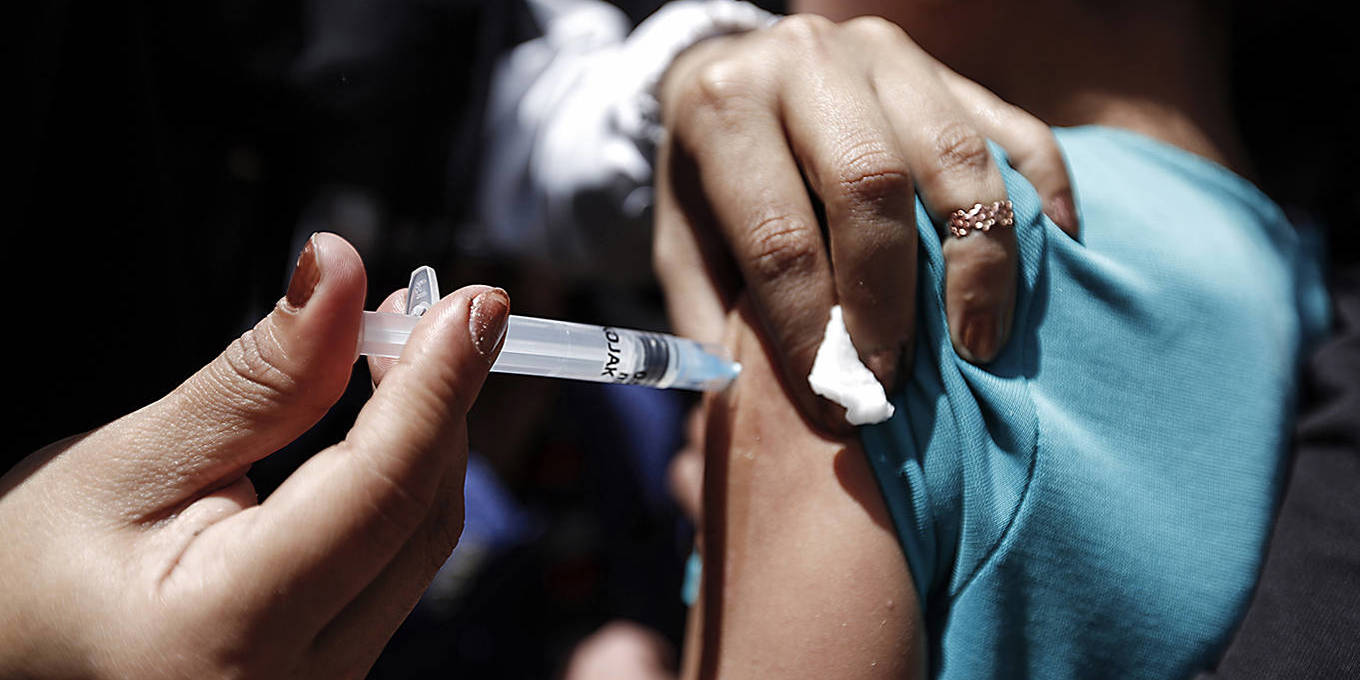
    Childhood immunization is the world’s most cost-effective public-health intervention, with a single vaccine dose costing less than $2 to administer—even in active conflict zones. But local delivery in the hardest-to-reach places, where zero-dose children are concentrated, requires investment in models that depend on local partners.

    NEW YORK—With so many intractable problems in global politics, it is all the more frustrating that the international community often neglects pressing ones that can, in fact, be solved. Vaccination, which has stalled worldwide after decades of remarkable progress, is one such issue. As leaders convene in Geneva for the World Health Assembly, they face a stark choice: recommit to childhood immunization, the world’s most cost-effective public-health intervention, or condemn millions of young people to a life of increased vulnerability.

    1. US President Donald Trump gesturing while speaking about the conflict in Iran during a press briefing in the James S. Brady Press Briefing Room at the White House in Washington, DC, on April 6, 2026.

      Kent Nishimura/AFP via Getty Images

      Trump’s Tragedy of Errors

      Joseph E. Stiglitz
      weighs the economic implications of America’s reckless war of choice against Iran.

    2. Missile strike in Iran city.

      Atta Kenare/AFP via Getty Images

      The Age of Global Un-Order

      Mark Leonard
      foresees a geopolitical landscape shaped not by stable alliances but by shifting interests.

    3. Illustration of a giant eye watching a man on a computer.

      Moor Studio/Getty Images

      Living Without an AI Kill Switch

      Ngaire Woods
      identifies the steps that can be taken now to prepare for attacks enabled by frontier models like Mythos.

    Immunization has averted more than 150 million deaths over the past half-century, making it one of the most reliable ways to reduce child mortality. According to the Johns Hopkins Bloomberg School of Public Health, every dollar invested in immunization in low- and middle-income countries saves $20 in health-care costs and lost wages and productivity, and more than $50 when accounting for the full benefits of longer, healthier lives.

    If one were to design a public-health intervention from scratch, it would be hard to improve upon vaccination. Yet the world is losing sight of the overwhelming evidence that vaccines save lives. In high-income countries with functioning health systems, vaccine skepticism has led to declining inoculation rates. More significantly, global-health financing has collapsed, falling up to 40% compared to 2023. Decades of progress on global-health security are now at risk—and so is the foundation for future gains.

    The consequences of today’s deep foreign-aid cuts are felt most acutely in fragile and conflict-affected settings, where around half of the 14 million never-vaccinated children live and where immunization delivery has stalled, particularly after pandemic-era disruptions. Children in these areas are three times more likely to die before their fifth birthday than their peers in stable settings (and over ten times more likely to die than their peers in New York or California). The resulting gaps in vaccination coverage also create risks for everyone: more than 70% of cases of epidemic-prone diseases now originate in fragile and conflict-affected settings.

    If the problem is clear, so, too, is the solution: invest in immunizing the missed children, using delivery models developed for such challenging environments. This need not be expensive. The International Rescue Committee (which I lead) has shown with its Reaching Every Child in Humanitarian Settings (REACH) initiative that even in active conflict zones, it can cost less than $2 to administer a single vaccine dose to a child.

    Since 2022, REACH (funded by Gavi, the Vaccine Alliance) has delivered more than 30 million vaccine doses in Chad, Ethiopia, Nigeria, Somalia, Sudan, and South Sudan, vaccinating more than one million zero-dose children. This model works because it depends on community health workers and a coalition of local partners who know the terrain and have built the trust necessary to reach and treat underserved and remote communities. As a result, they can operate in places where governments and external actors cannot.

    This high-impact, low-cost initiative is further evidence that supporting local health workers in reaching otherwise “unreachable” children offers the best value for money in global health today. At a time when Gavi’s own funding is under pressure, international leaders must decide whether they are willing to scale up this model and others similarly designed for fragile and conflict-affected settings.

    If they are, they must focus on two priorities. First, funding should follow evidence. That means explicitly targeting communities beyond the reach of government systems, because this is where zero-dose children are concentrated. These communities should be regarded as a distinct and top funding priority, with sustained, multiyear financing and clear accountability for outcomes. Success can and should be measured by how many children are reached and at what cost.

    Second, international leaders should provide funding for the model, not just for vaccine doses. Making immunization possible in the hardest-to-reach places requires investing in local delivery channels. These groups, often comprising civil-society partners, are the backbone of last-mile immunization efforts in conflict and disaster settings.

    There is a moral and economic imperative to act. Vaccine delivery to the communities with the most zero-dose children is not some niche effort, but one of the highest-return investments in global health. Policymakers should be clear about the choice before them: protect millions of lives at modest cost or bear the human consequences for years to come.

    David Miliband turn Vaccination World
    Follow on Google News Follow on Flipboard
    Share. Facebook Twitter Pinterest LinkedIn Tumblr Email Copy Link
    Previous ArticleRamaphosa fires Social Development Minister Sisisi Tolashe
    Next Article Life, Death and Rebirth in Nepal, the Land of the Buddha
    admin
    • Website

    Related Posts

    World Cup: FIFA chief Gianni Infantino offers £30m incentive for members to back controversial private investment plans | Football News

    July 29, 2026

    Opinion | I Hope This Column Ages Poorly

    July 29, 2026

    Opinion | The Hidden Cost of China’s Free A.I.

    July 29, 2026
    Leave A Reply Cancel Reply

    Demo
    Latest Posts

    Live Updates: Federal Reserve to Make a Close Call on Interest Rates

    GE HealthCare Technologies Inc. (GEHC) Q2 2026 Earnings Call Transcript

    Hollie Doyle: Diamond Necklace to sparkle in Nassau Stakes at Goodwood | Racing News

    As its new bikes launch in the Bay Area, Lyft’s bikeshare ambitions are going global

    Latest Posts

    Subscribe to News

    Get the latest sports news from NewsSite about world, sports and politics.

    Advertisement
    Demo

    We are a digital news platform delivering timely, accurate, and insightful coverage of politics, global affairs, business, economy, sports, and more. Our mission is to keep readers informed with reliable news, clear analysis, and stories that truly matter.
    We're social. Connect with us:

    Facebook X (Twitter) Instagram Pinterest YouTube

    Subscribe to Updates

    Get the latest creative news from FooBar about art, design and business.

    Type above and press Enter to search. Press Esc to cancel.

    Powered by
    ►
    Necessary cookies enable essential site features like secure log-ins and consent preference adjustments. They do not store personal data.
    None
    ►
    Functional cookies support features like content sharing on social media, collecting feedback, and enabling third-party tools.
    None
    ►
    Analytical cookies track visitor interactions, providing insights on metrics like visitor count, bounce rate, and traffic sources.
    None
    ►
    Advertisement cookies deliver personalized ads based on your previous visits and analyze the effectiveness of ad campaigns.
    None
    ►
    Unclassified cookies are cookies that we are in the process of classifying, together with the providers of individual cookies.
    None
    Powered by