

The oldest bridge in Paris has a new look.
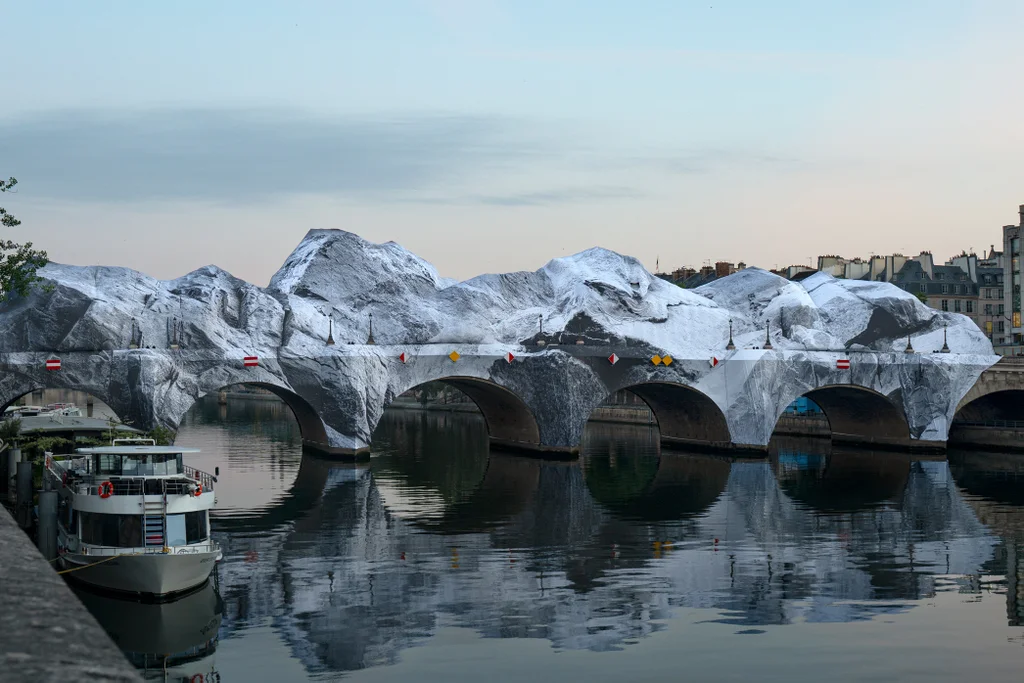
Veiling the 419-year-old structure with an inflatable envelope wrapped in canvas, the French street artist JR—often called the French Banksy—transformed the Pont Neuf in Paris, paying homage to the famed duo of artists, Christo and Jeanne-Claude. The work, titled La Caverne du Pont Neuf, is on view for free through June 28.
Its origin story is much longer. The inspiration dates back to when the artist was just 2 years old, and Christo and Jeanne-Claude, who are known for their large-scale environmental installations, had wrapped the oldest bridge in Paris for a work titled The Pont Neuf Wrapped.
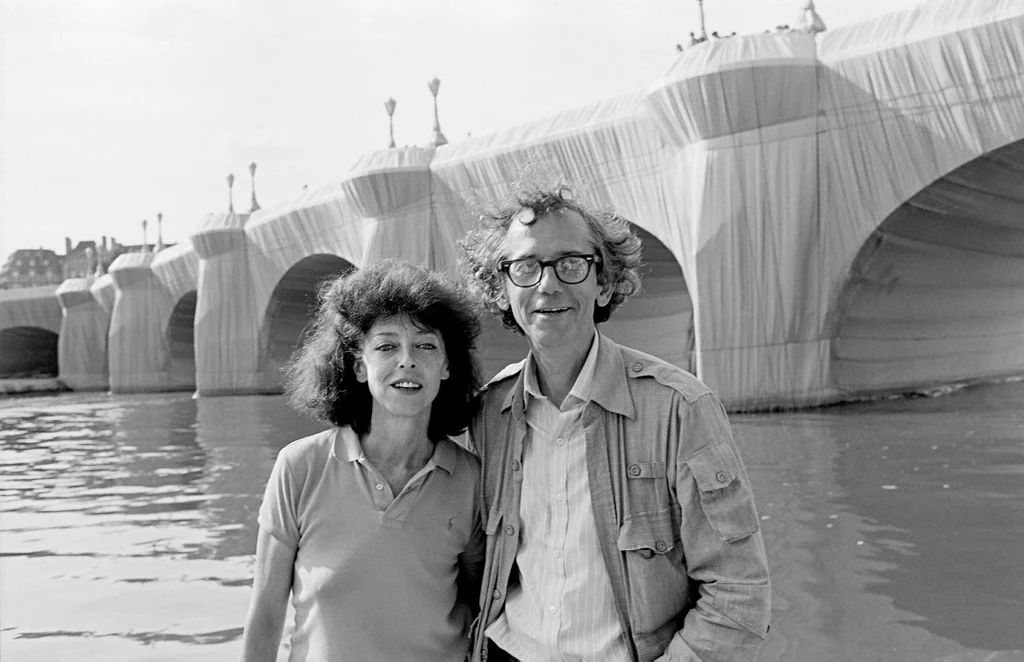
“Later I discovered their work, these monumental projects in public space, and they showed me a path was possible,” JR tells Fast Company. “Where they underlined the real, revealing the lines and the forms of the bridge, I wanted to do the opposite: to make it disappear, and to bring the surreal into the heart of Paris.”
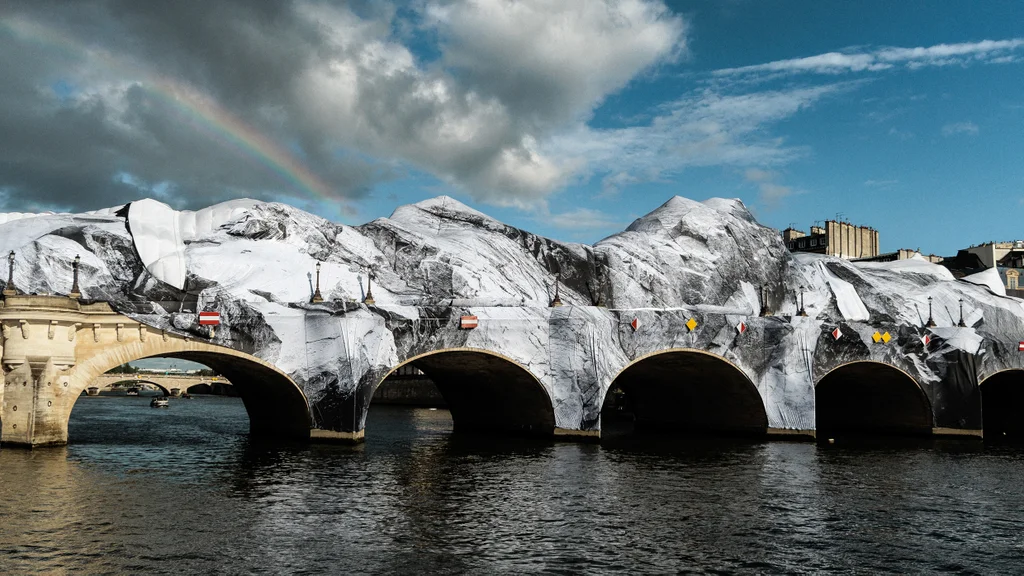
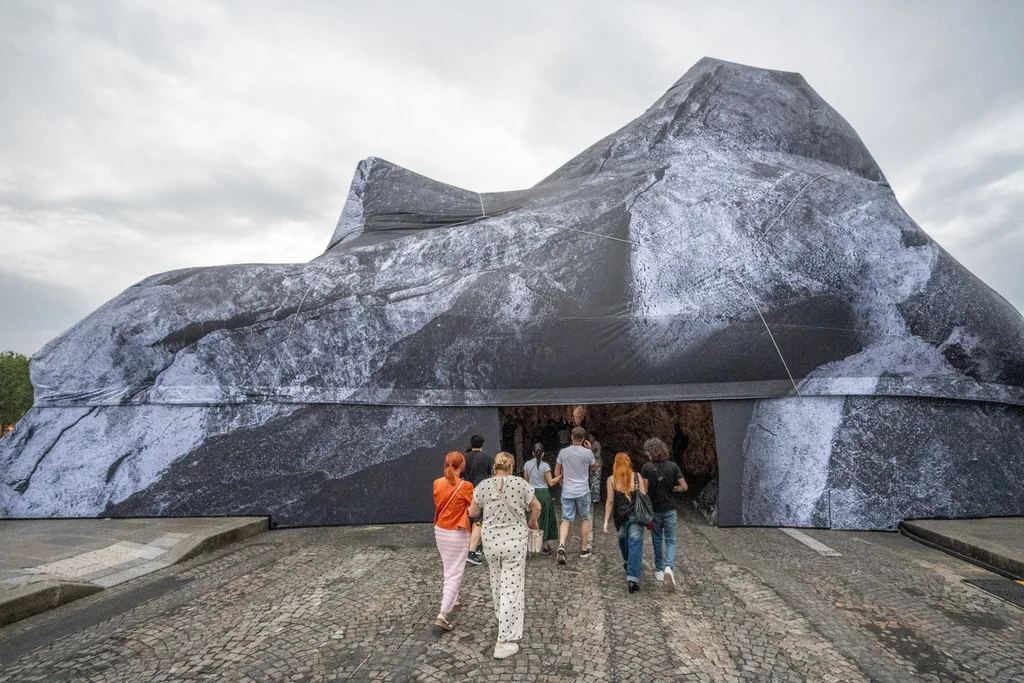
The installation turns the 17th-century bridge into an artificial cave for passersby to enter, while also transforming the structure into a trompe l’oeil, or a hyperrealistic optical illusion. The almost 18,900 square meters (203,400 square feet) of printed polyester canvas that drapes the bridge is covered with an image of Lutetian limestone, or Paris Stone, which was used to build the bridge and the city.
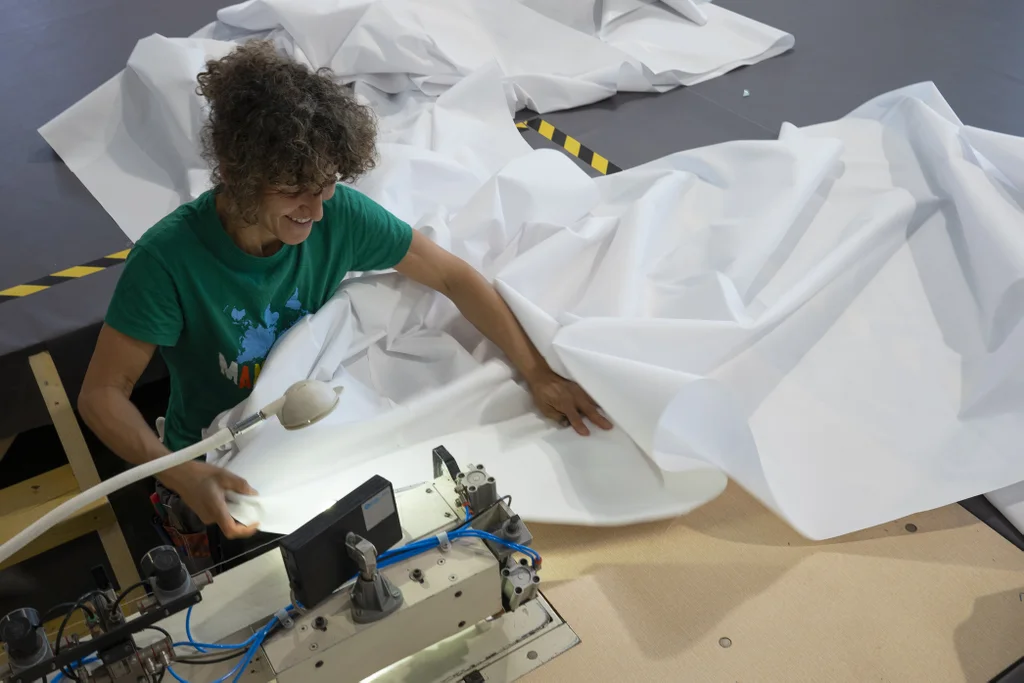
The realization of La Caverne started when Vladimir Yavachev, Christo’s nephew, invited JR to create something for the 40th anniversary of the original work, which he readily accepted. (Christo died in 2020; Jeanne-Claude in 2009.) JR’s project ultimately required around 850 workers and partners to complete. The materials come from nearby, with the fabric produced in Europe, printed in France, and then assembled by hand by artisans in Brittany.
“Underneath it there is something very old. Since the first paintings on cave walls, human beings have turned the real into a story. Maybe that is where the fantastical began,” JR says. “That capacity to create, tell and share stories is perhaps what separates us from the rest of the living world. La Caverne should be taken as a story and an adventure.”
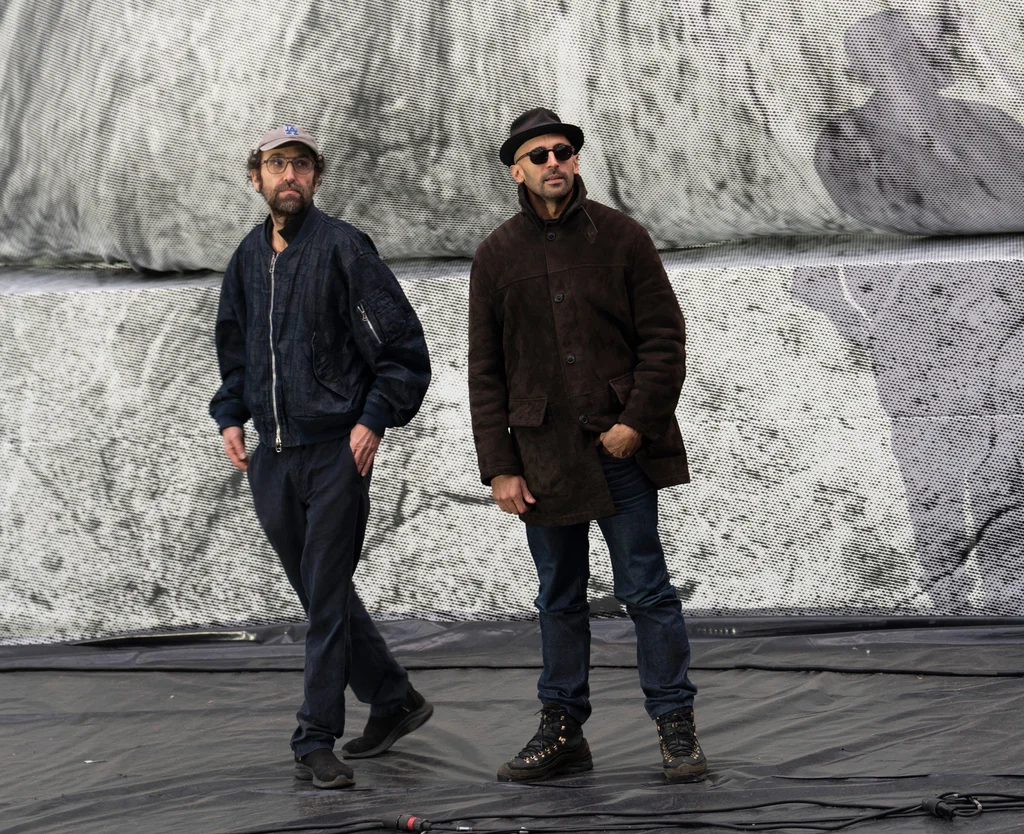
When walking inside the dark “cave,” passersby are met by a custom scent by the journalist and perfume specialist Sarah Bouasse, alongside music by Daft Punk’s Thomas Bangalter, and augmented reality developed by Snap’s AR Studio. For JR, the meeting of all of these features with the public is what makes the artwork complete.
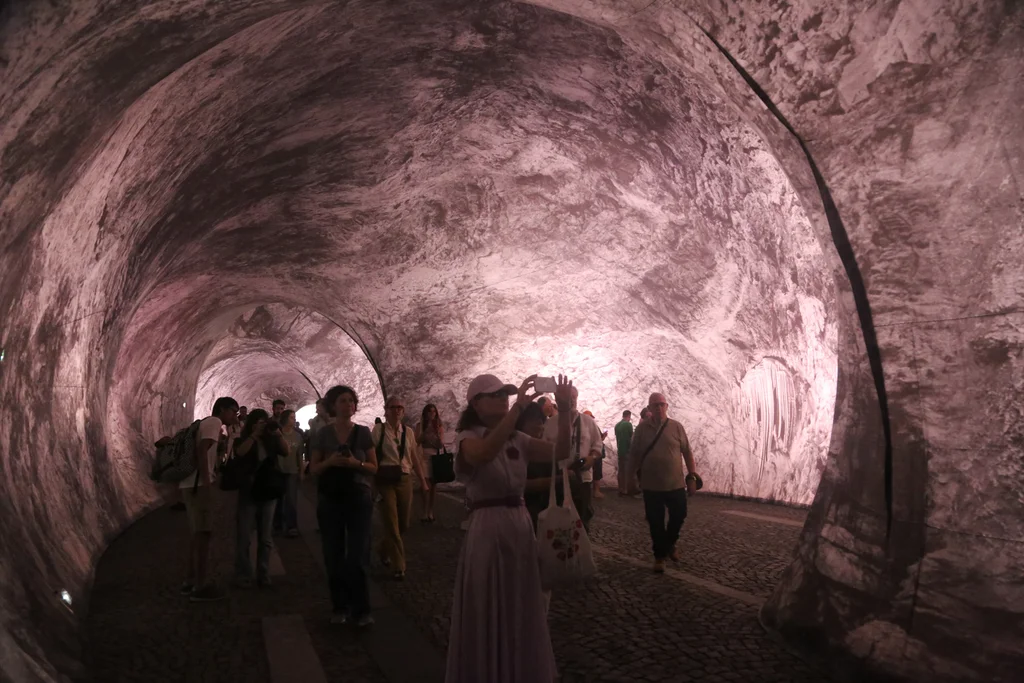
“I would rather it belong to everyone than stay mine,” he said. “I want people to come out of the darkness into the light carrying the sense that it is in the unknown that we are most alive.”
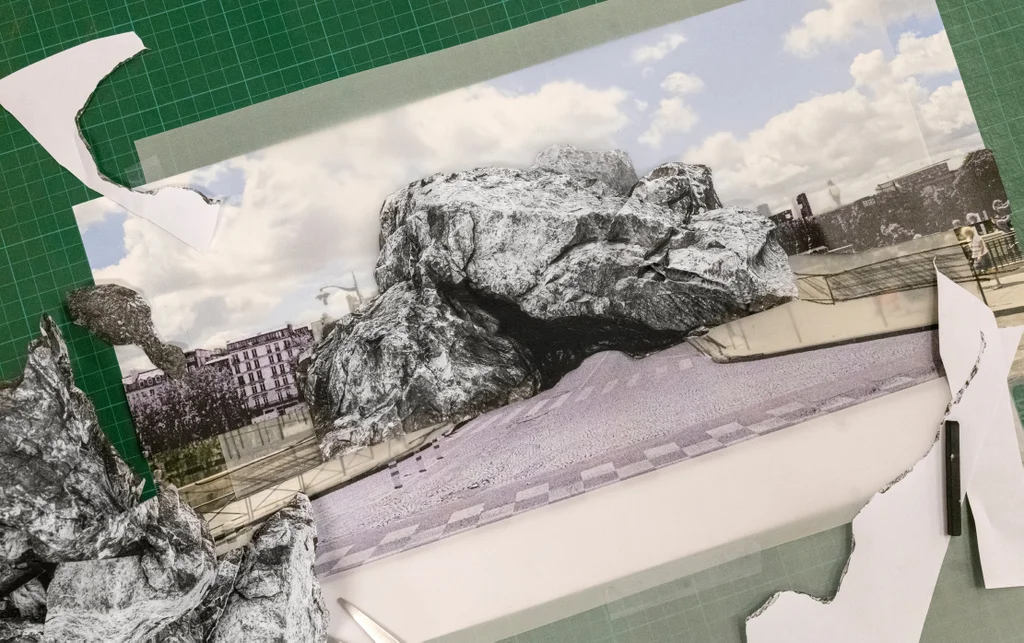
This wasn’t JR’s first introduction to caves. La Caverne du Pont Neuf is a continuation of the artist’s past work in the city, including the 2023 Chiroptera project where he draped the Palais Garnier, the old opera house, with an image of a cave.
With the new installation, JR invites the public to step into the cave and develop their own interpretations of the piece, inspired by Christo and Jeanne-Claude’s philosophy that art’s mission should be “to make us think.”
“The debate that a public art project can provoke is of equal value to its realization,” JR adds. “Art is a transformation, a way of renewing how we look at the world around us.”
But making a large-scale installation at the mercy of the environment comes with its own set of challenges, as JR would come to find out. Just days before the installation’s inauguration, strong gusts of wind and hailstorm tore the the canvas, delaying the opening.
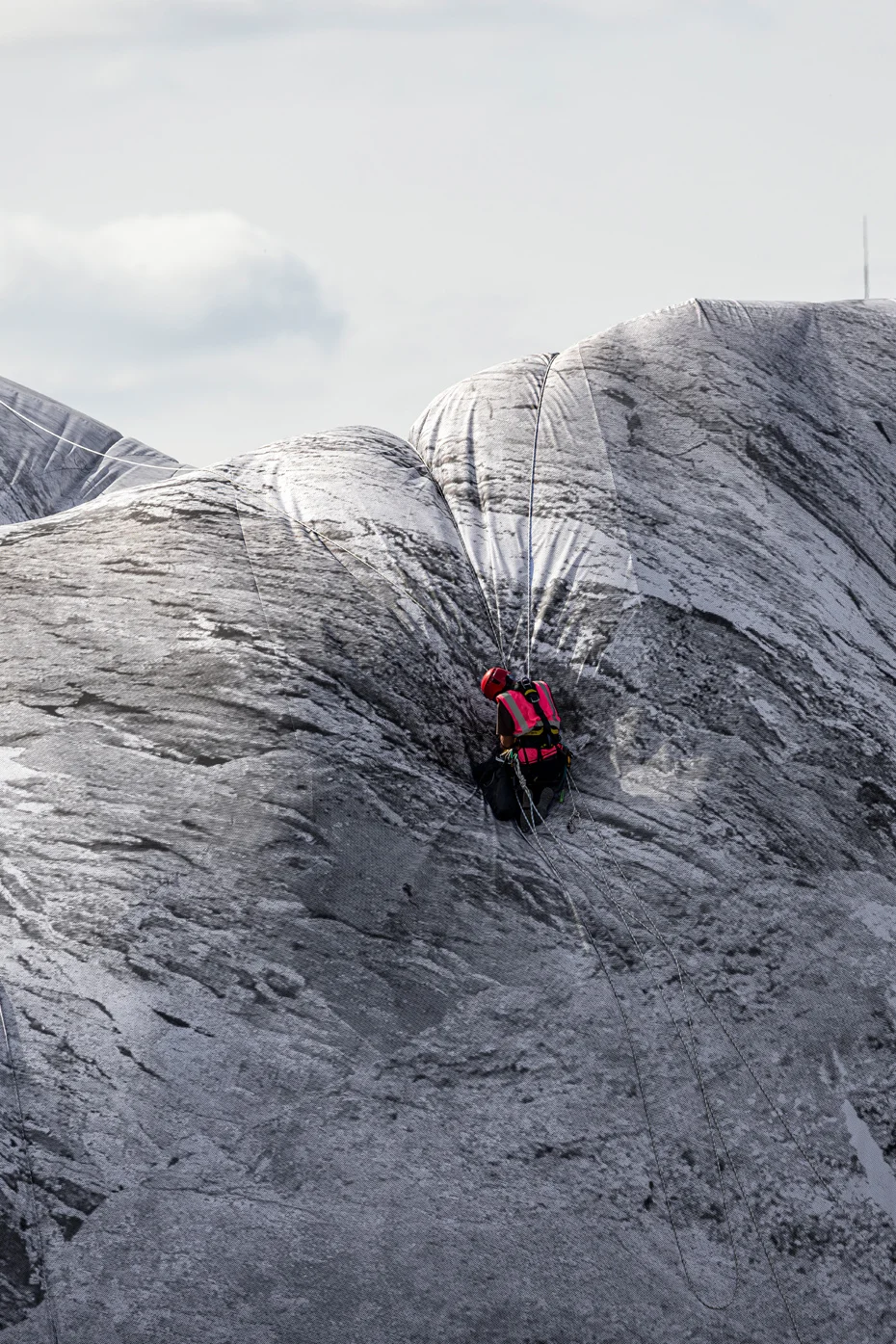
But for JR, this moment built more meaning into the piece, as the team got to work to fix the damage.
“There was nothing to do but repair it, in public, in the heart of Paris, under the eyes of passersby and journalists. The team was relentless, and climbers scaled the structure to restore it and, in doing so, brought our fiction to life,” JR says. “In my work the process of making is part of the work. The piece now carries a scar, a memory of its repair.”
