

A growing awareness of the inequities embedded in the world order has prompted calls for reform. Building a multilateral system that serves the global majority will require redesigning the international financial architecture, especially in relation to sovereign debt and corporate taxation.
JOHANNESBURG—Brazilian President Luiz Inácio Lula da Silva, speaking at the first Global Progressive Mobilisation meeting in April, highlighted the connection between democracy and material dignity. If citizens do not believe that their lives will get better, democracy will continue to be challenged by populists and other authoritarians who falsely promise that only they can improve the lot of ordinary people.
There is likewise a growing awareness of the inequities embedded in the international order. Unless people who bear the costs of others’ decisions and actions can influence the multilateral system and hold powerful actors to account, the international order will be viewed as unjust and illegitimate.
Fortunately, momentum is building for a global reordering. In May, United Nations Secretary-General António Guterres launched the Counting What Counts report, which addresses a long-standing blind spot in measuring progress. While acknowledging that GDP is still an important metric, Guterres underscored the need for a more sophisticated and humane accounting system that “consciously aligns metrics with our actual goals—not proxy measures that obscure or hide the challenges our world is facing.”
But some worry that efforts to design a multilateral system around the global majority will end up preserving the existing architecture, just with new figureheads. To avert this outcome, the international community must focus on building enforceable mechanisms that can provide countries with greater fiscal autonomy.
What would that look like in practice? For starters, a binding UN framework for sovereign-debt restructuring would move rule- and decision-making from behind closed doors to rooms where all sit around the table. The current debt architecture leaves countries like Malawi spending 43% of its revenue on interest payments. That would change if debtors had a seat at the table.
Unlike the Paris Club of sovereign creditors, which China has not joined, or the G20’s Common Framework for Debt Treatments, which has stalled because private bondholders’ participation is voluntary, a UN mechanism could impose requirements that effectively bind all creditors to a single process. These could include automatic standstills on payments once restructuring negotiations begin, comparable losses across public and private creditors, and an independent debt sustainability assessment that counts borrowers’ spending on health and climate as a senior, rather than subordinate, claim.
On the matter of taxation, negotiations on the UN Framework Convention on International Tax Cooperation are an important opportunity to set global rules. (While the OECD/G20 Inclusive Framework on Base Erosion and Profit Shifting made progress on adopting a global minimum corporate tax, American multinationals have since been exempted.) An ambitious convention would set a minimum effective corporate tax rate that counteracts profit-shifting and require all countries to exchange financial information automatically.
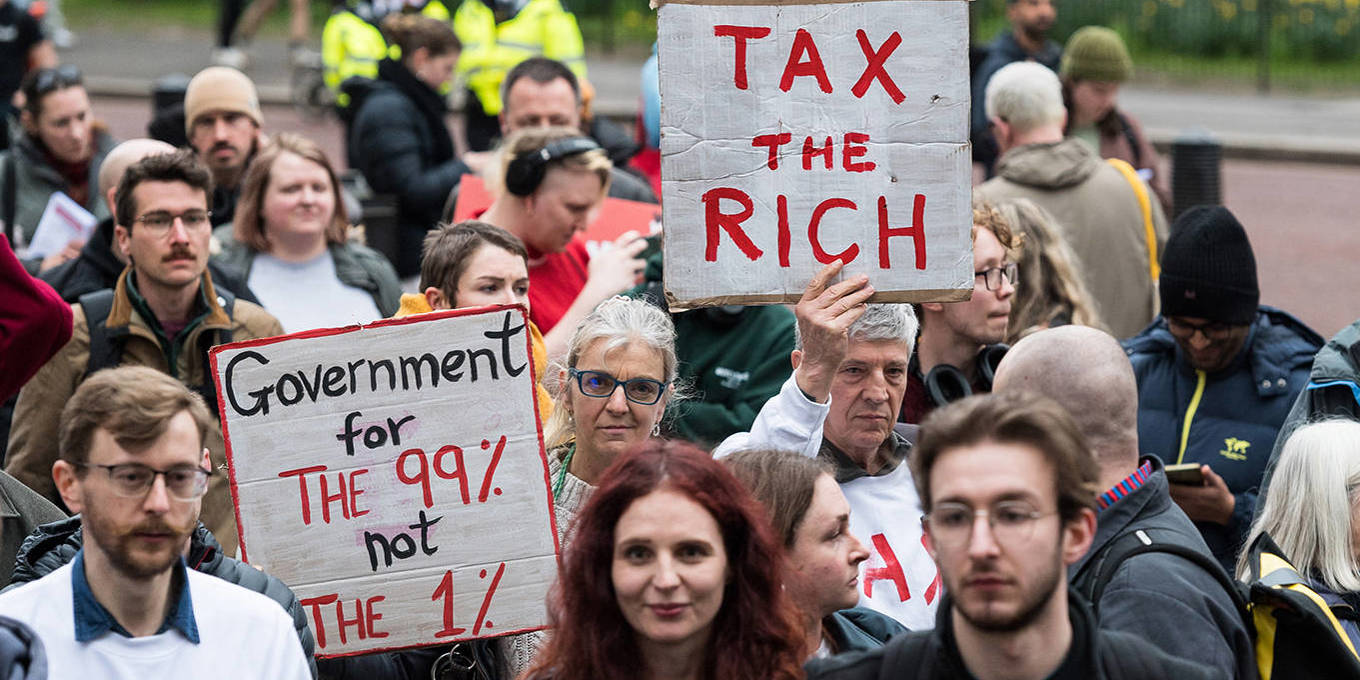
The convention should also establish a coordinated tax on extreme wealth of the kind Brazil proposed as part of its G20 presidency in 2024. A 2% annual levy on the world’s billionaires would raise hundreds of billions of dollars for public investment. The tools exist; the problem is establishing who would control them.
Lastly, the international community needs a standing mechanism to test the legitimacy of sovereign claims before populations are forced to repay them. When a fund like Malaysia’s 1MDB is looted of billions of dollars with the help of leading banks, which collect exorbitant fees for managing bond issues and don’t look back, the loss falls on citizens. A UN-anchored process to identify and void debts contracted through fraud or against the public interest would shift the risk back to where it belongs: reckless lenders, not the people who were robbed.
None of this gets built from the top down. The same governments that advocate wealth levies in the global arena often impose austerity or avoid taxing the rich at home like India, Brazil, and France. A new international order must rest on efforts to close that gap, which require governments that lead with their principles, and citizens who shape those promises and hold their leaders accountable for meeting them.
Domestic movements also force governments to behave differently on the global stage, and the commitments made there stay confined to paper until there are constituencies at home to enforce them. Therefore, citizens must organize in capitals and conference halls at the same time, because an order that answers to them can be won only on both fronts.
The cleaner paying over half her wage to reach work, the farmer who cannot afford fertilizer, and the care worker whose labor is never reflected in national accounts are now recognizing that their seemingly disparate problems are a symptom of a structural flaw. The international order has devolved into a system that asks the global majority to pay for a set of rules they did not write. Designing a new one requires handing them the pen.
The choice is not between the old order and chaos, but between a new order built around the global majority and one that simply swaps in a slightly different set of figureheads. Citizen movements are not peripheral to this more equitable order; they are its driving force. These groups grasp the true dynamics of the world economy. The challenge now is to ensure that the people designing new international institutions do as well.
