

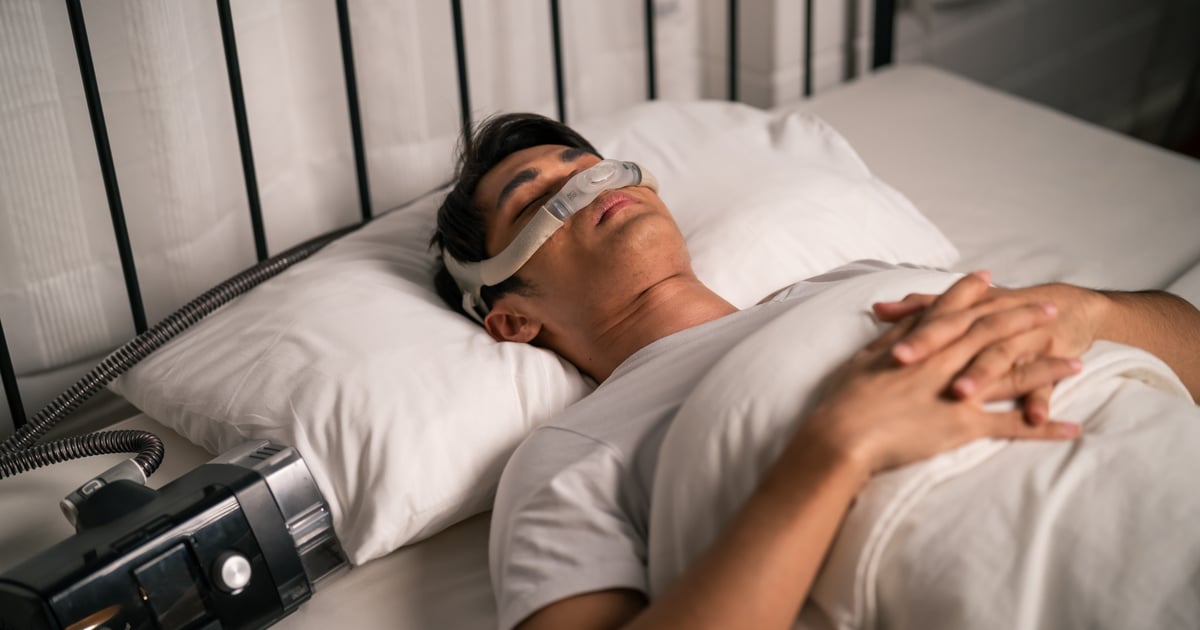
An unfortunate reality of being diagnosed with obstructive sleep apnea (OSA) is that you can’t really take a holiday from the disorder.
Living with untreated OSA in the long term increases the risk of coronary artery disease, heart attack, heart failure, and stroke. And it can be a vacation-ruiner even in the short term, causing severe daytime drowsiness, irritability, depression, and decreased libido.
Not a great recipe for a fun getaway.
As tempting as it might be to wave goodbye to your prescribed CPAP machine while on the road, experts in the field of sleep medicine recommend bringing along the equipment as a travel companion.
“Trying to set up your sleep environment to be as similar as to what you have at home is ideal,” says Dr. Margaret Kay-Stacey, assistant professor and ambulatory medical director for neurology at the University of Chicago.
We asked Kay-Stacey and board-certified sleep medicine specialist and neurologist Dr. Raina Gupta for tips on how to maintain CPAP therapy while traveling. Here’s what they said.
Do you need a CPAP travel unit?
The short answer is no, not really. Insurance companies rarely cover anything besides primary machines, and travel units can cost upwards of $1,000.
For frequent travelers who are willing to make the investment, though, the advantages to having a supplementary travel unit can be real—with some stipulations thrown in.
“Travel CPAPs are recommended for obstructive sleep apnea patients that are benefitting from CPAP use and want an easy way to use CPAP during travel,” says Gupta.
One perk of using a travel unit with a rechargeable battery pack is that they eliminate the headache of fussing with outlet adapters or extension cords while traveling internationally (though you’ll of course need to recharge the device eventually).
Nightstands in older hotels in the U.S. and abroad often aren’t equipped with enough outlets for the number of devices modern travelers need to charge for the next day, let alone another piece of equipment that has to be plugged in all night.
“They even make solar-powered rechargeable batteries for people who like to go camping with OSA,” Gupta points out.
Another plus is that portable CPAP units are tiny. The ResMed AirMini, for instance, weighs just a little over half a pound. That makes it easier to pack in a carry-on instead of schlepping around in its own conspicuous branded bag.
There’s not much of a back-breaking difference, though, between the AirMini and its primary unit companion, the ResMed AirSense 11, which itself only weighs 2.5 pounds.
A potential drawback to travel units is the lack of a traditional humidity chamber. Some come with waterless passive humidity devices, like small heat and moisture exchangers, but they’re not comparable to traditional CPAP machines.
“I do have patients tell me they don’t necessarily feel like it’s the same as what they get from their machine at home, but it does the trick,” says Kay-Stacey.
Travel units also tend to be a bit louder than ultraquiet modern primary machines, but either option is easier to listen to than snoring.
Cruise ships often provide distilled water at no or low cost.
Cruise lines know their audience. While not always prominently advertised, complimentary or low-cost distilled water intended for medical devices is available on many ships, particularly those that draw an older crowd. (Older adults are much likelier than younger people to have sleep apnea.)
Check to see if the cruise line you’ll be sailing with offers free or very cheap distilled water onboard before you waste valuable luggage space by bringing your own. You may need to fill out a request via the ship’s customer portal in advance or make a request with staff members or a concierge.
CPAP machines don’t count against your carry-on baggage limit.
Medical devices like CPAP machines are exempt from airline and cruise ship carry-on limits, and you’re not required to travel with the equipment in the bag it came with.
Keep in mind, however, that medical devices are not immunity idols for baggage limits—the only thing in the bag can be the device and its accessories. If you try to pack other stuff in there, the bag will count as a standard carry-on.
In our experience, a sleep mask and sleep medication tend to slide through when stored in the same bag, but don’t push it.
Not all distilled water is the same.
A common annoyance among CPAP users, especially when traveling, is that truly distilled water is mostly sold in full gallon jugs. Obviously, that’s way more than the few ounces most CPAP users need in their machines per night.
Grocery stores and pharmacies now often sell smaller travel-sized metal bottles of distilled water that appear perfect for CPAP machines—until you read the label. Anything that says “alkaline” or “electrolytes for taste” is unsuitable, even if the product claims to be distilled.
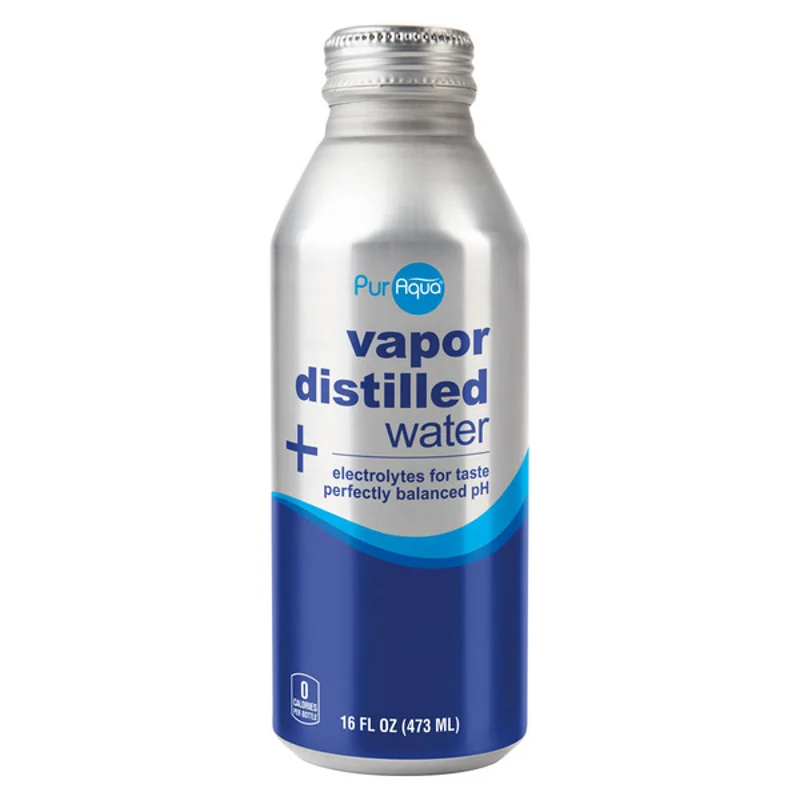
“It can actually be aerosolized,” says Kay-Stacey. “So the concern would be that if you were using that over time, it could actually be unsafe for your airway. You really do want something that’s completely additive-free.”
One of the few national retailers that does offer smaller bottles of distilled water with no additives is CVS.
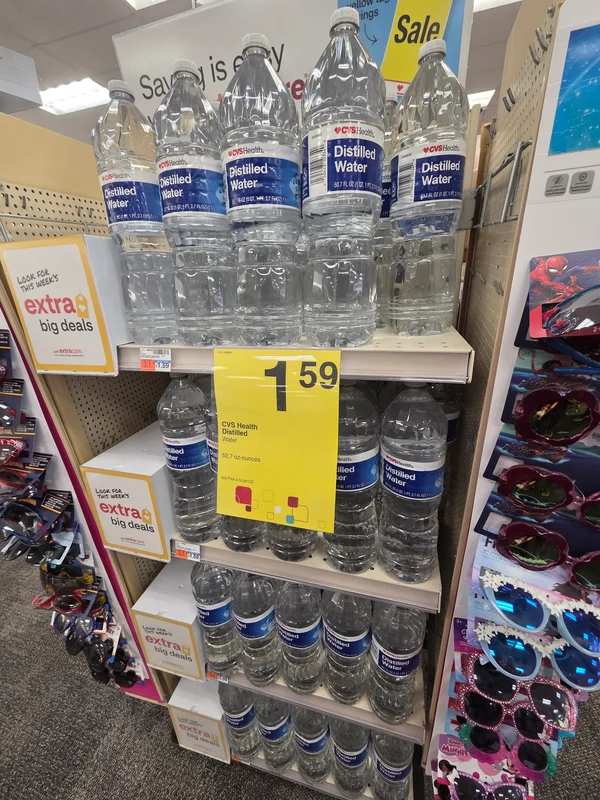
“CVS Health introduced 1.5-liter bottles of distilled water to stores in April 2025 after recognizing a growing need for more convenient sizes,” a spokesperson told Frommer’s. “These smaller bottles are designed to better support customers who rely on distilled water for everyday healthcare and personal care devices, including CPAP machines and garment steamers.”
So when you’re out of town on a trip, locate a CVS (the chain has about 9,000 of them across the U.S.) and you might be able to find a reasonably sized distilled water bottle there.
If you can’t get your hands on distilled water, standard mineralized bottled water is OK for a few nights, although it will cause calcium chamber buildup that will need to be cleaned. Tap water isn’t recommended for CPAP machines, even though you probably won’t get a scary brain-eating amoeba from relying on the sink. If you have absolutely no other option, always boil and then cool tap water before use.
And this should go without saying, but let Kay-Stacey say it anyway: “You’re certainly not going to go to a river or a stream and get your water and use it in your CPAP machine.”
Amazon and eBay will do in a pinch for replacement parts.
A common misconception among CPAP users is that a doctor’s prescription is required to purchase replacement parts. That’s certainly true if you intend for your insurance to cover the item or if you’re buying a new unit or whole mask from certain online retailers.
But for components like filters, a torn hose, or a worn-out face cushion, CPAP users can absolutely buy replacement parts from online retailers like Amazon or eBay without a prescription and have the items shipped wherever needed.
That’s a safer and more reliable option than trying to use duct tape on a punctured hose or leaky mask, which can accidentally cause a dangerous buildup of carbon dioxide.
“ My biggest thing is I never want [tape] to go over something that might potentially [affect] how the machine or the device works,” says Kay-Stacey. “I don’t want it over a space where maybe air is supposed to be able to go in and out.”
