
Close Menu
    What's Hot

    Want part of Amazon’s $2.5 billion settlement? The deadline is Monday

    Trump Holds Off on Major War Escalation Against Iran as Advisers Raise Concerns

    Hundreds of Thousands Flee Fires in France and Spain as Help Pours In

    Facebook X (Twitter) Instagram
    Trending
    • Want part of Amazon’s $2.5 billion settlement? The deadline is Monday
    • Trump Holds Off on Major War Escalation Against Iran as Advisers Raise Concerns
    • Hundreds of Thousands Flee Fires in France and Spain as Help Pours In
    • GoPro Mission 1 Pro Review: The Best Action Camera You Can Buy
    • TPG Stock: 5%-Yielding Growth Stock In Plain Sight (NASDAQ:TPG)
    • Super League: In-form Leigh close in on top four with victory against Warrington as Huddersfield end 12-game wait for win | Rugby League News
    • Berlin Pride Event Cut Short After Car Hits Crowds
    • Warner Bros. lawsuit accuses Amazon of illegally poaching executives
    interluknewsinterluknews
    • Home
    • Business
      • Corporate News
      • Industry Insights
      • Startups & Entrepreneurship
      • Technology & Innovation
    • Economy
      • Economic Policy
      • Financial Analysis
      • Inflation & Interest Rates
      • Trade & Markets
    • Global
      • Conflicts & Security
      • Diplomacy
      • Global Trends
      • International Affairs
    • Lifestyle
      • Fashion
      • Food & Dining
      • Personal Development
      • Travel
    • Opinion
      • Columns
      • Editorials
      • Expert Opinions
      • Reader Voices
    • More
      • Politics
        • Elections
        • Government & Policy
        • International Relations
        • Political Analysis
      • Sports
        • Cricket
        • Football / Soccer
        • International Sports
        • Local Sports
      • Technology
        • Artificial Intelligence
        • Cybersecurity
        • Gadgets & Reviews
        • Tech News
      • South Africa News
    Facebook X (Twitter) Instagram
    interluknewsinterluknews
    Editorials

    Why Development Doesn’t Prevent War by Rabah Arezki

    adminBy adminApril 14, 2026No Comments5 Mins Read
    Share Facebook Twitter Pinterest Copy Link Telegram LinkedIn Tumblr Email
    Why Development Doesn’t Prevent War by Rabah Arezki
    Share
    Facebook Twitter LinkedIn Pinterest Email

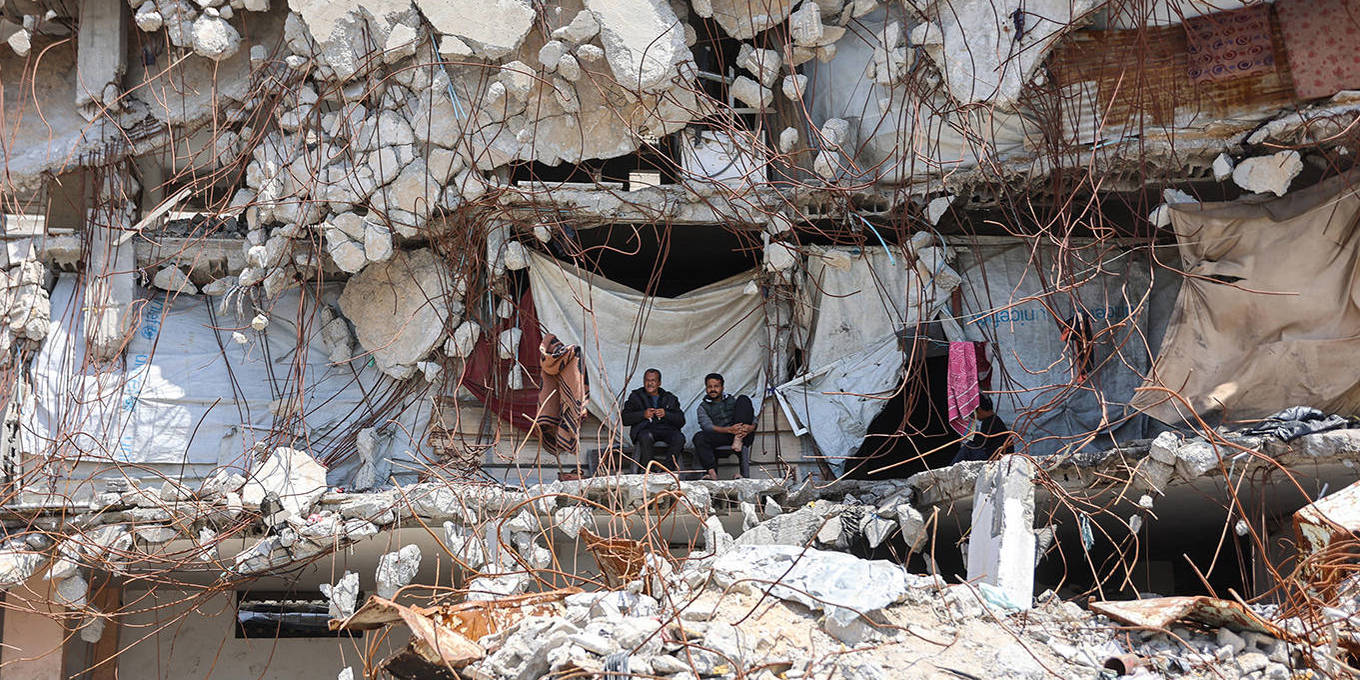
    Violent conflicts have reached levels not seen since World War II, even as global poverty has fallen to historic lows, challenging long-held assumptions about the relationship between development and peace. This outcome calls for a reassessment of the theory of change that underpins development aid.

    BRAZZAVILLE—In 1949, US President Harry S. Truman laid out a bold vision that would shape global policy for generations. Poverty, he argued, was not merely a humanitarian concern but a threat to peace itself, and development was the remedy.

    1. Image for Can Hungary Reverse Course?

      Balint Szentgallay/NurPhoto via Getty Images

      Can Hungary Reverse Course?

      Stephen Holmes
      warns that the system Viktor Orbán has created means that losing an election may not mean relinquishing power.

    2. Nickel mining in Indonesia.

      Ulet Ifansasti/Getty Images

      The Energy Transition Has Its Own Strait of Hormuz

      Dianne Araral & Eduardo Araral

      caution that escaping one form of geopolitical vulnerability does not eliminate the influence of geopolitics.

    3. Gazprom logo displayed at a petrol station in Sofia, Bulgaria, on April 27, 2022, as Russia halts gas supplies to Bulgaria and Poland over ruble payment dispute.

      Nikolay Doychinov/AFP via Getty Images

      The Fall of Gazprom

      Sławomir Sierakowski
      sees the collapse of Gazprom’s market capitalization as a microcosm of broader economic dynamics.

    The logic was compelling in its simplicity: raise living standards, and the risk of conflict would diminish. Over the years, the linear model that cast development as the pathway to stability became the intellectual foundation of international aid.

    Today, however, the world looks very different. Violent conflict has reached levels not seen since World War II, even as extreme poverty has fallen to historic lows. Taken together, these trends suggest it is time to reassess the linear development model and its underlying logic.

    Conventional wisdom, as articulated in the United Nations 2030 Agenda, holds that conflict undermines development, while poverty and inequality fuel conflict. This framing implies that progress on one front reinforces the other, enabling policymakers to present development aid as both a moral imperative and a strategic investment that promotes a virtuous cycle of prosperity and peace.

    But that view has always rested more on assumption than evidence. While a growing body of empirical research has documented the devastating effects of conflict on economic output, human capital, and institutional capacity, the link between development and peace has proven far harder to establish.

    How strong is the causal relationship between development and geopolitical stability? My recent research offers a sobering answer and reveals a striking asymmetry. When conflict erupts, its effects on development are profound and long-lasting. The average time it takes for the damage to diminish by half—what economists call its “half-life”—is nearly eight years.

    By contrast, development’s pacifying effects are fleeting. Across multiple dimensions, the impact of improved development outcomes on conflict has a half-life of roughly 13 months. Within two years, any measurable reduction in conflict intensity has effectively disappeared.

    This asymmetry reflects the scale of the damage armed conflicts cause. War does not simply disrupt livelihoods and public services; it wipes out assets that took generations to build: physical infrastructure, human capital, functioning institutions, and the basic social trust that makes collective action possible. Development interventions work differently. Cash transfers, clinics, and irrigation systems can improve lives and ease grievances, but they rarely transform the underlying political conditions that sustain violence, let alone on a global scale.

    The policy implications are far-reaching. If development yields only short-lived reductions in violence, then the case for development aid as a tool of conflict prevention is weaker than often assumed. That is an uncomfortable conclusion for institutions that have long justified aid budgets on security grounds.

    To be sure, the argument that investing in development today helps avoid the far higher costs of war tomorrow is not entirely wrong. There is evidence that aid to conflict-affected areas can reduce violence, though the effects are often modest and not always statistically robust. But while development spending is justified on humanitarian and ethical grounds, regardless of the strategic implications, the evidence does not support the claim that sustained investment can reliably prevent or resolve armed conflicts.

    What the evidence does show is the inverse: sustainable development depends on peace to a far greater extent than the Truman-era paradigm recognized. Preventing conflict yields enormous development gains, as each year without war preserves years of progress that would otherwise be lost. Investments in conflict prevention—including political settlements, power-sharing arrangements, and credible peace processes—are not substitutes for development spending but rather preconditions for it.

    Consequently, we must rethink the theory of change that currently underpins development economics. In developing countries plagued by distrust, poor services, and recurring violence, political stability and state legitimacy must come first. Only after that foundation is in place can institutional reform and sustained development spending deliver tangible results.

    None of this is meant to suggest that Truman was wrong to argue that poverty poses a threat to global peace. But the causal pathway is more complex, asymmetric, and contingent than the prevailing linear model assumed. While development can help sustain peace, it is far less effective at creating it.

    Recognizing this distinction obviously does not mean abandoning the pursuit of development. Rather, it calls for an honest reckoning with the limitations of the current model and to lay the groundwork for a more realistic and effective approach to development policy.

    Arezki development doesnt Prevent Rabah war
    Follow on Google News Follow on Flipboard
    Share. Facebook Twitter Pinterest LinkedIn Tumblr Email Copy Link
    Previous ArticleDon’t want to get into ‘debate with him’: How Trump’s feud with Pope on war could backfire
    Next Article TaskRabbit founder: the pivot is the point
    admin
    • Website

    Related Posts

    Trump Holds Off on Major War Escalation Against Iran as Advisers Raise Concerns

    July 25, 2026

    Opinion | Why Vance Still Trumps Rubio

    July 25, 2026

    As Trump Escalates Trade War, Ontario Premier Doug Ford Wants to Retaliate

    July 25, 2026
    Leave A Reply Cancel Reply

    Demo
    Latest Posts

    Want part of Amazon’s $2.5 billion settlement? The deadline is Monday

    Trump Holds Off on Major War Escalation Against Iran as Advisers Raise Concerns

    Hundreds of Thousands Flee Fires in France and Spain as Help Pours In

    GoPro Mission 1 Pro Review: The Best Action Camera You Can Buy

    Latest Posts

    Subscribe to News

    Get the latest sports news from NewsSite about world, sports and politics.

    Advertisement
    Demo

    We are a digital news platform delivering timely, accurate, and insightful coverage of politics, global affairs, business, economy, sports, and more. Our mission is to keep readers informed with reliable news, clear analysis, and stories that truly matter.
    We're social. Connect with us:

    Facebook X (Twitter) Instagram Pinterest YouTube

    Subscribe to Updates

    Get the latest creative news from FooBar about art, design and business.

    Type above and press Enter to search. Press Esc to cancel.

    Powered by
    ...
    ►
    Necessary cookies enable essential site features like secure log-ins and consent preference adjustments. They do not store personal data.
    None
    ►
    Functional cookies support features like content sharing on social media, collecting feedback, and enabling third-party tools.
    None
    ►
    Analytical cookies track visitor interactions, providing insights on metrics like visitor count, bounce rate, and traffic sources.
    None
    ►
    Advertisement cookies deliver personalized ads based on your previous visits and analyze the effectiveness of ad campaigns.
    None
    ►
    Unclassified cookies are cookies that we are in the process of classifying, together with the providers of individual cookies.
    None
    Powered by