

Fully 70% of U.S. workers feel unprepared for today’s workforce. That’s not a data point you encounter and move past. It sits with you, especially when you’ve spent a career thinking about how learning works.
What separates high performers today isn’t natural talent. The differentiator is how people use the brain science of learning to develop that kind of adaptable capacity, and how they’re starting to use AI to scale it.
After earning my master’s degree in education policy from Columbia University’s Teachers College, I dedicated my career to understanding how people learn and how we can translate learning science into better outcomes. For more than 25 years—as an educator, higher education leader, and now chief learning officer at Instructure—I have worked alongside teachers, students, and organizational leaders to better understand how people learn and how we can best apply learning science.
In my experience, high performers consistently rely on three learning habits: practicing active retrieval, using AI as a partner for deliberate practice, and metacognition—meaning reflecting on their own thinking and diagnosing what worked or didn’t.
1. Activate neuroplasticity
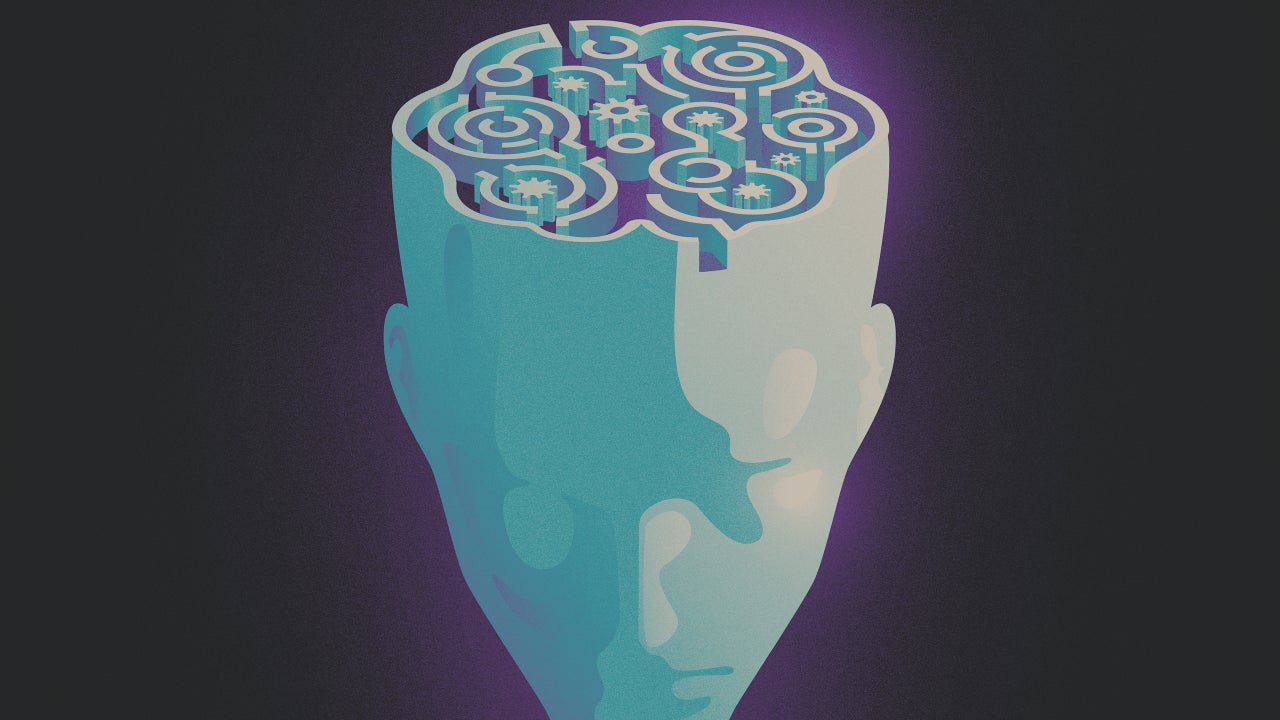
As we work together to design learning experiences that reinforce the importance of being resilient, we must first understand how the brain works. Neuroscience shows that the human brain is designed to adapt. Neuroplasticity, the brain’s ability to reorganize itself, thrives on novelty, relevance, and meaningful feedback. Repeated, intentional practice reshapes neural pathways.
That’s the good news. The challenge is that most learning environments don’t reflect this science. We lose people after about 20 minutes of a traditional lecture. Not because they’re lazy, but because our brains are wired to preserve cognitive resources. Passive consumption of information doesn’t activate the mechanisms that build durable memory.
High performers know this intuitively, even if they don’t use the neurological vocabulary. They practice retrieval. They don’t just review notes; they close the book and force themselves to recall. They space their learning over time rather than cramming. They return to what they’ve learned and apply it in new situations. This is how short-term exposure becomes long-term capability.
For educators and learning designers, this isn’t a nice-to-have. Bite-sized, structured activities that require active recall and spaced repetition are the architecture of real learning. They’re also what builds the cognitive flexibility that resilient learners rely on when conditions change.
2. Use AI for deliberate practice
Here’s where artificial intelligence enters the picture, and where most conversations about it get stuck.
Generative AI is often framed as a shortcut: Use it to produce a final output faster. But that approach undermines learning. If AI does the thinking, the learner skips the struggle that builds skill.
The more powerful use is AI as a deliberate practice partner. High performers use AI the way elite athletes use a coach: to create rapid, personalized feedback loops that accelerate growth.
A student preparing for a school project can prompt an AI agent to play the role of a skeptical teacher or a tough audience to test their argument before presenting it to the class. A new manager can practice a hard performance conversation before having it for real. A medical student can rehearse clinical reasoning by asking AI to play a skeptical attending physician. In each case, AI isn’t replacing the learning; it’s creating the conditions for accelerated repetition and immediate feedback.
The research on deliberate practice is detailed. Performance improves not just by doing a thing, but by doing it with specific targets, honest feedback, and adjustments. AI, used this way, makes deliberate practice accessible. That’s genuinely new, and it’s where educators should be pointing students.
As part of my research work, I visit educational institutions regularly to see practice in action. During one of my recent visits to a large school district, high school students shared how they use AI as a practice partner and coach when studying and completing assignments outside of school hours. They really appreciate the 24/7 availability so they can get help when they need it and not have to wait for the next time their teacher may be available through office hours or in class.
3. The Power of Reflection
The third habit of high performers is the one we talk about least: They think about their own thinking.
Metacognition, the act of reflecting on how you arrived at an answer rather than just whether the answer is right, is where deep understanding develops. High performers don’t just want to know if they got the outcome right. They want to understand where their reasoning broke down, what assumptions they made, and what they would do differently.
This has direct implications for how we should let learners use AI. If a student uses AI to generate a final essay, the learning stops at the output, leapfrogging the critical thinking process of creating. If a student uses AI to test their own thinking, to examine their reasoning, and identify gaps, the learning deepens.
Showing your work is not old-fashioned. It is, in fact, the most sophisticated thing a learner can do. Employers know this. The ability to explain your reasoning, describe how you used technology, and demonstrate where you course-corrected is exactly the kind of intellectual horsepower the workforce values.
We also need to make space for failure. In a student project activity at the University of Michigan, students surfaced exactly this desire: They wanted low-stakes opportunities to experiment with hard and soft skills. They felt there weren’t enough chances to practice in the normal direction of a course or term.
Current educational models often place so much pressure on perfect performance that learners become afraid to experiment. What we need is room to try, iterate, and fail without fear of a grade penalty. Fear of failure doesn’t build resilience. It builds anxiety. Resilient learners are not the ones who never stumble. They’re the ones who’ve learned to diagnose why, adjust, and try again. When we create environments where safe failure is part of the process, we give learners the room to develop that judgment.
Measuring What Matters
Brain science tells us how the biological aspects of learning manifest themselves in our daily lives. How we learn best comes from a combination of that science and our understanding of ourselves as learners in our own contexts. AI gives us the tools to implement those practices at a speed and level of personalization that weren’t possible before. But the right habits matter only if we’re willing to measure what those habits produce.
We need to ask what it proves: the skills demonstrated, the credentials earned, and the learners who can keep moving when the landscape changes again.
Implementing these three very doable learning habits helps people learn faster, retain knowledge longer, and adapt more effectively to change. That’s what learning resilience and high performance look like in practice.
