


Enterprise AI is entering a new phase — one where the central question is no longer what can be built, but how to make the most of our AI investment.
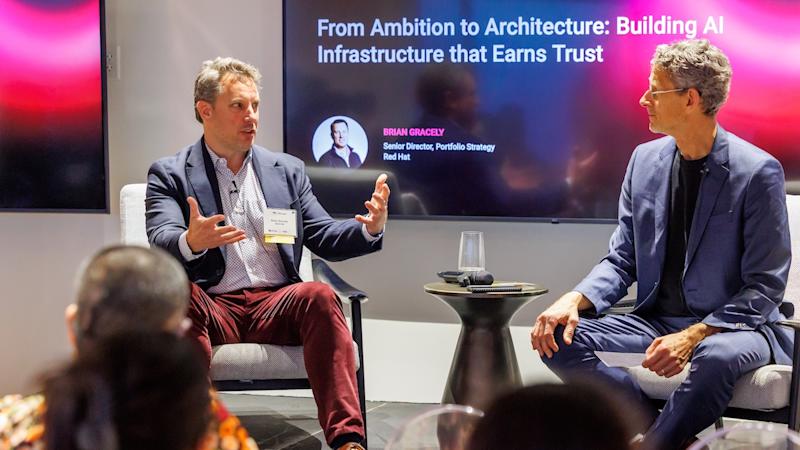
At VentureBeat’s latest AI Impact Tour session, Brian Gracely, director of portfolio strategy at Red Hat, described the operational reality inside large organizations: AI sprawl, rising inference costs, and limited visibility into what those investments are actually returning.
It’s the “Day 2” moment — when pilots give way to production, and cost, governance, and sustainability become harder than building the system in the first place.
“We’ve seen customers who say, ‘I have 50,000 licenses of Copilot. I don’t really know what people are getting out of that. But I do know that I’m paying for the most expensive computing in the world, because it’s GPUs,'” Gracely said. “‘How am I going to get that under control?'”
Why enterprise AI costs are now a board-level problem
For much of the past two years, cost was not the primary concern for organizations evaluating generative AI. The experimental phase gave teams cover to spend freely, and the promise of productivity gains justified aggressive investment, but that dynamic is shifting as enterprises enter their second and third budget cycles with AI. The focus has moved from “can we build something?” to “are we getting what we paid for?”
Enterprises that made large, early bets on managed AI services are conducting hard reviews of whether those investments are delivering measurable value. The issue isn’t just that GPU computing is expensive. It is that many organizations lack the instrumentation to connect spending to outcomes, making it nearly impossible to justify renewals or scale responsibly.
The strategic shift from token consumer to token producer
The dominant AI procurement model of the past few years has been straightforward: pay a vendor per token, per seat, or per API call, and let someone else manage the infrastructure. That model made sense as a starting point but is increasingly being questioned by organizations with enough experience to compare alternatives.
Enterprises that have been through one AI cycle are starting to rethink that model.
“Instead of being purely a token consumer, how can I start being a token generator?” Gracely said. “Are there use cases and workloads that make sense for me to own more? It may mean operating GPUs. It may mean renting GPUs. And then asking, ‘Does that workload need the greatest state-of-the-art model? Are there more capable open models or smaller models that fit?'”
The decision is not binary. The right answer depends on the workload, the organization, and the risk tolerance involved, but the math is getting more complicated as the number of capable open models, from DeepSeek to models now available through cloud marketplaces, grows. Now enterprises actually have real alternatives to the handful of providers that dominated the landscape two years ago.
Falling AI costs and rising usage create a paradox for enterprise budgets
Some enterprise leaders argue that locking into infrastructure investments now could mean significantly overpaying in the long run, pointing to the statement from Anthropic CEO Dario Amodei that AI inference costs are declining roughly 60% per year.
The emergence of open-source models such as DeepSeek and others has meaningfully expanded the strategic options available to enterprises that are willing to invest in the underlying infrastructure in the last three years.
But while costs per token are falling, usage is accelerating at a pace that more than offsets efficiency gains. It’s a version of Jevons Paradox, the economic principle that improvements in resource efficiency tend to increase total consumption rather than reduce it, as lower cost enables broader adoption.
For enterprise budget planners, this means declining unit costs do not translate into declining total bills. An organization that triples its AI usage while costs fall by half still ends up spending more than it did before. The consideration becomes which workloads genuinely require the most capable and most expensive models, and which can be handled just fine by smaller, cheaper alternatives.
The business case for investing in AI infrastructure flexibility
The prescription isn’t to slow down AI investment, but to build with flexibility being top of mind. The organizations that will win aren’t necessarily the ones that move fastest or spend the most; they’re the ones building infrastructure and operating models capable of absorbing the next unexpected development.
“The more you can build some abstractions and give yourself some flexibility, the more you can experiment without running up costs, but also without jeopardizing your business. Those are as important as asking whether you’re doing everything best practice right now,” Gracely explained.
But despite how entrenched AI discussions have become in enterprise planning cycles, the practical experience most organizations have is still measured in years, not decades.
“It feels like we’ve been doing this forever. We’ve been doing this for three years,” Gracely added. “It’s early and it’s moving really fast. You don’t know what’s coming next. But the characteristics of what’s coming next — you should have some sense of what that looks like.”
For enterprise leaders still calibrating their AI investment strategies, that may be the most actionable takeaway: the goal is not to optimize for today’s cost structure, but to build the organizational and technical flexibility to adapt when, not if, it changes again.
