

At graduation ceremonies in 2026, the mere mention of artificial intelligence is enough to garner boos from the crowd.
It happened at the University of Central Florida, where speaker Gloria Caulfield said the “rise of artificial intelligence is the next industrial revolution.” It happened at Middle Tennessee State University, where Big Machine Records CEO Scott Borchetta claimed “AI is rewriting production as we sit here.” And it happened at the University of Arizona, where former Google CEO Eric Schmidt said that AI “will touch every profession, every classroom, every hospital, every laboratory, every person, and every relationship you have.”
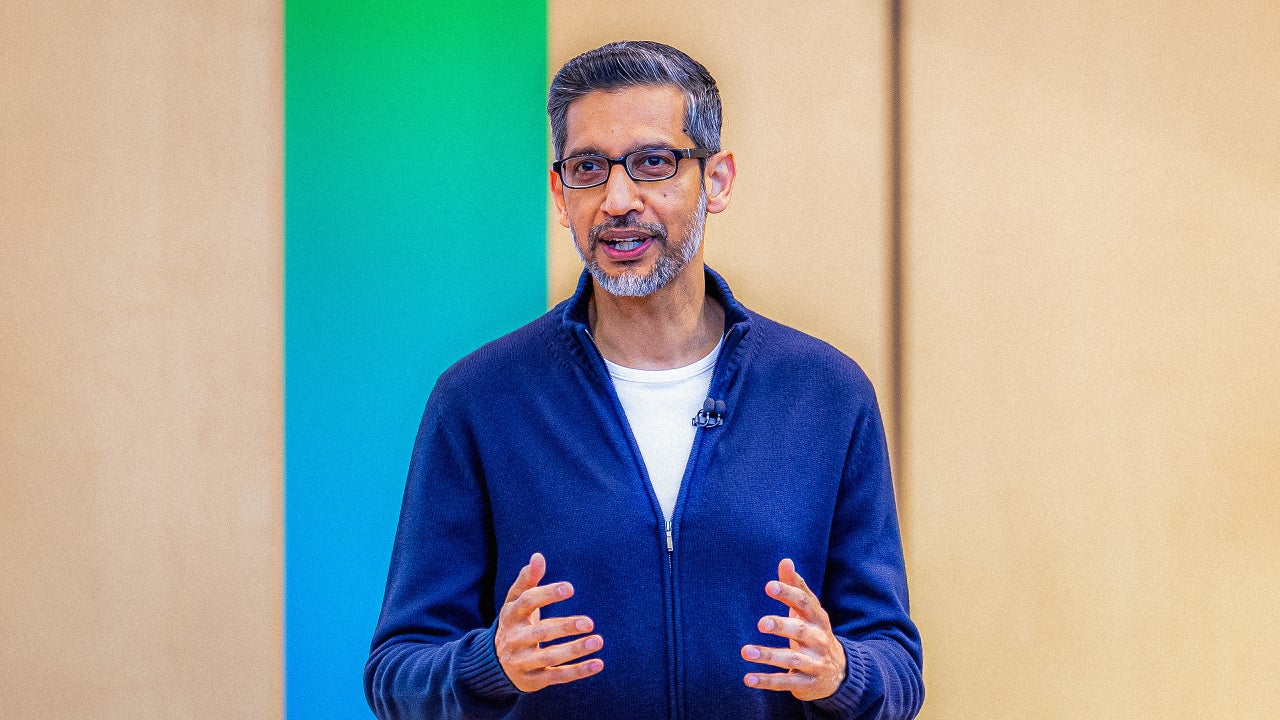
One might think the trend continued when current Google CEO Sundar Pichai’s speech at Stanford University was met with boos and even a walkout—but despite Pichai helming one of the foremost companies in the AI industry, Stanford’s graduates had an entirely different reason for protesting his speech.
During his commencement speech on Sunday, June 14, Pichai never brought up AI, instead focusing on his life story, experience as an immigrant, and career at Google. Still, around 200 graduates booed and walked out during Pichai’s speech, chanting “free, free Palestine” and sporting protest signs.
Stanford grads walk out as Google CEO Sundar Pichai takes the stage as commencement speaker. No mention of AI, unlike other uni speakers getting booed down this year. Story for @sfgate shortly pic.twitter.com/qvS2rJ91Ip
— Matt Brown (@maattttbrown) June 14, 2026
Google’s deal with Israel
The pro-Palestine demonstration at Stanford comes amid Google’s ongoing “Project Nimbus” deal with Israel. In 2021, Google and Amazon signed a $1.2 billion contract to provide the Israeli government and military with cloud computing infrastructure and AI among other technological services.
As Israel’s war on Gaza garnered heightened attention in 2024, controversy around Project Nimbus reached a fever pitch. Google employees protested the company’s ties to Israel via sit-in protests at Google offices in New York and California. Google called the police on those protesters, then fired more than 50 employees over the next few weeks. At the time, Google claimed that “every single one of those whose employment was terminated was personally and definitively involved in disruptive activity inside our buildings.”
At the time, Pichai wrote in a blog post that Google has “a culture of vibrant, open discussion,” followed by what some saw as a vague warning.
“This is a business, and not a place to act in a way that disrupts coworkers or makes them feel unsafe, to attempt to use the company as a personal platform, or to fight over disruptive issues or debate politics,” he wrote. “This is too important a moment as a company for us to be distracted.”
Stanford’s alternative commencement
When graduates walked out of Stanford’s official graduation ceremony, they didn’t forgo the concept of commencement entirely. Instead, they went to a student-hosted “People’s Commencement,” where activist Mahmoud Khalil delivered a commencement speech instead. Last year, Khalil was at the center of the pro-Palestine protests at Columbia University, being detained by U.S. Immigration and Customs Enforcement for more than 100 days and threatened with deportation.
“Throughout history, students have stood at the forefront of struggles for civil rights, labor rights, peace, justice, and human dignity,” Khalil said in his commencement speech.
Speaking to CNN, a Stanford graduate explained why they chose to protest Stanford’s official commencement and attend the People’s Commencement instead.
“Stanford’s interest in creating a ceremony which goes to honor their corporate donors rather than their students is why we have come here today: to celebrate ourselves and our conviction in the world we want to create with the educations that we received here today,” they said.
